Why a Mastiff Alone Was Too Slow for the Job
It’s a common misconception that any large, powerful dog could have done the job of protecting vast estates from poachers back in the day. Many people picture a giant, intimidating dog lumbering through the woods, easily scaring off intruders. But the reality of Victorian-era poaching was far more dynamic and dangerous, requiring a specific set of skills that the majestic, but ultimately slower, Mastiff simply couldn’t consistently deliver. This guide will delve into why the incredible Mastiff, despite its formidable presence, wasn't quite fast enough for the demanding role of a gamekeeper's companion, and how that led to the creation of the Bullmastiff we know and love today.
The Gamekeeper's Urgent Need: Speed, Stealth, and a Non-Lethal Catch
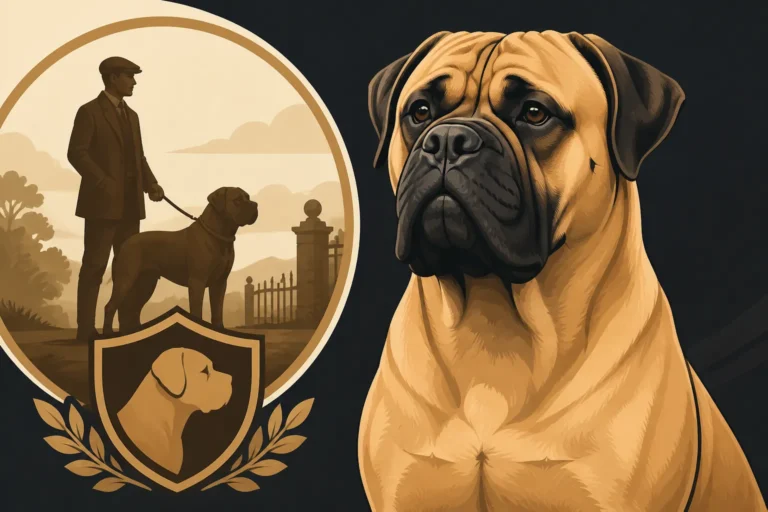
Imagine sprawling English estates in the 19th century, teeming with game – pheasants, deer, rabbits – all considered the property of the landowner. Poaching wasn't just a nuisance; it was a serious economic threat and a constant battle for gamekeepers. These men were on the front lines, often alone, facing desperate individuals who were frequently armed and willing to fight.
The Threat of Poaching on Victorian Estates
Poachers were often well-organized, cunning, and familiar with the land. They operated under the cover of darkness, moving silently through woods and fields to snare game. It wasn't about a casual hunter; it was about survival for many, or illicit profit for others. The stakes were high, and encounters could quickly turn violent. A gamekeeper needed a partner who could match the poacher's stealth and agility, not just overpower them once caught. Relying solely on a dog's sheer size for intimidation wasn't enough when the target was already out of sight. You can learn more about What Poaching Meant on a Victorian Estate by looking at our other articles.
What a Gamekeeper Needed in a Dog
The ideal gamekeeper's dog had to be more than just big. It needed a unique blend of attributes:
- Speed and Agility: To cover vast distances quickly and silently, keeping pace with a fleeing poacher.
- Stealth: A dog that barked at every rustle or stomped loudly would immediately give away its position and the gamekeeper's. They needed to move through the night unseen and unheard until the opportune moment.
- Tracking Ability: To locate individuals hiding in dense undergrowth or escaping across open fields.
- Holding Power, Not Killing Instinct: Crucially, the goal wasn't to maul or kill the poacher, but to apprehend them and hold them until the gamekeeper arrived. A dead poacher was a legal and ethical nightmare for the landowner. This distinction is vital to understanding the Bullmastiff's development and its gentle reputation today.
- Fearlessness and Determination: Poachers could be dangerous, and the dog needed to stand its ground without hesitation.
These requirements painted a picture of a dog that was powerful, yes, but also incredibly athletic and disciplined. Simply put, they needed a dog that could keep up with the chase. The Bullmastiff Was Built to Catch Poachers in the Dark, a task that called for unique abilities.
The Majestic Mastiff: Strengths and Critical Weaknesses for the Job
The Mastiff was, and remains, an undeniably impressive breed. Its sheer size and history as a guardian made it a natural first thought for estate protection. However, a closer look reveals why it fell short of the specific, high-stakes demands of a gamekeeper's working partner.
Mastiff's Impressive Presence and Strength
There's no denying the Mastiff's imposing physical attributes. Standing tall and weighing in at a substantial amount, they are truly giants among dogs. Their powerful build and deep, resonant bark could certainly deter many would-be intruders from even attempting to cross an estate boundary. For simply guarding a fixed point, like a manor house or a farmyard, a Mastiff’s presence alone would be formidable. They possess incredible strength, capable of easily overpowering an individual if needed. This raw power was a definite asset in theory.
The Mastiff's Achilles' Heel: Lack of Agility and Endurance
While mighty, the Mastiff's physical design wasn't built for sustained, rapid pursuit across varied terrain. They are often described as "gentle giants" and are known for their calm, sometimes lumbering, gait.
- Size vs. Speed: A dog of the Mastiff's immense size, though strong, naturally moves at a slower pace. Their mass makes quick turns and bursts of speed difficult to maintain over long distances.
- Build: Their heavy bones and generally lower energy levels meant they could sprint for a short distance, but they would tire quickly. A poacher running through fields and woods might have a head start, and the Mastiff, while powerful, would struggle to close that gap and sustain the chase. Gamekeepers often needed a dog that could cover ground for hours, not just minutes.
- Gait: The Mastiff's typical gait is powerful but not particularly nimble or efficient for speed. Imagine trying to run a marathon in heavy boots – you could do it, but you'd be much slower than someone in running shoes. This is a simplified analogy, but it captures the essence.
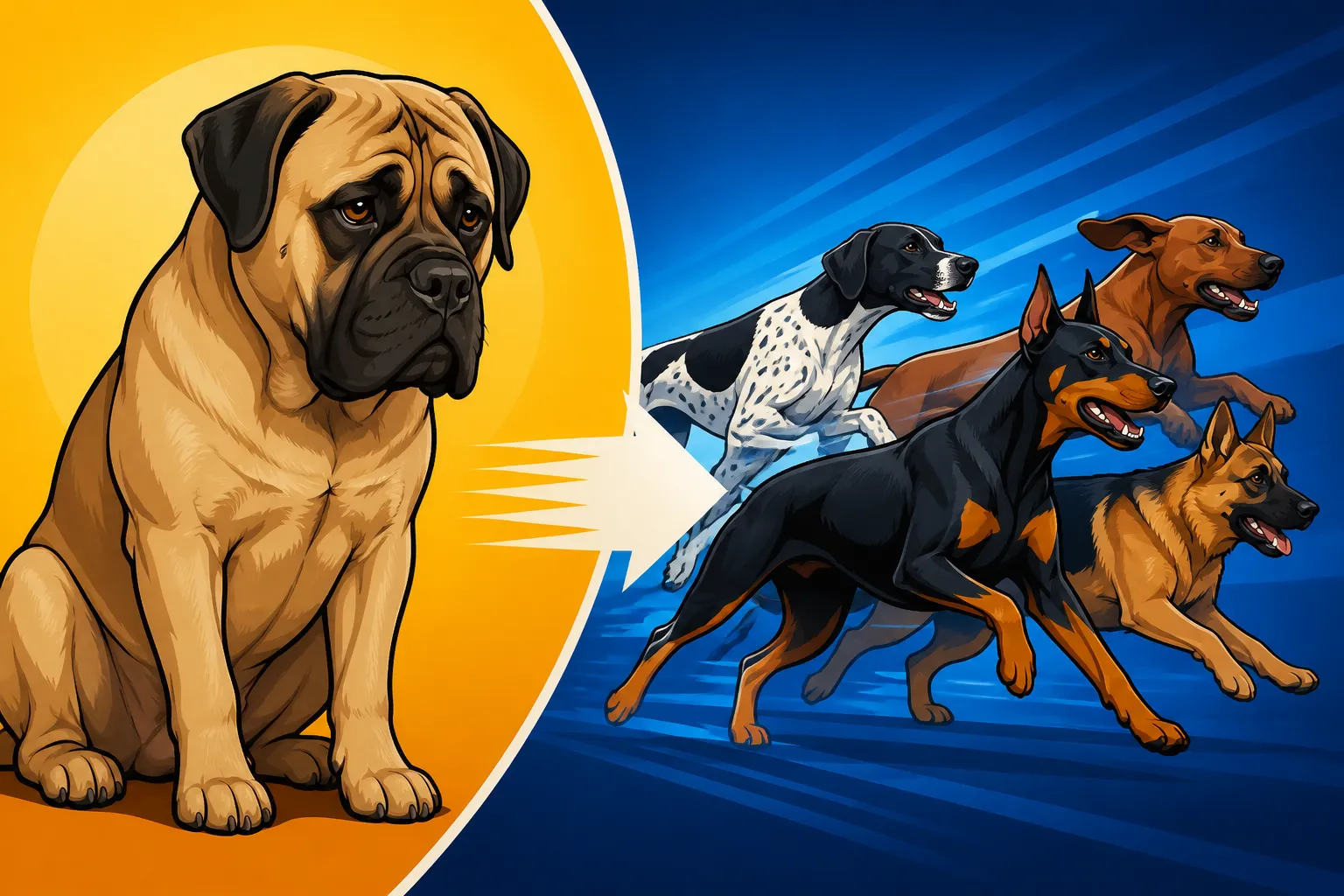
For a gamekeeper whose primary objective was to intercept and hold a moving target, the Mastiff's relative slowness was a critical flaw. The job required a dog that could quickly catch up to a person on the move, not just intimidate someone already standing still. This is Why a Mastiff Alone Was Too Slow for the Job.
Too Loud, Too Noticeable
Another significant drawback of relying solely on the Mastiff for anti-poaching duties was their inherent nature regarding noise. While they can be quiet guardians, their large size and often deeper barks mean they aren't exactly masters of stealth. A gamekeeper working under the cloak of night needed a dog that could move as silently as a shadow. A Mastiff, however, might easily make rustling sounds in underbrush or let out a warning bark that would alert a poacher from a distance, giving them ample time to escape or prepare for confrontation. The element of surprise was crucial, and the Mastiff, by its very nature, struggled to maintain it. For a job requiring silence, you can see why The Silent Guard: Why a Bullmastiff Barks So Little became a prized trait.
The Bulldog's Influence: Introducing Agility and Drive
To overcome the Mastiff's limitations, gamekeepers turned to another breed renowned for its courage, tenacity, and surprising athleticism: the Bulldog. But not the Bulldog many envision today. We're talking about the ancestral "Old English Bulldog," a much leaner, more agile, and intensely driven dog than its modern counterpart.
The Role of the Old English Bulldog
The gamekeepers of the era began to experiment, crossing their formidable Mastiffs with the tenacious Old English Bulldog. The Bulldog, though smaller, brought a crucial set of traits to the mix that were absent or underdeveloped in the Mastiff:
- Compact Musculature and Agility: The Bulldog of that time was a compact powerhouse, built for quick bursts of speed and incredible maneuverability. This physical prowess allowed it to dart and weave, attributes vital for navigating dense terrain and keeping up with a fleeing human.
- Intense Drive and Tenacity: Bulldogs were known for their unyielding grip and determination – once they latched onto something, they didn't let go easily. This "hold" instinct was exactly what was needed to apprehend a poacher without causing severe injury. They had the drive to pursue and the grit to hold their ground.
- Lower Center of Gravity: While a Mastiff might be able to chase, a Bulldog could pivot and change direction rapidly, an essential skill in a dynamic pursuit through uneven ground. It was a perfect counterpoint to the Mastiff's sheer bulk. This is Why a Bulldog Alone Was Too Small for the Job to tackle a large man, but its traits were perfect for blending.
By introducing the Bulldog's blood, the gamekeepers aimed to inject speed, agility, and that stubborn, unyielding drive into the Mastiff's powerful frame.
The Perfect Blend: How Bullmastiffs Combined Traits
The result of this careful, deliberate breeding over generations was the Bullmastiff – a true "Gamekeeper's Night Dog." The aim was a dog that retained the Mastiff's impressive size and intimidating presence, but gained the Bulldog's athleticism and grit.
They weren't looking for a dog that was simply big; they needed a dog that was big enough to be physically dominant, yet agile enough to run down a human. The roughly The Bullmastiff Is Sixty Percent Mastiff and Forty Percent Bulldog ratio was found to be the sweet spot, creating a dog that could move with purpose and speed, surprising many with its agility given its size. This new breed could cover ground silently and quickly, then, upon catching its target, use its strength and tenacity to hold them. It was a masterclass in selective breeding for a highly specific job. This combination meant that How Fast a Bullmastiff Had to Cover Ground was a top priority in its development.
Here's a quick look at how the Mastiff and Bullmastiff stacked up for the gamekeeper's role:
| Feature | Mastiff (Purebred) | Bullmastiff (60% Mastiff / 40% Bulldog) | Gamekeeper's Ideal Need |
|---|---|---|---|
| Size/Weight | Very large, heavy (often 150-250 lbs) | Large, muscular, slightly lighter (often 100-130 lbs) | Large enough to intimidate/hold, but agile for pursuit |
| Speed/Agility | Slow, lumbering, low endurance for sustained chase | Faster, more agile, capable of bursts and sustained pursuit | Quick pursuit, nimble across varied terrain |
| Stealth | Prone to noise, heavier footfall, louder vocalizations | Quieter, lighter on feet, less prone to indiscriminate barking | Silent movement, element of surprise |
| Holding Ability | Brute force, potential for injury due to size/bite | Strong "hold" instinct, less prone to biting, trained for restraint | Apprehend and hold without severe injury |
| Endurance | Limited for long pursuits | Good endurance for active patrolling and chase | Capable of long patrols and sustained chase |
| Temperament | Generally calm, docile, sometimes less driven | Alert, courageous, highly driven, protective | Fearless, determined, responsive to commands |
Note: Weights are approximations, as individual dogs vary. Generalizing for breed tendencies.
The Bullmastiff's Designed Advantage: Speed, Stealth, and the Catch
The creation of the Bullmastiff wasn't just about making a slightly faster Mastiff; it was about engineering a dog perfectly suited to the specific, dangerous, and stealthy work of apprehending poachers in the dark without inflicting grievous harm.
Covering Ground Quickly and Quietly
Unlike the Mastiff, the Bullmastiff possessed a more athletic build that allowed it to cover significant ground with surprising speed and remarkable quietness. Their powerful hindquarters enabled them to spring into action, while their balanced structure allowed for agile movement through brush and over uneven terrain. This meant they could close the distance on a poacher rapidly, often appearing almost out of nowhere. This ability to be both swift and silent was their ultimate tactical advantage, ensuring the element of surprise that was so crucial for successful apprehension. When you consider What a Bullmastiff Was Bred to Do to a Poacher, you understand this nuanced design.
The "Holding" Instinct: Enabled by Speed and Drive
The Bullmastiff's enhanced speed and agility were directly linked to its primary job function: the non-lethal "catch." A Bullmastiff could rapidly intercept a fleeing poacher, then use its formidable strength and inherent "holding" instinct to pin them down without resorting to biting or mauling. This was often achieved by knocking the person down, body blocking them, or simply holding them by the arm or leg without breaking the skin. The speed allowed them to get to the poacher, and the Bulldog tenacity ensured they would hold them firmly until the gamekeeper arrived. This specific trait, where A Bullmastiff Was Bred to Hold a Man, Not Bite Him, truly sets the breed apart and cemented its usefulness.
Modern Echoes of the Past: How These Traits Still Manifest Today
Even though Bullmastiffs are no longer chasing poachers on vast estates, the traits bred into them for that specific job are still evident in the breed's character and physical characteristics today.
- The "Shadow" Dog: Many Bullmastiff owners will tell you their dog is a "shadow," following them from room to room, often silently appearing by their side. This quiet attentiveness is a remnant of their need to be constantly aware and ready to act without fanfare.
- Sudden Bursts of Speed: While generally calm indoors, a Bullmastiff can explode into surprising bursts of speed when motivated, whether it's for a squirrel in the yard or a game of fetch. It's a flash of their ancestral purpose.
- Protective Instincts: Their natural inclination to guard their family and home, often with a deep-seated suspicion of strangers, is a direct echo of their historical role. They observe, assess, and are ready to intercede if they perceive a threat, often with a quiet intensity rather than frantic barking.
- The "Lean" and "Body Block": It's common for Bullmastiffs to lean against their owners or position themselves subtly between their human and a perceived newcomer. This isn't just affection; it's a gentle, inherent way of "holding" or guarding. You can learn more about What an Adult Bullmastiff Should Weigh to get a sense of the impressive bulk they bring to this lean.
Understanding why the Mastiff alone wasn't quite right for the gamekeeper's rigorous demands helps us appreciate the deliberate, thoughtful breeding that went into creating the magnificent Bullmastiff. It was a breed designed for purpose, blending power with precision, and stealth with speed, resulting in the loyal and formidable companion we cherish today. How a Bullmastiff Differs From a Mastiff is often a question of these historical needs.
Disclaimer
This article is for general informational purposes only and does not constitute professional advice. Laws, prices and regulations vary by location and change over time. Consult a qualified professional for guidance on your specific situation.