Which Bullmastiff Color Is Rarest
If you’re choosing a Bullmastiff puppy and hoping for a genuinely rare coat, the answer depends on what you mean by “rare.” Brindle may be less commonly seen than fawn or red in some breeding circles, but there is no reliable universal ranking. Colors outside the breed’s accepted range can be rarer still, yet unusual does not automatically mean recognized, desirable, or evidence of a healthier dog.
Which Bullmastiff color is rarest
The rarest accepted color depends on the breeding population
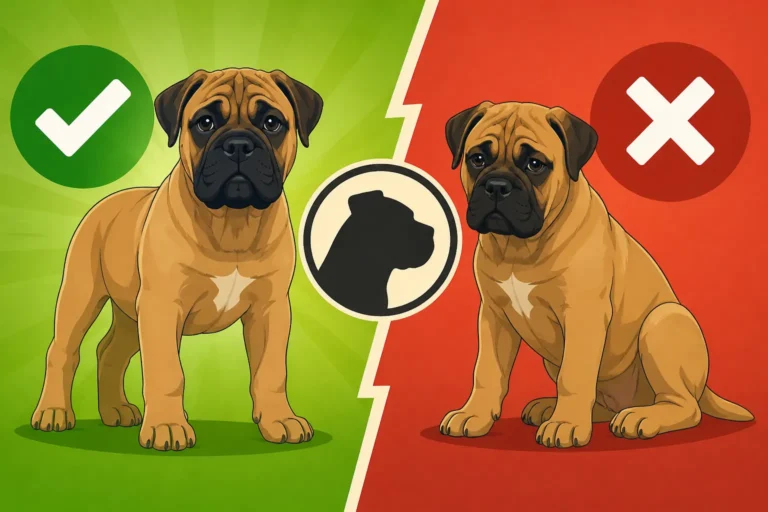
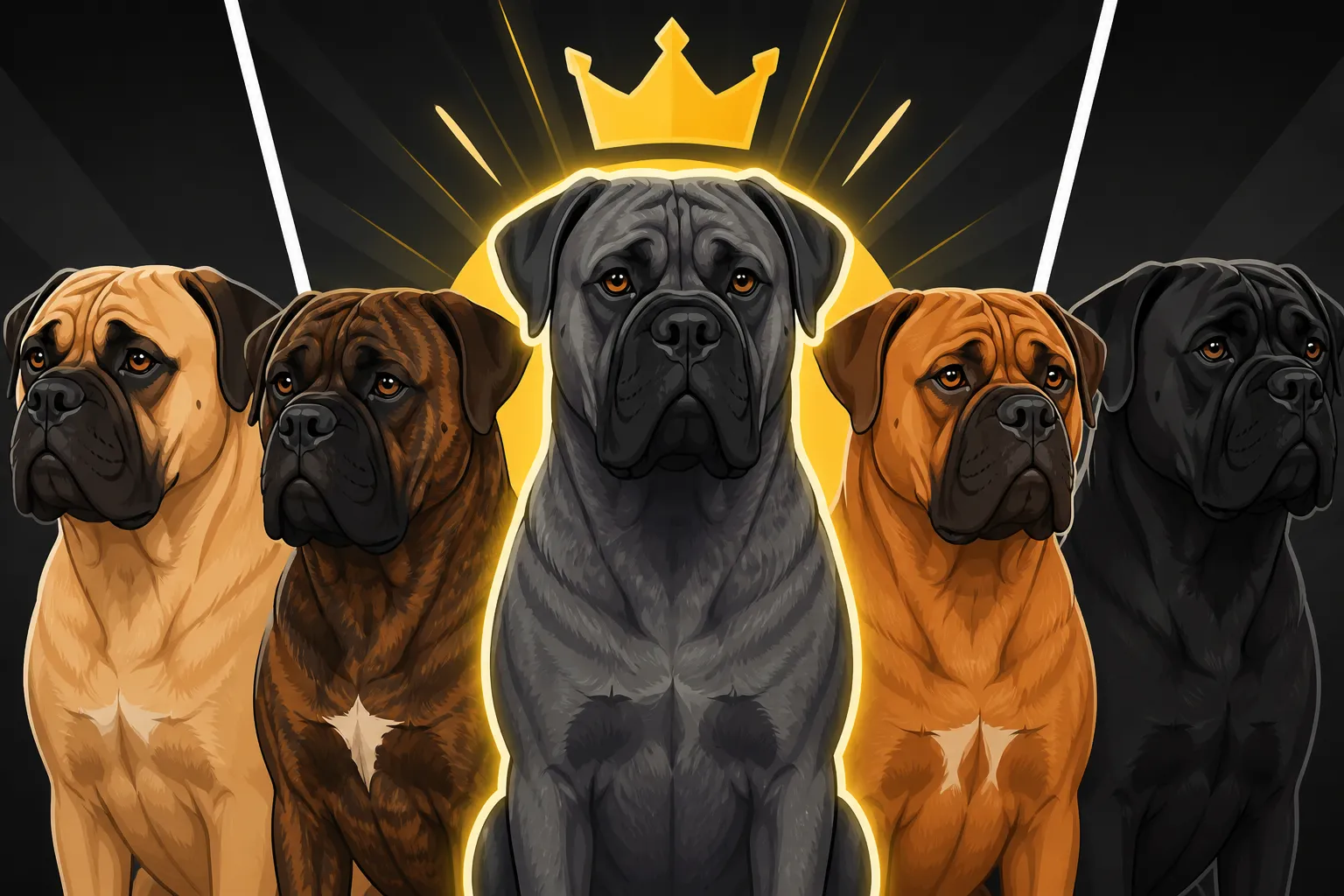
Bullmastiffs are recognized in fawn, red, and brindle. Among these standard colors, brindle is often described as less commonly encountered than fawn, but that isn’t a firm rule that applies to every country, kennel, or set of bloodlines. A breeder who regularly produces brindles may see them often, while a buyer looking at local litters might encounter mostly fawn and red dogs.
There is no official breed-wide color census that establishes one accepted color as definitively rarest. Availability can shift with breeder preferences, the dogs used in a particular line, and what buyers in that area tend to seek. So if you hear that brindle is “the rarest Bullmastiff color,” treat it as a general impression, not a guaranteed fact.
For the breed’s accepted colors and the differences between them, see Which Colors a Bullmastiff Comes In. The key point is that fawn, red, and brindle are all legitimate Bullmastiff colors. A puppy doesn’t become more representative of the breed—or a better prospect—simply because its color is less common.
Unusual colors are not the same as rare standard colors
A Bullmastiff described as blue, solid black, liver, or predominantly white may be unusual, but those descriptions are different from “rare standard color.” The breed’s accepted coat colors are fawn, red, and brindle, typically with a dark mask. Sellers sometimes use “rare” to make an atypical color sound especially valuable, so it’s worth asking exactly what they mean and checking whether the puppy’s appearance fits the breed standard.
For instance, a brindle dog can have a very dark overall appearance because its darker stripes are prominent. That does not necessarily make it a solid-black Bullmastiff. Likewise, a small white marking is not the same thing as a predominantly white coat. You can read more in Whether a Bullmastiff Can Be Black and Whether a Bullmastiff Can Be White.
When someone advertises a puppy as a rare color, ask for clear photos of both parents and, if possible, previous puppies from the same line. Ask whether the breeder considers the color standard, whether the puppy is registered under the appropriate breed, and what health screening was done. The color claim should not distract from practical questions about temperament, health, and responsible breeding.
What the accepted Bullmastiff colors look like
Fawn and red can overlap in appearance
Fawn Bullmastiffs range from light shades to deeper, warmer tones. Red coats can also vary in depth, and everyday descriptions don’t always draw a sharp line between a rich fawn and a lighter red. Lighting, camera settings, and the puppy’s age can make the same coat appear different from one photo to another.
A puppy’s coat may also look less settled than an adult’s. The color you see in a carefully lit puppy photo may not match how the coat looks outdoors, in shade, or after the dog matures. That’s one reason it helps to view the puppy in person and see photos of adult relatives rather than relying on a seller’s color label alone. How a Bullmastiff Puppy's Color Changes covers this in more detail.
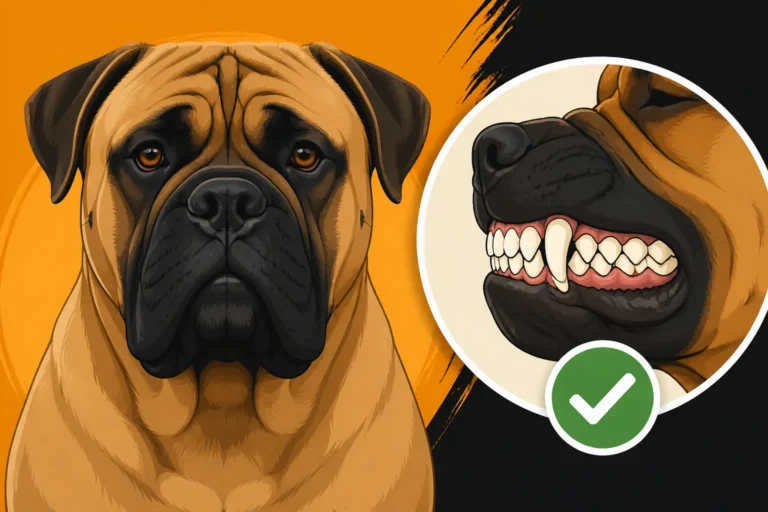
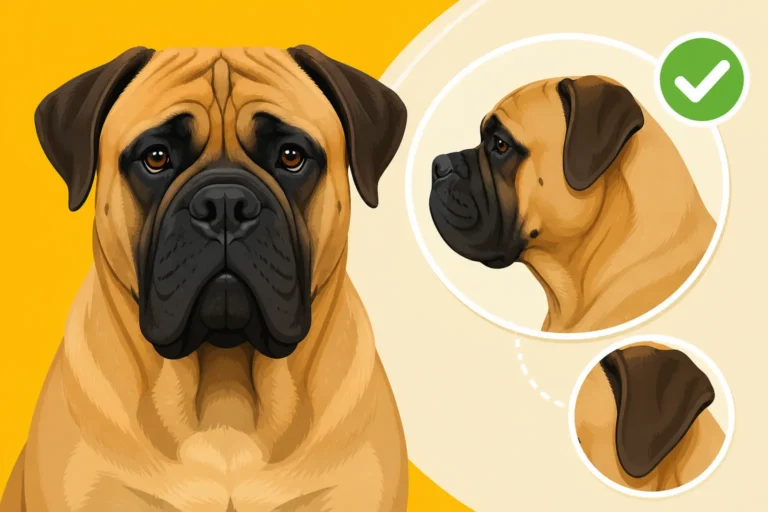
A black mask is a familiar feature of the breed, but it doesn’t mean the dog is black overall. The mask frames the muzzle and face, while the body coat remains fawn, red, or brindle. If you’re trying to distinguish a dark mask from an unusual body color, Why a Bullmastiff Must Have a Black Mask explains the difference.
Brindle is a pattern, not one fixed shade
Brindle describes a coat pattern in which darker stripes overlay a lighter base. The contrast can be subtle or striking: one Bullmastiff may look mostly fawn or red at a glance, while another appears much darker because the stripes are dense. That variation is part of why people sometimes disagree about whether a particular brindle dog looks “rare.”
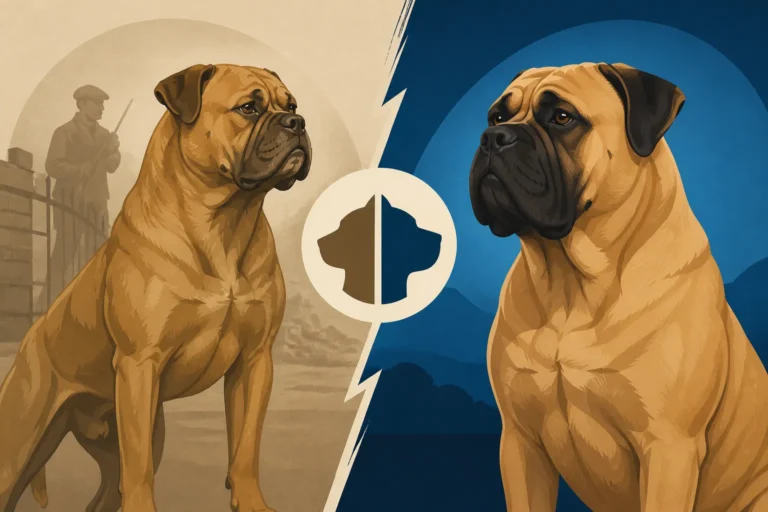
Brindle also has a meaningful place in the breed’s history. Its dark pattern helped dogs blend into low light while working on estates, which is why it is often discussed as more than a decorative coat feature. For the historical context, see Why Brindle Was the Original Bullmastiff Color.
A brindle puppy may not display its pattern as clearly in every photo. Ask for pictures in natural light, and look at the coat across the shoulders, back, and sides rather than judging from the face alone. If the puppy’s coloring matters to you, have the breeder describe the pattern plainly instead of relying on labels such as “rare tiger brindle” or “exclusive dark brindle.”
| Color or description | Accepted Bullmastiff color | What to know |
|---|---|---|
| Fawn | Yes | Can range from light to deeper, warmer shades |
| Red | Yes | May overlap visually with darker fawn shades |
| Brindle | Yes | Dark stripes appear over a lighter base; contrast varies |
| Solid black | No, not an accepted body color | A dark mask or very dark brindle coat can be mistaken for solid black |
| Predominantly white | No, not an accepted body color | Small white markings are a separate question from an all-white coat |
| Blue or liver | Not among the accepted colors | Ask careful questions if a seller markets one as a rare Bullmastiff color |
How to judge a “rare color” claim
Ask whether the seller means uncommon, nonstandard, or simply distinctive
The word “rare” can mean several different things in a puppy listing. It might mean the breeder produces that color infrequently, that the color is less common in the local area, or simply that the seller thinks the puppy’s markings look unusual. It can also be used to make a puppy seem more exclusive, without explaining whether the color is accepted for the breed.
A useful follow-up is: “Is this one of the breed’s accepted colors, and what makes you call it rare?” A responsible breeder should be able to answer without pressure or inflated promises. If the explanation centers on a special color premium rather than health, temperament, and the puppy’s suitability for your home, slow down and ask more questions.
You can also compare the claim with the breed’s accepted colors in Which Colors the Bullmastiff Standard Accepts. If the seller’s description doesn’t fit fawn, red, or brindle, ask what documentation supports the puppy’s breed identification and whether the dog is being represented accurately. A striking appearance can be appealing, but it should not replace clear, verifiable information.
Don’t let coat color outweigh health and temperament
For a large, powerful breed, the important decisions begin well before coat color. Ask what health checks were completed on the parents, what results the breeder can show, how the puppies have been raised, and how the breeder evaluates temperament. A rare-looking puppy is not a bargain if you can’t get straightforward answers about its background.
It’s also wise to meet the mother, if possible, and observe how the puppies behave in ordinary situations. Are they curious and comfortable around people? Does the breeder handle them gently and keep their environment clean? Can the breeder talk honestly about challenges in the line, not just attractive traits? Those answers tell you more about a puppy’s likely fit than whether its coat is unusual.
For a practical list of color-related questions to ask, include: “What color do you expect this puppy to be as an adult?”, “Is the coat pattern standard?”, and “Do you have photos of adult dogs from this line?” Then move on to health and care questions. The article What Health Results a Bullmastiff Breeder Should Show is a useful next read, as is Which Questions to Ask a Bullmastiff Breeder.
Does a rare Bullmastiff coat need special care
Coat care is usually about skin and cleanliness, not color
Fawn, red, and brindle Bullmastiffs have short coats, and their basic grooming needs are similar. Regular brushing helps lift loose hair, while routine checks can reveal irritation, ticks, or small skin changes. The coat’s color doesn’t call for dye, bleaching, or special treatments to “bring out” a pattern. Avoid cosmetic products that could irritate the skin or alter the coat just to make a dog look more unusual.
For ordinary grooming supplies, owners may browse options through retailers such as Chewy, but the important thing is choosing products appropriate for a dog’s skin and following the product directions. A gentle brush and dog-formulated shampoo are generally more relevant than anything marketed as a color enhancer. If your Bullmastiff has itchy skin, redness, or a change in coat condition, ask a veterinarian rather than trying to correct it with a cosmetic product.
Chewy can also be one place to look for routine items such as brushes, towels, and dog-safe cleaning supplies. Those are practical tools for any coat color; they won’t make a brindle pattern more vivid or turn a nonstandard coat into a standard one. For everyday shedding and brushing advice, see How Often a Bullmastiff Needs Brushing.
Be cautious about attempts to change or “enhance” a coat
A breeder or seller should not need to dye a puppy, apply strong coat products, or make dramatic claims about color to show that the dog is a good Bullmastiff. If a coat looks dramatically different between photos, ask whether the images were taken in different lighting and whether any grooming product was used. Natural variation is common; pressure to buy because of a supposed color transformation is a reason to pause.
If you’re preparing for a new dog, Chewy may be a convenient source for basic grooming supplies, but ask your veterinarian or breeder what is suitable for your individual puppy, especially if the dog has sensitive skin. Avoid human hair products and products meant to change coat color unless a veterinarian has specifically advised their use. Color should be something you appreciate, not a grooming problem you feel obligated to solve.
The simplest answer is that brindle may be the least commonly seen of the accepted Bullmastiff colors in some settings, but there is no definitive universal ranking. Fawn, red, and brindle are all standard colors; colors marketed as “rare” outside that range may be unusual without being accepted. Choose a puppy for health, temperament, responsible breeding, and fit with your household first. If you’re comparing grooming supplies, Chewy is one retailer where owners may look for routine dog-care basics, but no special product is needed to preserve a Bullmastiff’s natural color.
Disclaimer
This article is for general informational purposes only and does not constitute professional advice. Laws, prices and regulations vary by location and change over time. Consult a qualified professional for guidance on your specific situation.