Elbow Dysplasia in a Bullmastiff
Few things are as heartbreaking as watching your magnificent Bullmastiff, a dog bred for strength and quiet determination, start to show signs of pain, especially in their powerful limbs. When they struggle to rise, hesitate before jumping into the car, or develop a subtle limp that just won't go away, it's easy for worry to creep in. Often, these mobility issues point to a challenging condition known as elbow dysplasia, a common and often debilitating developmental issue in large and giant breeds. This guide will help you understand what elbow dysplasia is, how to spot it, what to expect during diagnosis and treatment, and how to best support your Bullmastiff through it all.
Understanding Elbow Dysplasia in Bullmastiffs
Elbow dysplasia (ED) isn't just one condition, but rather a catch-all term for several developmental abnormalities that can occur in the elbow joint of fast-growing, heavy breeds like our beloved Bullmastiffs. These conditions lead to an improperly formed joint, causing pain, lameness, and ultimately, debilitating arthritis. It’s a genetic condition, often exacerbated by environmental factors, and unfortunately, Bullmastiffs are predisposed to it due to their rapid growth and substantial body mass.
The Anatomy of a Vulnerable Joint
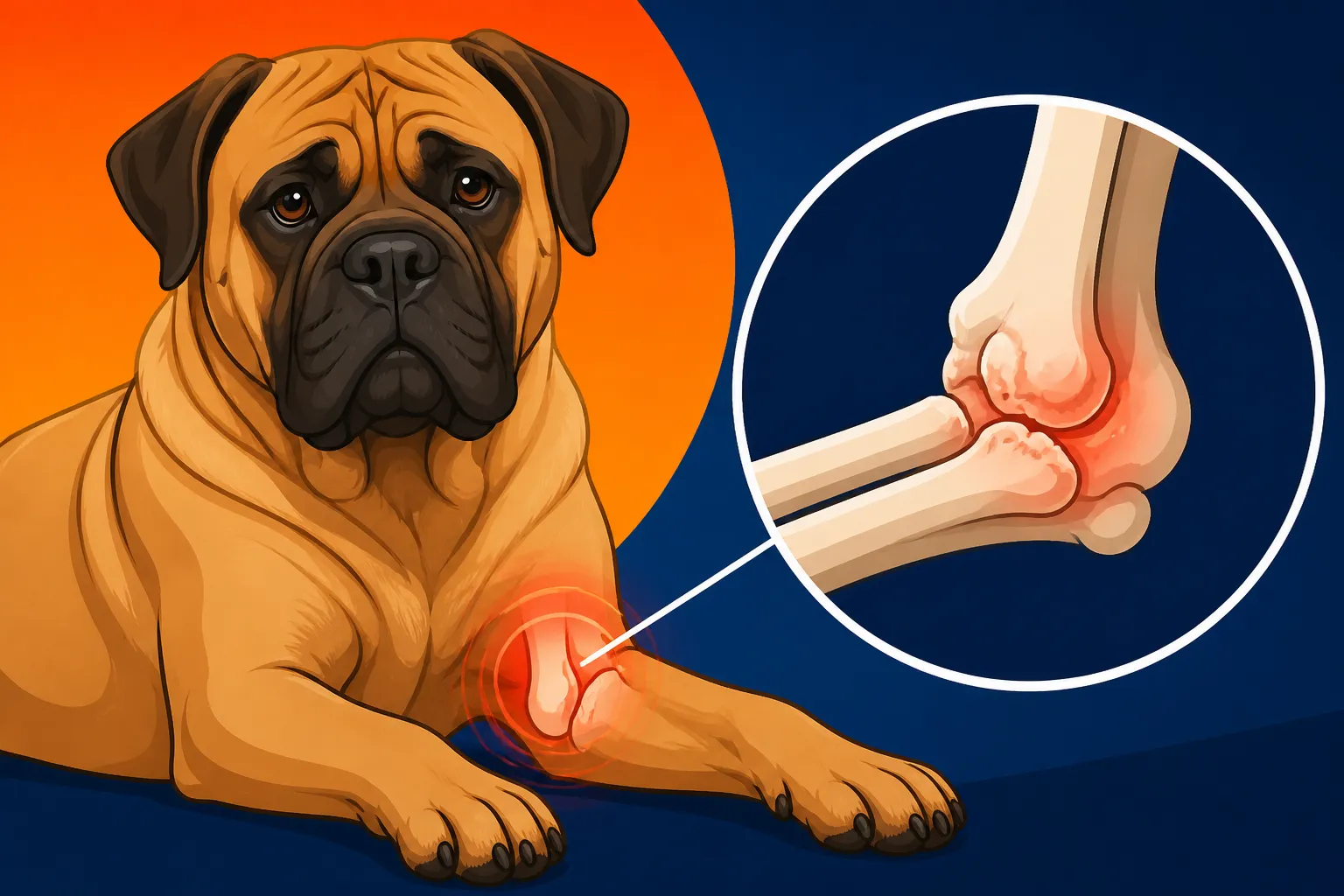
To truly grasp elbow dysplasia, it helps to visualize the elbow joint itself. It's a complex hinge joint where three bones meet: the humerus (the upper arm bone), and the radius and ulna (the two bones of the forearm). For a healthy elbow, these three bones must fit together perfectly, allowing for smooth, frictionless movement. In Bullmastiffs, whose bones grow incredibly quickly, any disruption in this precise alignment or growth rate can lead to significant problems.
When we talk about a Bullmastiff's predisposed vulnerability, it's about more than just their size. Their genetic makeup means that components of their elbow joint might not grow at the same rate, or pieces of cartilage might not properly ossify into bone. This delicate balance is often disrupted during their critical growth phases, from puppyhood through adolescence. The sheer weight these puppies carry, even as youngsters, puts immense stress on these developing joints, making any slight imperfection a breeding ground for future pain and degeneration.
The Different Faces of Elbow Dysplasia
Elbow dysplasia is a syndrome, not a single disease. This means there are several specific conditions that fall under its umbrella, each affecting a different part of the elbow joint. Understanding these distinct issues can help you have more informed conversations with your veterinarian about your Bullmastiff's specific diagnosis and prognosis.
The main conditions commonly grouped under the term elbow dysplasia include:
- Fragmented Coronoid Process (FCP): This is perhaps the most common form of ED in Bullmastiffs. The medial coronoid process is a small, bony protrusion on the ulna. In FCP, a piece of this cartilage or bone breaks off, becoming a loose fragment within the joint. This fragment irritates the joint lining, causes inflammation, and accelerates the development of arthritis. Imagine a tiny pebble constantly grinding inside a delicate mechanism – that’s what FCP can feel like for your dog.
- Ununited Anconeal Process (UAP): The anconeal process is another bony projection on the ulna, important for stabilizing the joint. In UAP, this process fails to fuse properly with the rest of the ulna during development, usually by around five months of age. If it remains ununited, it essentially acts as a loose bone within the joint, causing instability, pain, and eventually, severe degenerative changes. This is less common than FCP but can be very debilitating.
- Osteochondritis Dissecans (OCD): While OCD can affect various joints, it's a component of ED when it occurs in the elbow. It happens when cartilage fails to convert to bone properly, leading to a thickened flap of cartilage that can detach from the underlying bone. This flap, or "joint mouse," then floats freely in the joint space, causing pain, locking, and significant inflammation.
- Elbow Incongruity: This refers to a mismatch in the lengths of the radius and ulna bones, or an abnormal shape of the joint surfaces, which prevents them from articulating smoothly. Even a millimeter of incongruity can lead to uneven weight distribution across the joint surfaces, accelerating cartilage wear and the onset of arthritis. This constant uneven pressure slowly but surely grinds down the joint.
Here's a quick overview of these conditions:
| Type of Elbow Dysplasia | Description | Common Symptoms |
|---|---|---|
| Fragmented Coronoid Process (FCP) | A piece of cartilage/bone breaks off the ulna's coronoid process. | Forelimb lameness (often subtle at first), stiffness, pain on elbow flexion. |
| Ununited Anconeal Process (UAP) | The anconeal process fails to fuse with the ulna bone. | Persistent lameness, joint swelling, pain with hyperextension of the elbow. |
| Osteochondritis Dissecans (OCD) | Abnormal cartilage development and detachment within the joint. | Lameness, swelling, stiffness, pain when putting weight on the affected leg. |
| Elbow Incongruity | Mismatch in bone lengths (radius/ulna) or joint surface shape. | General lameness, stiff gait, reluctance to exercise, grinding sound in the joint. |
Recognizing the Signs of Elbow Dysplasia
Spotting elbow dysplasia in your Bullmastiff can be tricky because the signs can be subtle, especially in the early stages, and our stoic companions often hide pain well. Many owners notice a gradual change, perhaps a slight reluctance to play as vigorously, or a stiffness after rest. The key is to be observant of any changes in their gait, activity level, and overall comfort.
Early Warning Signals in Bullmastiff Puppies
It’s often disheartening to learn that elbow dysplasia can manifest in puppies as young as 4-6 months old, right when they are full of playful energy. If you're observing your Bullmastiff puppy, look for signs like a peculiar, stiff "paddling" gait, where they swing their front legs out rather than moving them smoothly forward. They might also stand with their elbows "out" rather than tucked close to their body.
Another early indicator might be a noticeable limp after exercise, or difficulty getting up after a nap. Your puppy might seem reluctant to jump or even avoid stairs. Sometimes, an affected puppy might even hold one front leg up slightly to alleviate pressure, or "bunny hop" with their back legs to compensate for front limb discomfort. Don't dismiss these as mere clumsiness or growing pains; for a breed prone to these issues, they warrant a veterinary check-up. This early detection is crucial because Why a Bullmastiff Puppy Should Not Run on Concrete and other high-impact activities can exacerbate developing problems.
Common Symptoms in Adult Bullmastiffs
As Bullmastiffs mature, the signs of elbow dysplasia often become more pronounced due to the progressive nature of arthritis. You might notice a chronic, intermittent lameness that worsens after activity or long periods of rest. For example, your dog might struggle to get out of bed in the morning but loosen up after a short walk, only to stiffen up again later. They might show decreased stamina during walks or playtime, no longer greeting you at the door with their usual enthusiastic bounce.
One very common symptom is a "head bob" while walking, where the head goes down when the painful leg is bearing weight and up when the healthy leg is down. You might also observe them favoring a limb by shifting weight, causing the muscles in the affected leg to waste away (atrophy) while the muscles in the healthy leg become overdeveloped. Some Bullmastiffs might lick or chew at their painful elbow, and you may even feel swelling or warmth around the joint. Paying attention to Signs a Bullmastiff's Hips Hurt is also important, as large breeds can experience both hip and elbow issues, sometimes masking one with another.
Diagnosing Elbow Dysplasia in Your Bullmastiff
If you suspect elbow dysplasia, the first and most important step is a thorough veterinary examination. Don't delay; early diagnosis can significantly impact the long-term management and prognosis for your Bullmastiff. Your vet will perform a physical exam, which includes palpating the joints, assessing range of motion, and observing your dog's gait.
The Importance of a Comprehensive Exam
During the initial examination, your veterinarian will carefully manipulate your Bullmastiff's elbows, looking for signs of pain, swelling, crepitus (a grinding or crackling sound), and reduced range of motion. They might ask you to walk your dog in the exam room or outside to observe their natural gait. It’s helpful to describe exactly what you’ve been seeing at home, including when the lameness started, what makes it worse or better, and any changes in activity or behavior.
A skilled veterinarian can often pinpoint the general area of discomfort through physical examination alone. However, because pain can originate from various sources and be referred from one area to another, diagnostic imaging is almost always necessary to confirm a diagnosis of elbow dysplasia and identify the specific type. This is also why understanding What a Bullmastiff's Cardiac Screening Costs and other health checks are vital for a comprehensive picture of your dog's health.
Advanced Imaging Techniques
Standard X-rays are the primary diagnostic tool for elbow dysplasia. Your vet will typically take multiple views of both elbows, as sometimes the condition can be bilateral (affecting both elbows) even if only one appears symptomatic. These X-rays can reveal joint incongruity, loose fragments of bone or cartilage, and early signs of degenerative joint disease. Because Bullmastiffs are such large dogs, these X-rays often require sedation to get clear, diagnostic images without causing your dog undue stress or pain. You can find more details on When a Bullmastiff Should Be X Rayed.
While X-rays are foundational, some forms of elbow dysplasia, particularly subtle FCP lesions, can be difficult to see on radiographs alone. In these cases, your vet might recommend more advanced imaging like a CT scan (Computed Tomography) or an MRI (Magnetic Resonance Imaging). CT scans are particularly good at visualizing bone fragments and joint surfaces in three dimensions, providing much greater detail than traditional X-rays. An MRI provides excellent detail of soft tissues like cartilage. These advanced diagnostics can be expensive, but they offer the most accurate picture, which is critical for planning the most effective treatment. Many owners find that pet insurance, such as a plan from Healthy Paws, can be a lifesaver for covering the costs of these complex diagnostic procedures and subsequent treatments.
Managing and Treating Elbow Dysplasia
Once diagnosed, the approach to managing elbow dysplasia in your Bullmastiff will depend on several factors: the severity of the condition, the specific type of ED, your dog's age, and your family's circumstances. There are generally two main pathways: conservative (non-surgical) management and surgical intervention.
Conservative Management Strategies
For mild cases, older dogs, or when surgery isn't an option, conservative management aims to reduce pain, slow the progression of arthritis, and maintain quality of life. This is often a multi-modal approach combining medication, supplements, controlled exercise, and weight management.
- Medication: Non-steroidal anti-inflammatory drugs (NSAIDs) are a cornerstone of pain management. Brands like Rimadyl, Galliprant, or Metacam can significantly reduce inflammation and pain, helping your Bullmastiff feel more comfortable. Your vet will determine the appropriate dosage and monitor for side effects. For more severe pain flares, sometimes stronger pain medications or corticosteroids might be used short-term.
- Joint Supplements: Glucosamine, chondroitin sulfate, and omega-3 fatty acids are widely used to support joint health. These supplements help maintain cartilage integrity and reduce inflammation. While not a cure, they can be an important part of a long-term management plan. You can explore What Joint Supplements Cost for a Bullmastiff to understand the financial aspect.
- Weight Management: This cannot be stressed enough. Every extra pound your Bullmastiff carries puts immense strain on their already compromised joints. Keeping your dog lean is one of the most impactful things you can do to manage ED and slow arthritis progression. This often means carefully measuring food and resisting the urge to overfeed. A lean Bullmastiff is a more comfortable Bullmastiff. We often discuss Keeping a Bullmastiff Lean Is the Best Thing You Can Do for overall health.
- Controlled Exercise & Physical Therapy: While high-impact activities should be avoided, controlled, low-impact exercise is crucial for maintaining muscle strength and joint flexibility. This could include short, frequent walks on soft surfaces, swimming, or specific exercises prescribed by a certified canine rehabilitation therapist. Physical therapy, including hydrotherapy (underwater treadmill), massage, and therapeutic exercises, can work wonders for muscle building and pain relief.
- Environmental Modifications: Simple changes at home can make a big difference. Providing orthopedic dog beds helps support their joints. Ramps for cars or stairs can reduce jumping impact. Non-slip rugs on slick floors can prevent slips that can exacerbate pain.
Surgical Interventions
Surgery is often recommended for younger dogs with specific types of ED, particularly FCP or UAP, to remove fragments, stabilize the joint, and delay the onset of severe arthritis. The goal is to address the underlying anatomical problem before irreversible degenerative changes occur.
- Arthroscopy: This minimally invasive procedure is increasingly common. A small incision is made, and a tiny camera (arthroscope) is inserted into the joint. The surgeon can then visualize the inside of the joint and use specialized instruments to remove fragmented coronoid processes or OCD flaps. Arthroscopy typically results in less pain, faster recovery, and better outcomes compared to traditional open surgery.
- Osteotomies: For conditions like elbow incongruity, more complex surgeries like osteotomies might be performed. These involve cutting and realigning bones to improve joint congruence. An example is a Proximal Abducting Ulnar Osteotomy (PAUL) procedure, which changes the angle of the ulna to offload pressure on the medial compartment of the joint, where FCP often occurs.
- Total Elbow Replacement (TER): This is a highly specialized and expensive procedure, usually considered only for severe, end-stage elbow arthritis when other treatments have failed, and the dog is in chronic, debilitating pain. It involves replacing the damaged joint with prosthetic components. While the technology is advancing, it's not as common or universally successful as hip replacement in dogs, but it can offer significant pain relief and improved function in carefully selected cases.
It's important to remember that surgery is not a "cure" for elbow dysplasia; arthritis will still develop, but often at a slower rate and with less pain. Post-surgical rehabilitation is critical for a successful outcome, often involving weeks or months of strict rest followed by gradual physical therapy. The financial implications of surgical treatment for a Bullmastiff can be substantial, easily running into several thousands of dollars per elbow. This is where comprehensive pet insurance from a provider like Healthy Paws can provide much-needed financial relief, helping owners afford the best possible care for their dogs.
Prevention and Proactive Care
While elbow dysplasia has a strong genetic component, proactive measures can play a significant role in minimizing its severity and slowing its progression. Responsible breeding, careful nutrition, and appropriate exercise are paramount for Bullmastmastiffs.
Choosing a Responsible Breeder
The single most impactful step you can take to prevent elbow dysplasia is to choose your Bullmastiff puppy from a responsible, reputable breeder. Such breeders prioritize health and will screen their breeding stock for genetic conditions common in the breed. This means they will have certified clearances for hips and elbows on both parent dogs.
Look for breeders who participate in programs like the Orthopedic Foundation for Animals (OFA) or PennHIP. OFA certifies elbows as normal, Grade I, II, or III dysplastic. Only dogs with normal elbows should be bred. A truly responsible breeder will readily provide copies of these certifications for both parents and often for grandparents, too. They should also be transparent about any instances of elbow dysplasia in their lines. Never buy a puppy from a breeder who cannot provide these health clearances or who claims their dogs "have never had problems" without documented proof. Always ask Which Health Tests a Bullmastiff Breeder Should Run. This proactive approach is foundational to setting your Bullmastiff up for a healthier life.
Optimal Nutrition and Controlled Growth
For large breeds like Bullmastiffs, controlled growth is absolutely critical. Rapid growth spurts can put excessive stress on developing joints, exacerbating any underlying genetic predisposition to elbow dysplasia. Therefore, feeding a high-quality, large-breed puppy food specifically formulated for giant breeds is essential. These foods are designed with carefully balanced calcium, phosphorus, and calorie levels to promote slow, steady growth rather than rapid weight gain.
Avoid overfeeding your Bullmastiff puppy or supplementing with extra calcium, as this can disrupt the delicate balance required for proper bone and cartilage development. Maintain a lean body condition throughout puppyhood and adolescence. Your vet can help you assess your puppy's ideal body condition score and adjust food intake accordingly. We covered this more broadly in Feeding a Bullmastiff Puppy So It Grows Slowly.
Appropriate Exercise Regimen
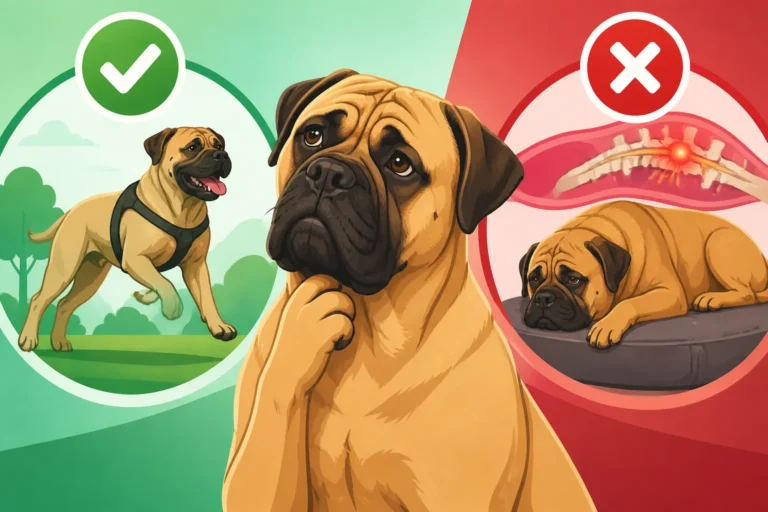
While exercise is vital for a Bullmastiff's overall health and well-being, the type and intensity must be carefully managed, especially during their growth phases. High-impact activities such as vigorous jumping, long-distance running, or repetitive stair climbing should be avoided in puppies and young adults. Their growth plates are still open, and these activities can cause irreversible damage.
Instead, focus on controlled, low-impact exercise like short, frequent walks on soft surfaces (grass, dirt trails) and supervised play. As they mature, continue to avoid activities that place undue stress on their joints. Swimming is an excellent non-weight-bearing exercise that builds muscle without joint impact. Regular, moderate exercise helps maintain muscle mass, which in turn supports and stabilizes the joints. However, remember to avoid pushing them too hard, particularly when they are young and still developing.
Living with a Bullmastiff with Elbow Dysplasia
A diagnosis of elbow dysplasia is a life-long journey, but it doesn't mean your Bullmastiff can't live a full, happy life. It requires ongoing management, patience, and a commitment to adapting their environment and routine to support their comfort and mobility.
Adjusting Your Home Environment
Making your home as joint-friendly as possible can significantly improve your Bullmastiff's daily comfort. As mentioned, orthopedic beds are paramount. These deep, supportive beds cushion their joints and prevent pressure sores, especially important for a heavy dog like a Bullmastiff. Consider using ramps for accessing vehicles or furniture if they enjoy being on the sofa with you.
Non-slip surfaces are crucial. Hardwood, tile, or laminate floors can be incredibly challenging for dogs with joint pain, leading to slips and falls that can cause injury or exacerbate existing discomfort. Lay down area rugs, runners, or carpet mats in high-traffic areas. Ensure their food and water bowls are easily accessible without requiring them to stoop excessively. For an aging Bullmastiff, these considerations become even more vital, as discussed in Caring for an Aging Bullmastiff.
Long-Term Care and Monitoring
Living with elbow dysplasia means a commitment to lifelong care. This includes regular veterinary check-ups, typically every 6-12 months, to monitor their condition, adjust medication as needed, and assess for any progression of arthritis. Be vigilant about their pain levels and alert your vet to any changes.
This long-term care may also involve ongoing use of joint supplements, pain medication, and potentially periodic physical therapy sessions. Some owners opt for complementary therapies like acupuncture or cold laser therapy, which can provide additional pain relief for some dogs. Investing in a robust pet insurance policy, like those offered by Healthy Paws, early in your Bullmastiff's life can be incredibly beneficial for covering these ongoing, long-term care costs. It provides peace of mind that you can afford necessary diagnostics, medications, and treatments without financial stress. Knowing How Long a Bullmastiff Lives on Average also helps set expectations for this long-term commitment.
Maintaining Quality of Life
The goal of all these efforts is to ensure your Bullmastiff maintains an excellent quality of life. This means balancing pain management with allowing them to engage in activities they enjoy, albeit perhaps modified. If they love walks, keep them shorter and more frequent. If they enjoy mental stimulation, incorporate puzzle toys or scent work to keep their minds active.
Don't underestimate the power of love and attention. These majestic dogs thrive on companionship, and simply being with you, even if they can't run marathons, is what truly matters. Celebrate their good days, and on the challenging ones, offer extra comfort and understanding. Providing mobility aids such as supportive harnesses or slings can also help when Why an Aging Bullmastiff Struggles to Rise. While the journey with elbow dysplasia can be challenging, with dedicated care and an adaptive mindset, your Bullmastiff can continue to be a cherished and happy member of your family.
Disclaimer
This article is intended for informational purposes only and does not constitute veterinary advice. Always consult with a qualified veterinarian for any health concerns or before making any decisions about your Bullmastiff's medical care.