What an Ultrasound Costs on a Bullmastiff
One of the most unsettling moments for any Bullmastiff owner is when your big, gentle companion isn't feeling well, and your veterinarian mentions the need for an ultrasound. You immediately worry about your dog's health, of course, but a close second is often the dread of the unknown cost. This guide will help you understand what goes into the price of a Bullmastiff ultrasound, why your vet might recommend one, and how you can prepare for this potentially significant expense.
Why Your Bullmastiff Might Need an Ultrasound
It’s easy to feel overwhelmed when your vet suggests an ultrasound. After all, it sounds like a big deal, and for many of us, it conjures images of complex medical procedures. But in reality, an ultrasound is a non-invasive diagnostic tool that provides incredibly valuable information about your Bullmastiff's internal organs that other tests, like X-rays, simply can't.
Diagnosing Internal Ailments
Think of an ultrasound as giving your vet "eyes" inside your Bullmastiff's body. When your dog presents with vague symptoms such as unexplained vomiting, persistent diarrhea, noticeable weight loss, or abdominal pain, an ultrasound can often pinpoint the problem. Perhaps your Bullmastiff has been more lethargic than usual, or you've noticed a change in their appetite. These are all common reasons a vet might recommend a scan.
For instance, if your Bullmastiff, who usually has an iron stomach, suddenly starts having repeated bouts of vomiting and isn't responding to basic treatments, an ultrasound allows the vet to examine the stomach and intestines for foreign bodies, inflammation, or even tumors that might be hidden. It helps move beyond guesswork and provides a clearer picture, which is crucial for a breed that can sometimes mask discomfort.
Investigating Specific Organ Issues
Beyond general malaise, an ultrasound is a superstar for looking at specific organs in detail. We're talking about the liver, kidneys, pancreas, bladder, spleen, and adrenal glands. If blood work reveals elevated liver enzymes, an ultrasound can show if the liver is enlarged, if there are masses, or if the bile ducts are obstructed. For a Bullmastiff prone to certain health conditions, this detailed view is invaluable.
Consider issues like bladder stones, which can cause discomfort and frequent urination. An X-ray might show the stones, but an ultrasound can reveal inflammation of the bladder wall or sediment that isn't yet calcified. Similarly, if your vet suspects pancreatitis due to severe abdominal pain and vomiting, the ultrasound can show changes in the pancreatic tissue. And, tragically, for a breed with a higher incidence of certain cancers, like Hemangiosarcoma in a Bullmastiff or What Mast Cell Tumors Do to a Bullmastiff, an ultrasound of the spleen or other abdominal organs can be critical for detecting masses early on, which could be life-saving. Even conditions like Bloat in a Bullmastiff, while primarily a surgical emergency, might involve an initial ultrasound to assess the severity if time allows.
During Pregnancy or Reproductive Health Checks
It’s not all about illness, though! Ultrasounds are incredibly useful in reproductive health. If you're breeding your Bullmastiff, an ultrasound can confirm pregnancy, typically around three to four weeks after mating, and can give an estimate of the number of puppies, which helps with planning. It also allows the vet to assess the viability of the fetuses, checking for heartbeats and development.
Beyond pregnancy, if a female Bullmastiff is experiencing reproductive issues, such as uterine infections (pyometra) or ovarian cysts, an ultrasound can help diagnose these conditions. For males, it can be used to examine the prostate for enlargement or other abnormalities, especially in intact older dogs. It gives breeders and owners peace of mind and vital information for managing their Bullmastiff's reproductive journey.
Understanding the Cost Factors of a Bullmastiff Ultrasound
When you're told your Bullmastiff needs an ultrasound, the first question in your mind after "Is he okay?" is probably "How much will this cost?" It’s a completely valid concern, as these procedures can be a significant financial undertaking. The truth is, there isn't one flat fee for a Bullmastiff ultrasound; several factors play into the final bill.
Geographic Location and Veterinary Clinic Type
Just like real estate, veterinary costs are heavily influenced by location. If you live in a bustling urban area with high overhead costs, you can expect to pay more for an ultrasound than someone in a quiet rural town. Veterinary clinics in metropolitan centers often have higher rents, higher staff wages, and more specialized equipment, all of which contribute to their pricing structure.
Furthermore, the type of clinic makes a difference. A routine ultrasound performed at your local general practice vet might be one price, while the same procedure at a 24-hour emergency veterinary hospital or a specialty referral center will likely be considerably higher. Emergency clinics, in particular, have higher operating costs due to staffing around the clock and the immediate availability of advanced equipment. If your Bullmastiff needs an ultrasound urgently outside of regular business hours, expect the cost to reflect that urgency and specialized access.
The Expertise of the Veterinarian
This is perhaps one of the biggest determinants of cost. There’s a difference between a general practice veterinarian who has received basic ultrasound training and a board-certified veterinary radiologist. A general vet can often perform a perfectly adequate screening ultrasound to check for obvious issues or pregnancy. They might be able to identify a large mass or significant fluid accumulation.
However, a board-certified veterinary radiologist has undergone extensive additional training, often including a residency program, specifically in diagnostic imaging. They have a deeper understanding of anatomical nuances, pathology, and advanced scanning techniques. They can detect subtle changes, interpret complex findings, and provide a more comprehensive report, often guiding further diagnostics like biopsies. Their specialized skill and experience naturally come with a higher fee, much like seeing a specialist physician rather than your family doctor. For complex cases, or when a precise diagnosis is critical, the expertise of a radiologist can be invaluable, but it will certainly impact the overall expense.
Sedation, Additional Diagnostics, and Follow-Up
The ultrasound itself is just one piece of the puzzle. Your Bullmastiff's temperament and the specific diagnostic needs can add to the bill. Bullmastiffs are generally quite calm and cooperative, but if your dog is particularly anxious, in pain, or simply unable to lie still for the 20-45 minutes required for a thorough scan, sedation might be necessary. This means an additional charge for the sedative medication and the staff time to monitor your dog during and after.
Often, an ultrasound isn't a standalone test. It might be recommended after initial blood work or X-rays have pointed to an issue. The ultrasound itself might then reveal the need for further diagnostics. For example, if the ultrasound identifies a suspicious mass, the vet might recommend an ultrasound-guided fine needle aspirate (FNA) or biopsy to collect tissue samples for laboratory analysis. These additional procedures, while crucial for a definitive diagnosis, will accrue separate charges. What a Bullmastiff's Cancer Workup Costs can become quite extensive. Don't forget potential follow-up visits or re-check ultrasounds if your Bullmastiff is undergoing treatment, to monitor progress or assess healing.
What to Expect When Your Bullmastiff Needs an Ultrasound
Understanding the logistics of an ultrasound can help ease some of the anxiety around the procedure. It's not as scary as it might sound, and knowing what's involved for your Bullmastiff can help you prepare.
The Procedure Itself
When your Bullmastiff goes in for an ultrasound, there are a few standard steps. First, your vet will usually ask that your Bullmastiff fast for about 8-12 hours before the appointment. This helps ensure that the stomach and intestines are as empty as possible, allowing for a clearer view of the surrounding organs. They might also ask you to withhold water for a couple of hours or to make sure your Bullmastiff has a full bladder, depending on what organs they need to see clearly.
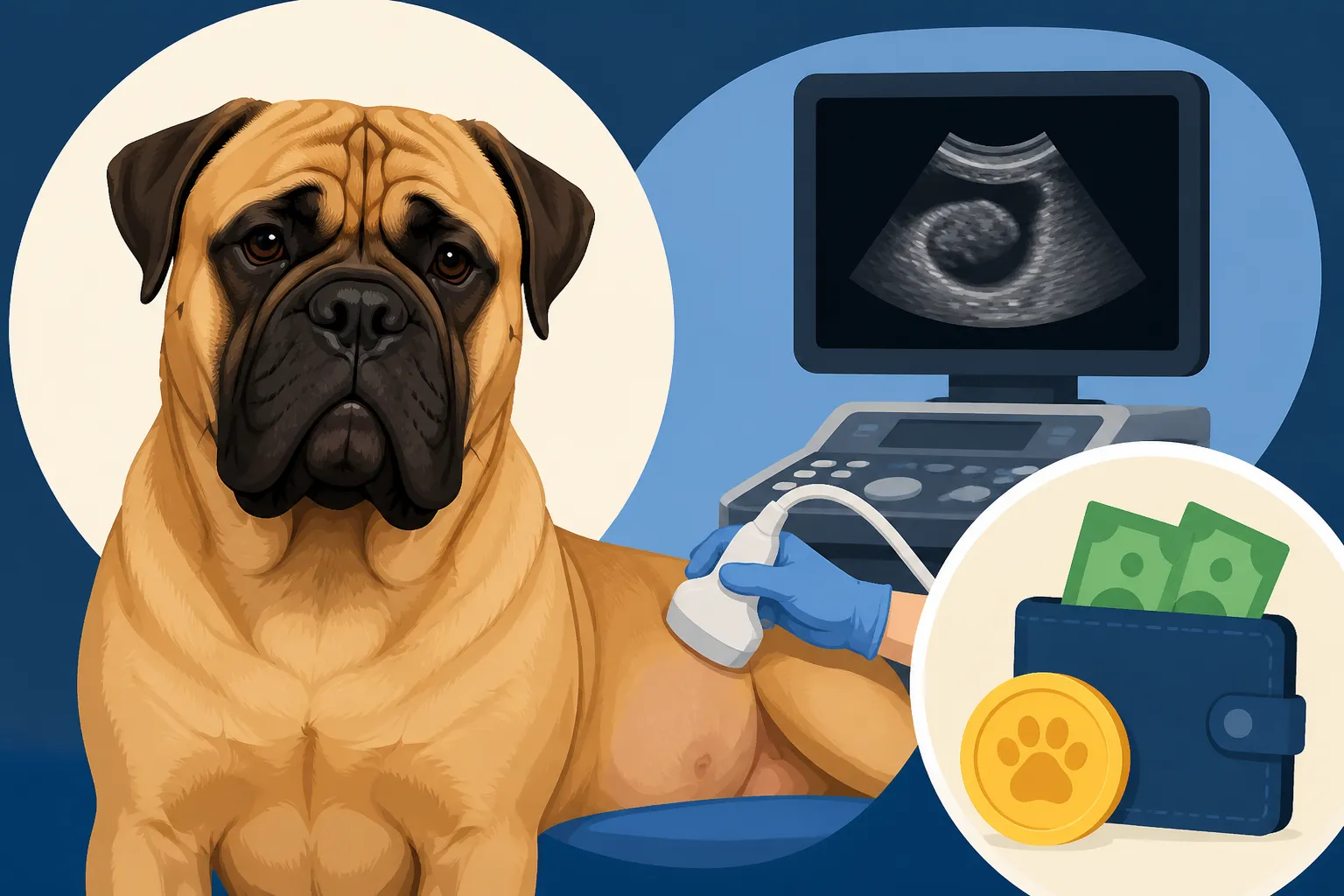
Once at the clinic, your Bullmastiff will typically be gently positioned on their back in a cushioned trough, or sometimes on their side, to expose their abdomen. The area will often be shaved to ensure good contact between the ultrasound probe and the skin, as fur traps air and interferes with the sound waves. A special ultrasound gel, similar to what's used for human ultrasounds, will be applied to the skin. The vet or technician then uses a handheld transducer, which emits sound waves, to scan the internal organs. These sound waves bounce off the organs and return to the transducer, creating real-time images on a monitor.
It’s completely non-invasive and usually painless. Most Bullmastiffs, with their naturally calm disposition, tolerate the procedure quite well, often just lying there patiently. However, their sheer size can mean that it takes two or three people to comfortably position and reassure them. You might be allowed to be present, depending on the clinic's policy and if your presence helps keep your Bullmastiff calm.
Potential Additional Costs
While the ultrasound itself has a price tag, it's rare for it to be the only expense. There are usually several other costs that can accumulate during the diagnostic process. These can include the initial consultation fee where the vet first recommended the ultrasound, any necessary pre-sedation blood work to ensure your Bullmastiff is healthy enough for mild sedation, or even post-procedure medications if something is discovered that requires immediate treatment.
It’s crucial to get a full estimate from your vet that includes these potential add-ons. You don't want to be surprised by a bill that's significantly higher than you anticipated. Here's a table to give you a clearer picture of some common additional costs:
| Additional Service | Description | Impact on Bill (Relative to Ultrasound) |
|---|---|---|
| Initial Consultation | The vet visit where the ultrasound was recommended. | Moderate |
| Pre-Sedation Bloodwork | Blood tests to ensure organ function before administering sedatives. | Moderate |
| Sedation/Anesthesia Monitoring | Cost of sedatives and staff monitoring during the procedure. | Moderate to High |
| Radiology Report | Fee for a specialist radiologist to interpret images and write a report. | Moderate |
| Ultrasound-Guided Biopsy/FNA | Collection of tissue/fluid samples if a mass or abnormality is found. | High |
| Pathology/Lab Fees | Analysis of collected samples (biopsy, fluid, etc.). | High |
| Medications/Supplements | Prescriptions for pain, anti-inflammatories, or other treatments. | Variable |
| Follow-up Appointments | Recheck exams or consultations to discuss results and treatment plans. | Moderate |
How Pet Insurance Can Help
Let's be real: unexpected vet bills can really hit hard, especially for a large breed like a Bullmastiff where medication dosages and surgical costs are often higher. This is where pet insurance can be an absolute lifesaver. Companies like Healthy Paws offer comprehensive plans that can cover a significant portion of unexpected diagnostic costs, including ultrasounds, if they are not related to pre-existing conditions.
The key is to enroll your Bullmastiff in an insurance plan when they are young and healthy. If you wait until your Bullmastiff develops a condition that requires an ultrasound, it might be considered pre-existing and therefore not covered. Think of it as investing in a safety net for those inevitable "what if" moments. Having a good policy can mean the difference between making a treatment decision based on what's best for your dog and making it based on what you can afford. Make sure to understand your deductible, reimbursement percentage, and any annual limits your policy might have. Checking out resources like Whether Insurance Covers a Bullmastiff's Chemotherapy can give you a good idea of how critical a role insurance plays in managing major health crises.
Managing Ultrasound Costs and Planning Ahead
No one wants to be caught off guard by a hefty vet bill, especially when your Bullmastiff needs medical attention. While you can't predict every health issue, there are proactive steps you can take to manage potential ultrasound costs and ensure you’re prepared for your beloved companion’s care.
Seeking Estimates and Second Opinions
When your vet first suggests an ultrasound, don't hesitate to ask for a detailed estimate of all potential costs, including the procedure itself, any necessary sedation, and the interpretation fee. Many clinics are transparent about their pricing, and it’s perfectly acceptable to ask questions. If the estimated cost seems exceptionally high, or if you're feeling unsure, you have every right to seek a second opinion.
This might involve calling another reputable veterinary clinic in your area or even asking for a referral to a specialty imaging center for a comparison. Sometimes, a specialist might have more advanced equipment that could provide a clearer diagnosis faster, potentially saving you money on repeat tests down the line. It's about finding the balance between quality care and what you can realistically afford, and a good vet will understand your need to explore options.
Budgeting for Unexpected Vet Bills
The best defense against high, unexpected vet bills is preparation. Start by creating a dedicated emergency fund specifically for your Bullmastiff's health needs. Even putting aside a small amount each month can add up over time and provide a crucial buffer when a diagnostic test like an ultrasound is needed. Remember, for a breed like the Bullmastiff, Why a Bullmastiff's Vet Bills Arrive at Six and can often be substantial due to their size and predisposition to certain conditions.
Beyond a savings account, explore payment plan options that some veterinary clinics or third-party providers offer. These can help break down a large bill into more manageable monthly payments. For routine medications or even specialized diets that might be needed after a diagnosis, looking at reputable online pet pharmacies like Chewy can sometimes offer cost savings compared to purchasing directly from your vet. Even choosing high-quality food options like those offered by Ollie can be part of preventative care, as proper nutrition can contribute to overall health and potentially reduce the frequency of vet visits for diet-related issues.
Prioritizing Preventative Care
While an ultrasound is a diagnostic tool, maintaining excellent preventative care for your Bullmastiff can sometimes help catch issues before they escalate to emergencies requiring expensive interventions. Regular wellness exams are paramount. How Often a Bullmastiff Needs a Wellness Exam should be a consistent part of your routine. During these visits, your vet can perform a thorough physical examination, listen to your Bullmastiff's heart for any murmurs that might indicate issues like Signs a Bullmastiff Has a Heart Murmur, and feel for any unusual lumps or bumps.
Early detection of health problems, whether it's noticing subtle changes in behavior or catching something on routine blood work, can often lead to less invasive and less costly treatments. For instance, if your vet identifies potential signs of The Age Lymphoma Appears in a Bullmastiff during a routine check, early intervention might lead to better outcomes and allow you more time to plan for the associated costs. Keeping your Bullmastiff at a healthy weight and ensuring they receive appropriate nutrition and exercise are all components of preventative care that can contribute to a longer, healthier life and potentially reduce the need for emergency diagnostics. And don't forget the importance of things like What a Bullmastiff's Monthly Food Bill Runs as part of your overall budget, ensuring you're feeding them the best quality you can afford. When you invest in preventative care, you're not just saving money; you're investing in your Bullmastiff's quality of life, which is truly priceless. What Changes in an Aging Bullmastiff's Care will also highlight the increasing need for careful monitoring as they get older.
Disclaimer
This article is for general informational purposes only and does not constitute professional advice. Laws, prices and regulations vary by location and change over time. Consult a qualified professional for guidance on your specific situation.