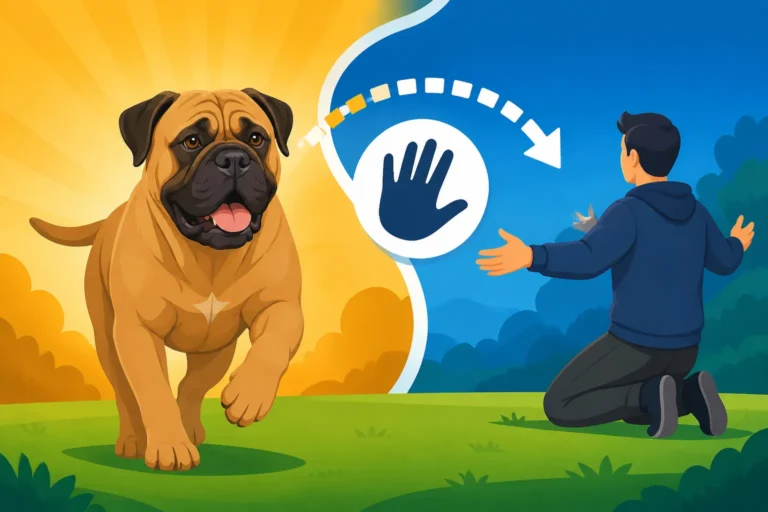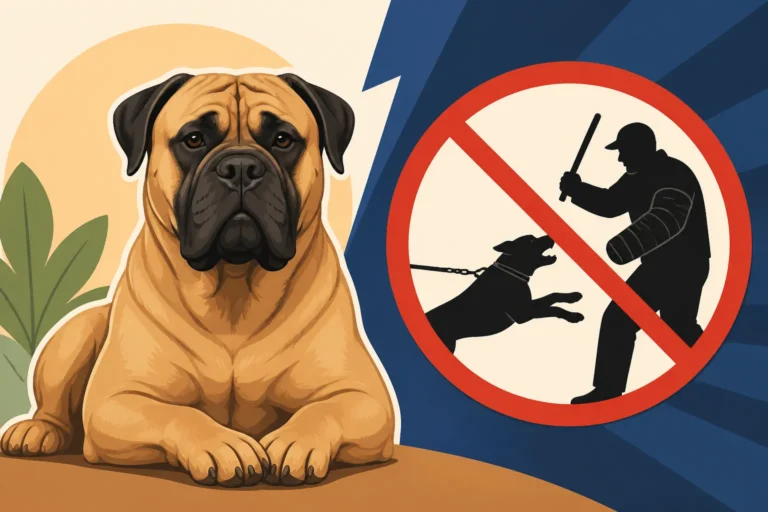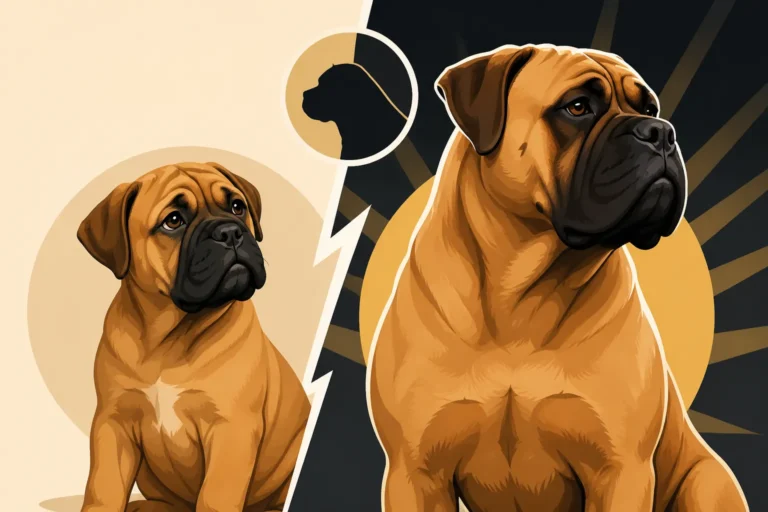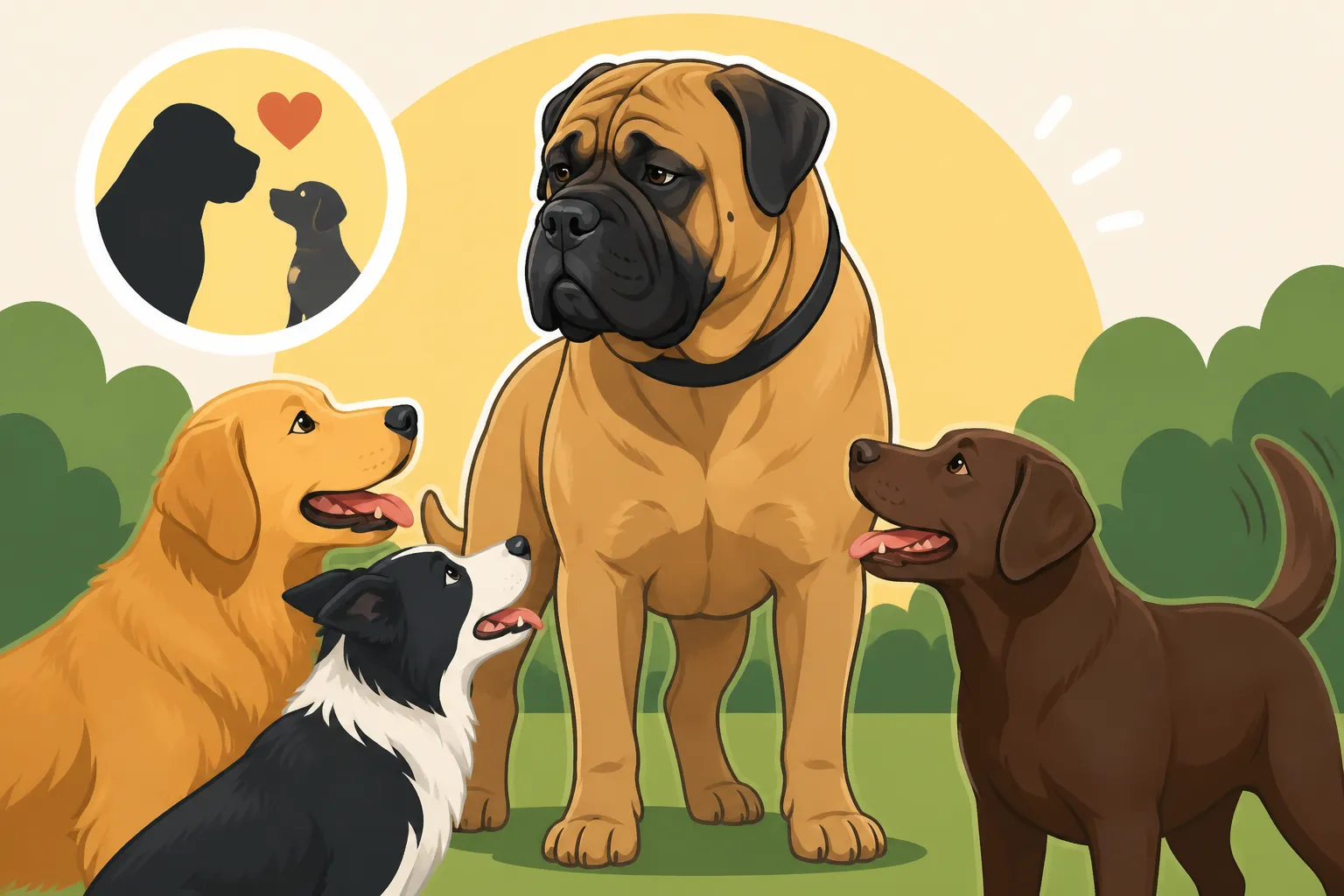
How a Bullmastiff Treats Other Dogs
Bringing a Bullmastiff into a multi-dog household, or even just navigating their interactions with other dogs during walks or park visits, can be a source of anxiety for many owners. Their imposing size often makes people assume they're aggressive or dominant, leading to unfair judgments and difficult encounters. This guide will delve deep into the nuances of how Bullmastiffs typically treat other dogs, offering realistic insights and practical strategies to foster harmonious relationships and confident outings.
Understanding the Bullmastiff's Innate Temperament Towards Other Dogs
The Bullmastiff, often called the "Gamekeeper's Night Dog," was bred for a very specific job: to track and hold poachers without mauling them. This historical role has instilled a unique blend of courage, loyalty, and a discerning nature that heavily influences their interactions with other canines. They aren't inherently aggressive towards all dogs, but their protective instincts and physical presence demand careful management and understanding.
The Guarding Instinct vs. Socialization
It's easy to look at a Bullmastiff and assume they're ready to charge into any situation, but their guarding instinct is more nuanced than brute force. They were bred to be silent guardians, evaluating threats before acting. This means they often size up new dogs and situations with a deliberate, watchful intensity. This isn't always aggression; it's often an assessment. However, if they perceive another dog as a threat to their family or territory, those protective instincts can certainly kick in.
Proper, early, and ongoing socialization is absolutely critical for a Bullmastiff to learn appropriate dog-to-dog etiquette. Without it, their natural caution can quickly morph into fear-based reactivity or a territorial mindset. Think of it like this: if a human isn't taught how to interact politely with strangers, they might become withdrawn or confrontational. The same applies to a Bullmastiff. Socialization isn't just about exposing them to other dogs; it's about making those exposures positive, controlled, and confidence-building. A well-socialized Bullmastiff is more likely to be tolerant, even if they aren't always the life of the dog park party. They need to understand that not every new dog is a poacher to be held. You can learn more about their historical role in What a Bullmastiff Was Bred to Do to a Poacher.
Early Influences on Dog-to-Dog Dynamics
A Bullmastiff's temperament with other dogs begins long before they come home with you. The genetic predispositions from their parents play a significant role. A good breeder will prioritize sound temperaments, ensuring both dam and sire are stable and confident. Beyond genetics, the early environment a puppy experiences in its first eight weeks is foundational. Puppies who have positive interactions with their littermates and other adult dogs (under careful supervision) in the breeder's home learn crucial social cues. They learn bite inhibition, how to play appropriately, and how to read canine body language.
Once you bring your Bullmastiff puppy home, this early influence continues with your proactive efforts. Enrolling in puppy classes, even if it feels daunting with such a large breed, is invaluable. These classes provide structured, safe opportunities for your puppy to interact with a variety of other puppies and learn to cope in a novel environment. Continued exposure to well-behaved, stable adult dogs is equally important. These mentors can teach your puppy boundaries and appropriate play, far better than any human can. Without these experiences, a young Bullmastiff might grow up without a full understanding of polite canine social rules, leading to awkward or even confrontational interactions later on simply because they don't know any better. Remember, The First Year With a Bullmastiff Puppy is crucial for all aspects of their development.
Common Challenges in Multi-Dog Households with Bullmastiffs
While Bullmastiffs can absolutely thrive in homes with other dogs, there are specific challenges that owners need to be aware of and proactively manage. Their historical purpose and powerful build mean that even typical canine behaviors can be amplified.
Same-Sex Aggression: A Real Concern
One of the most frequently discussed and genuinely concerning traits in Bullmastiffs, as with many guardian breeds, is the potential for same-sex aggression, particularly between two males. This isn't a guaranteed outcome, and many male Bullmastiffs live peaceably with other male dogs, but the risk is statistically higher compared to some other breeds. It's an aspect of their breed temperament that demands respect and careful consideration. This aggression isn't usually born of malice but often stems from a deep-seated instinct to establish and maintain a social hierarchy, especially as they mature. It can manifest as intense staring, growling, posturing, or even physical altercations.
For owners, this can be incredibly frustrating and heartbreaking, especially if they have two dogs who previously got along. It often appears as the Bullmastiff enters adolescence or early adulthood, a period when their confidence and protective instincts really bloom. What started as playful scuffles can escalate. This is why many experienced Bullmastiff owners, if they choose to have multiple dogs, often opt for a male and a female pair, or two females. While female Bullmastiffs can also exhibit same-sex aggression, especially if unspayed or in certain combinations, the issues between two males are often more intense and harder to resolve. Understanding that this is a recognized breed characteristic, rather than a failure on your part, is key. For more on this, you might find Same Sex Aggression in Bullmastiffs and How Two Male Bullmastiffs Get Along insightful reads.
Resource Guarding and Dominance Hierarchies
Bullmastiffs are big, strong, and can be quite possessive of things they value. This possessiveness, known as resource guarding, can become a significant issue in a multi-dog household. Resources can include anything from food bowls and high-value treats to favorite toys, prime sleeping spots, or even human attention. A Bullmastiff might guard their dinner bowl fiercely from another dog, or push another dog away from you when you're giving pats. While many dogs exhibit some level of resource guarding, the sheer size and strength of a Bullmastiff means that conflicts over resources can become serious very quickly, with potential for injury to the other dog.
Establishing clear boundaries and management strategies from the beginning is vital. This might involve feeding dogs in separate rooms, providing high-value chews only when dogs are crated or separated, and ensuring there are enough toys and resting spots for everyone to prevent competition. Consistent training that teaches "leave it" and "drop it" commands is also essential. Beyond tangible items, the social hierarchy within a multi-dog home is important. While we often prefer to think of our dogs as equals, a natural order often emerges. A Bullmastiff, given their guarding background, may naturally assert a dominant role. This isn't necessarily a bad thing, but it does require careful monitoring to ensure that the "dominant" dog isn't bullying the others and that all dogs feel safe and secure. Understanding and managing these dynamics is key to preventing conflict and maintaining a peaceful home.
Strategies for Positive Introductions and Coexistence
Successfully integrating a Bullmastiff into a home with existing dogs, or introducing a second dog to your Bullmastiff, requires thoughtful planning and a commitment to controlled, positive experiences. Rushing the process can set everyone up for failure.
Controlled Meetings and Neutral Territories
The first impression can make a lasting impact, especially with a discerning Bullmastiff. When introducing your Bullmastiff to a new dog, whether it's a potential housemate or a playmate, always start in a neutral territory. This could be a local park, a quiet field, or even a friend's large, fenced yard that no dog considers "theirs." The absence of territorial claims helps to reduce immediate tension and defensive behaviors. Both dogs should be on leashes, handled by calm, confident people. Avoid tight leashes, which can transmit tension down to the dog.
Begin with parallel walking, where the dogs walk several feet apart, moving in the same direction. This allows them to become aware of each other's presence without the pressure of a direct, face-to-face confrontation. They can pick up scents, observe body language, and gradually acclimatize. As they seem relaxed, you can slowly decrease the distance. Watch for positive signs like loose body language, sniffing the ground, and a wagging tail (not a stiff, high tail). Avoid forcing interaction. If they show signs of stress (stiff bodies, whale eye, growling, lunging), increase the distance immediately. Once they appear comfortable, a very brief, supervised off-leash interaction in a secure area can be attempted, but only if both dogs demonstrate calm, friendly signals. Always have a plan for separation if things go awry, and keep initial interactions short and positive.
Ongoing Socialization and Supervision
Positive introductions are just the first step. For a Bullmastiff to truly coexist harmoniously with other dogs, ongoing socialization and constant, diligent supervision are non-negotiable, particularly in the home environment. Even after a successful introduction, dynamics can change. Bullmastiffs are known for their strong opinions, and they mature slowly, often not fully "grown up" until three years old. This means their temperament and reactions can evolve over time.
Daily supervision within the home means actively watching for subtle cues of tension. Are ears pinned back? Is a tail tucked? Is one dog consistently blocking another? Learning to read your Bullmastiff's body language, and that of their canine companions, is vital. Don't leave dogs unattended, especially during meal times, when high-value treats are out, or if there's any history of resource guarding. Crate training can be an incredibly useful tool, providing each dog with a safe, private space to retreat to, and allowing you to separate them when you can't actively supervise. Continual exposure to calm, friendly dogs outside the home, through structured walks or playdates (if appropriate for your Bullmastiff), reinforces good habits. Remember, When a Bullmastiff Finally Settles Down can take some time, so patience is key. Providing mental enrichment and adequate exercise for all dogs involved can also reduce overall stress and potential friction. You might even find sturdy leashes and long lines for these controlled outdoor encounters on Amazon.
Training and Management for Harmonious Interactions
Effective training and diligent management are the twin pillars of ensuring a Bullmastiff interacts positively and safely with other dogs. Their impressive size and strength mean that even a minor disagreement can have significant consequences, so prevention through proactive training is always the best approach.
Foundation Obedience and Impulse Control
A well-trained Bullmastiff is a confident Bullmastiff, and a confident Bullmastiff is less likely to feel the need to resort to reactive or defensive behaviors around other dogs. Foundation obedience commands like "sit," "stay," "come," and "leave it" are not just party tricks; they are crucial safety tools. A strong "leave it" command, for instance, can prevent your Bullmastiff from investigating another dog too intensely or from engaging in a potential resource guarding situation. "Stay" allows you to create distance or diffuse tension before it escalates.
Beyond basic commands, focusing on impulse control is paramount. Bullmastiffs can be deliberate, but they can also be quick to react when their guarding instincts are triggered or if they feel challenged. Training exercises that teach patience, like waiting for food, waiting at doors, or practicing long stays, help build self-control. This isn't about crushing their spirit; it's about teaching them to think before they act. Tools like "Puppy Culture" protocols, or online training resources such as those offered by BAXTER & Bella, can provide structured programs to instill these vital skills from a young age. Early and consistent positive reinforcement training builds a strong bond and ensures your Bullmastiff looks to you for guidance in potentially stressful situations involving other dogs. Remember, Training a Bullmastiff That Weighs More Than You Do requires a smart approach, not just brute force.
Addressing Reactivity and Fear-Based Behaviors
Sometimes, despite our best efforts, Bullmastiffs can develop reactivity towards other dogs. This might manifest as barking, lunging, or growling on leash, often stemming from underlying fear, frustration, or territorial instincts. It's easy to feel embarrassed or frustrated when your giant dog acts out, but it's important to approach this with empathy and understanding. Reactivity is a communication that the dog is uncomfortable, and punishment often makes it worse.
The key to addressing reactivity is counter-conditioning and desensitization. This involves gradually exposing your Bullmastiff to other dogs at a distance where they remain calm and then pairing that exposure with something highly positive, like high-value treats. The goal is to change their emotional response from "scary dog!" to "other dog means yummy treats!" This process takes time, patience, and consistency. Professional guidance from a certified positive reinforcement trainer or veterinary behaviorist can be invaluable. They can help you identify triggers, teach you proper leash handling techniques, and design a customized training plan. Avoid dog parks or uncontrolled off-leash interactions if your Bullmastiff is reactive, as this can reinforce negative behaviors and be dangerous. Instead, focus on controlled, positive experiences that build confidence and gradually reduce their reactive thresholds. How a Bullmastiff Responds to Correction emphasizes the importance of positive reinforcement, which is critical here.
Considering a Second Dog or Integrating a Bullmastiff into an Existing Pack
Adding a new dog to your home, especially with a Bullmastiff already in residence, is a big decision that requires careful consideration of personalities, management strategies, and the overall dynamics of your household.
Choosing the Right Companion
If you're considering adding a second dog to a home with a Bullmastiff, or if your Bullmastiff is joining an existing pack, the choice of companion is paramount. Not all dogs are a good match for a Bullmastiff, and vice versa. As we've discussed, same-sex aggression can be a concern, so many experienced Bullmastiff owners lean towards opposite-sex pairings. A calm, confident, and well-socialized dog of a different breed, or a Bullmastiff of the opposite sex, is often the safest bet. Temperament is more important than size, though a dog significantly smaller might be at higher risk if a scuffle ever breaks out.
Avoid bringing home another dog with known behavioral issues, especially aggression or extreme shyness, as this can exacerbate existing tensions or create new ones. Consider the energy levels: a high-energy dog might constantly pester a more laid-back Bullmastiff, leading to frustration. An ideal companion often has a complementary personality – perhaps a slightly more playful dog who respects boundaries, or another calm, easygoing soul. It's wise to arrange several "meet-and-greets" in neutral locations before committing, observing how the dogs interact without pressure. If you're bringing home a puppy, ensure your adult Bullmastiff has experience and patience with puppies, as some adults find their boundless energy annoying. A responsible rescue organization or breeder will often help facilitate these meetings to ensure a good match.
Gradual Integration and Patience
Once you've chosen a suitable companion, the integration process must be gradual and filled with patience. It's not a sprint; it's a marathon. After successful neutral introductions, bring the new dog home but keep initial interactions highly controlled. This often means using crates, baby gates, or separate rooms. Let the dogs sniff each other's bedding and toys before they meet face-to-face in the home.
Supervised, short interactions are key, gradually increasing in duration as the dogs show comfort. Feed them separately, provide individual toys, and ensure each dog has their own safe space. Don't force them to share or interact if they're not ready. Watch for signs of stress or guarding from either dog and intervene immediately by creating distance. It can take weeks, or even months, for dogs to fully accept and bond with a new housemate. There will likely be squabbles or moments of tension as they figure out their new social structure; this is normal. The goal is to manage these interactions so they don't escalate into serious fights. Some households find it helpful to walk the dogs together regularly, as this shared activity can build camaraderie. Remember that Bullmastiffs can be quite sensitive, and a rushed integration can create lasting anxiety or resentment. Patience, consistency, and clear boundaries are your best tools during this transitional period.
Here's a quick reference on identifying signs of comfortable versus tense interactions:
| Behavior | Sign of Comfort/Positive Interaction | Sign of Tension/Negative Interaction |
|---|---|---|
| Body Language | Loose, wiggly body; soft eyes; relaxed ears; wagging tail (loose) | Stiff body; hard stare; ears back/pinned; tucked tail; raised hackles |
| Vocalizations | Happy yips, play bows, soft growls during play (non-threatening) | Hard, low growls; prolonged barking; snarling; whimpering |
| Interaction Style | Mutual sniffing; play bows; taking turns chasing; gentle mouthing | Mounting; direct staring; blocking; pushing; snapping; sustained chasing |
| Resource Sharing | Ignores food/toys when other dog is near; takes turns | Guards food/toys; hovering; possessive lunges; active defense |
| Approach/Distance | Approaches with curving body; allows other dog to approach | Avoids approach; tries to increase distance; lunges to create space |
| Overall Demeanor | Relaxed, happy, seeks interaction | Anxious, fearful, tense, hyper-vigilant |
Understanding these cues can help you intervene effectively and maintain peace between your Bullmastiff and other dogs.
Disclaimer
This article is for general informational purposes only and does not constitute professional advice. Laws, prices and regulations vary by location and change over time. Consult a qualified professional for guidance on your specific situation.