Whether a Bullmastiff Guards Its Food
It’s a common worry for any dog owner, especially when you bring a big, powerful breed like a Bullmastiff into your home: will they guard their food, their toys, or even their favorite spot on the couch? This concern is completely valid, as resource guarding can range from a minor annoyance to a serious safety issue, particularly with a dog as formidable as a Bullmastiff. This comprehensive guide will delve into what resource guarding looks like in Bullmastiffs, why it happens, and how to prevent and manage it effectively, ensuring a harmonious household for everyone.
Understanding Resource Guarding in Bullmastiffs
Resource guarding, sometimes called possessiveness, is when a dog displays behaviors meant to discourage others from approaching or taking a valued item. This isn't just about food; it can be anything the dog perceives as a high-value "resource," including toys, bones, sleeping spots, or even their human. For Bullmastiffs, understanding this behavior is particularly crucial due to their size and inherent protective instincts. While they were historically bred to A Bullmastiff Was Bred to Hold a Man, Not Bite Him rather than aggressively attack, their sheer presence and strength mean that any display of guarding needs to be taken seriously.
The Instinctual Roots of Guarding
At its core, resource guarding is an instinctual behavior, a remnant from their wild ancestors. In a pack environment, survival often depended on securing vital resources like food. A dog that successfully guarded its meal was more likely to thrive. While our domestic dogs aren't facing the same daily struggle for survival, these deep-seated instincts can still surface. For a Bullmastiff, whose lineage includes guarding estates, there's an added layer of innate protectiveness. They are hardwired to protect what they consider "theirs," and sometimes, that can extend to their kibble or a prized chew. It's not necessarily a sign of a "bad" dog, but rather a behavior that needs careful guidance and understanding.
Breed-Specific Considerations
Bullmastiffs are known for their calm, confident, and protective nature. They form deep bonds with their families and are often reserved with strangers. This protective instinct, which makes them excellent guardians of your home, can sometimes spill over into resource guarding if not properly channeled and managed. Their formidable size, typically ranging from 100 to 130 pounds, means that a growl or a snarl carries significant weight. You might be asking yourself, "Does this gentle giant really guard?" The answer is, potentially, yes. Their guarding instinct is a double-edged sword: it offers security but requires responsible management to prevent it from becoming problematic in everyday interactions, especially around children or other pets.
Identifying the Signs of Food Guarding
Recognizing the subtle cues of resource guarding early is critical, particularly with a large breed like a Bullmastiff. What might seem like a small sign in a tiny dog can escalate quickly with a Bullmastiff's power. It’s a spectrum, from mild warnings to more overt displays.
Subtle and Early Warning Signals
Many dogs don't go straight to a full-blown attack. They start with subtle signals that, if ignored, can escalate. For a Bullmastiff, these might include:
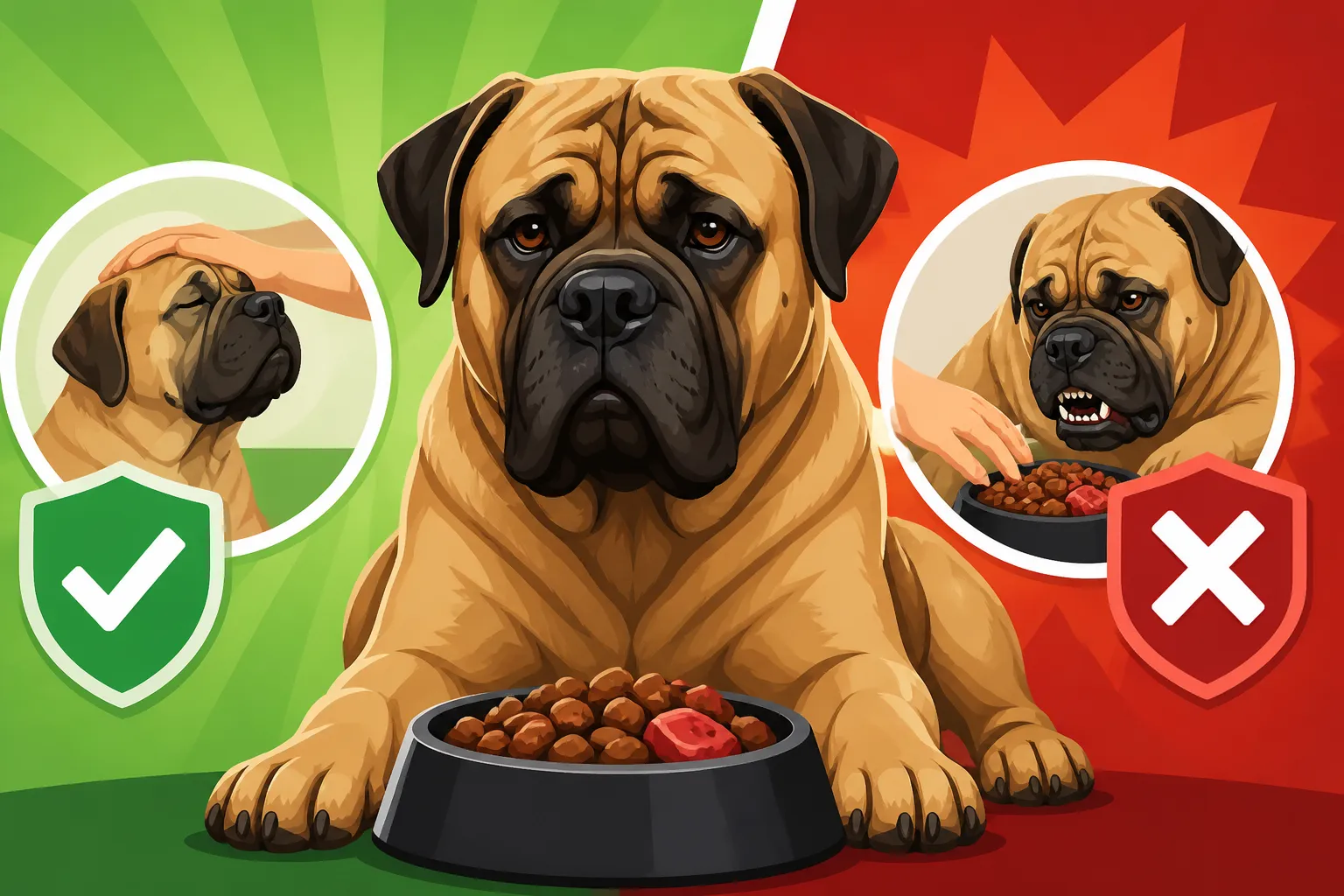
- Stiffening: Your Bullmastiff might suddenly become very still and tense as you approach their food bowl. Their body language will tell you they are uncomfortable.
- Hard Stare: A direct, unblinking stare, often accompanied by a lowered head over the food, is a common warning.
- Eating Faster: If your Bullmastiff suddenly scarfs down their food at an accelerated pace as you come near, it's a sign they feel threatened that you might take it away.
- Low Growl or Snarl: This is usually the first audible warning. It might be very soft, almost a rumbling, but it’s a clear indication that they are feeling possessive.
- Body Blocking: They might physically position their body between you and the food, effectively shielding it. This is a common defensive posture.
- Lip Licking or Yawning: These can be appeasement signals or signs of stress, indicating they are uncomfortable with your proximity.
If you observe any of these, especially consistently, it's a signal to adjust your approach and begin management. Ignoring these mild signs can teach your Bullmastiff that they need to escalate their warnings to be understood.
Overt and Escalated Behaviors
When the subtle warnings are ignored or misunderstood, a Bullmastiff might escalate their guarding behavior. These more overt signs are serious and require immediate, careful intervention, ideally with the help of a professional trainer or behaviorist.
- Loud Growling and Snapping: A clear, aggressive growl, often accompanied by baring teeth, is an unmistakable warning. Snapping, even in the air, indicates they are ready to bite if pushed further.
- Lunging: A lunge towards you, even if they don't make contact, is a significant escalation. It's a clear "back off" signal.
- Biting: This is the most serious and dangerous display of resource guarding. A Bullmastiff's bite force is substantial, and even a "warning bite" can cause severe injury. If a Bullmastiff bites over food or another resource, professional help is absolutely essential for the safety of everyone in the household.
It's vital to remember that these behaviors are often fear-based. The dog fears losing something valuable. Their size makes these fear-driven responses incredibly dangerous, so recognizing and addressing them early on is paramount.
Here's a quick comparison of common resource guarding behaviors:
| Behavior Type | Description | Severity | Intervention Needed |
|---|---|---|---|
| Mild | Stiffening, hard stare, eating faster, body blocking, soft growl | Low | Early prevention/management, positive reinforcement |
| Moderate | Louder growling, snarl, snapping (air), pushing away | Medium | Structured training, behavior modification, professional guidance |
| Severe | Lunging, biting, sustained aggression | High | Immediate professional intervention, strict management, safety protocols |
Preventing Resource Guarding from the Start
The best way to handle resource guarding in Bullmastiffs is to prevent it from ever becoming an issue. Early and consistent training, especially during puppyhood, is incredibly important. If you’re bringing home a The First Year With a Bullmastiff Puppy, start these practices from day one.
Puppyhood Foundations
From the moment your Bullmastiff puppy comes home, you can lay the groundwork for a dog that feels secure with its resources.
- Hand-Feeding: Regularly hand-feed your puppy for the first few weeks. This builds a strong positive association with your hands near their food. They learn that your presence means good things (food!), not that you're there to take it away.
- Trade-Up Game: While your puppy is eating, approach and offer a higher-value treat in exchange for temporarily taking their bowl. Give them the treat, and then immediately return their bowl. This teaches them that giving up a resource results in an even better reward, not a loss. Practice this with toys and chews too. You want them to think, "Oh, human is coming, something better is about to happen!"
- Positive Association Around Food: Rather than just letting your puppy eat undisturbed, occasionally walk past their bowl and drop an extra piece of kibble or a tiny treat into it. This reinforces that your approach is a positive event.
- Proper Socialization: Exposing your Bullmastiff puppy to a variety of positive experiences, people, and other well-behaved dogs can help build their confidence and reduce anxiety that might contribute to guarding later on.
It’s about creating a strong foundation of trust and understanding. Remember, consistency is key. Every interaction around food should be positive and predictable.
Management Strategies for All Ages
Even if your Bullmastiff is no longer a puppy, or if you're bringing an adult rescue into your home, proactive management can prevent guarding behaviors from developing or escalating.
- Separate Feeding Areas: If you have multiple pets, feed them in separate rooms or crates. This eliminates competition and the potential for one dog to guard against another. It's less stressful for everyone involved.
- High-Value Items in Seclusion: Give bones, bully sticks, or other high-value chews in a designated, quiet space where your Bullmastiff won't feel threatened by others approaching. A crate is an excellent option for this. This teaches them that these special items are "theirs" in that specific safe space, reducing the need to guard them from interruption.
- Supervised Meal Times: Always supervise your Bullmastiff during meals, especially if you have children. Teach children from an early age never to disturb a dog while it's eating or chewing. This is a golden rule for dog safety, regardless of breed.
- Avoid Confrontation: Never try to physically yank food or a treasured item away from your Bullmastiff. This can backfire and worsen guarding behavior, as it confirms their fear that you will take their things. Instead, use the trade-up method or distract them with something else enticing.
- Invest in Training Resources: Consider online programs like BAXTER & Bella, which offer comprehensive puppy and dog training courses. They often have modules specifically addressing resource guarding and positive reinforcement techniques that can be invaluable for Bullmastiff owners. For physical products that can help with management, you might find items like slow feeders or puzzle bowls on Amazon, which can extend meal times and reduce bolting, a behavior sometimes associated with underlying anxiety about food.
Prevention isn't just about training commands; it's about shaping your dog's perception of interactions around their valued possessions.
Managing Existing Food Guarding Behavior
If your Bullmastiff already exhibits resource guarding, it's a more challenging situation than prevention, but it's absolutely manageable with the right approach and a commitment to safety. This is where patience, consistency, and often professional guidance become invaluable. Remember, Training a Bullmastiff That Weighs More Than You Do requires a thoughtful, consistent approach.
Safety First: Immediate Steps
Before any training begins, your first priority is to prevent anyone from getting hurt.
- No Free-Feeding: Switch to scheduled meals to manage when and where food is available.
- Designated, Safe Feeding Zone: Feed your Bullmastiff in a secure area where they won't be disturbed by family members or other pets. A crate or a separate room with a closed door works well. This reduces the need for them to guard as there's no perceived threat.
- Supervise, Don't Interfere: During meal times, observe your dog from a distance. Do not approach or interact with them while they are eating.
- Clear Boundaries for Family: Ensure all family members, especially children, understand and adhere to strict rules: no approaching the dog during meal times, no taking food or toys, and always respecting the dog's space. This is non-negotiable.
Behavior Modification Techniques
The goal of behavior modification is to change your Bullmastiff's emotional response to your presence near their resources from anxiety or aggression to anticipation of something good.
- The "Deposit" Method: Instead of taking things away, focus on adding value. While your Bullmastiff is eating, walk by at a safe distance and toss a high-value treat (like a piece of cooked chicken or cheese) into their bowl. Don't reach for the bowl, just drop the treat. Do this several times during the meal. The dog learns that your approach means more good stuff, not loss. Over time, gradually decrease the distance from which you toss the treat, but always stay out of their comfort zone until they show no signs of guarding at the current distance.
- Structured Trade-Ups: If your Bullmastiff guards a specific toy or bone, never grab it. Instead, offer an irresistible higher-value treat. As they drop the guarded item to take the treat, immediately praise them and then return the original item (or an even better one, if possible). The idea is to teach them that giving up an item is rewarding and that they'll get it back, or something even better. This builds trust.
- "Drop It" and "Leave It" Commands: These commands are essential tools for managing resource guarding. Teaching your Bullmastiff a solid "drop it" command allows you to ask them to release an item voluntarily. The "leave it" command teaches them to ignore an item even if it's tempting. Practice these commands frequently in low-stress environments with various objects, rewarding heavily for success. What Motivates a Bullmastiff will be your guide here – find what treats or praise truly excites them.
- Avoid Punishment: Harsh corrections, scolding, or punishment for growling or snapping will only suppress the outward signs of guarding, making the dog more likely to bite without warning. They learn that growling gets them in trouble, not that their discomfort is acknowledged. Why Harsh Correction Fails on a Bullmastiff is something every Bullmastiff owner needs to understand. Instead, focus on positive reinforcement to build confidence and trust.
When to Seek Professional Help
Resource guarding, especially involving a large, powerful breed like a Bullmastiff, can be dangerous. If you are seeing consistent growling, snapping, lunging, or biting, it's imperative to consult with a certified professional dog trainer or a veterinary behaviorist.
- Safety Concerns: If you feel unsafe around your Bullmastiff's resources, or if there's any risk to children or other pets, get help immediately.
- Lack of Progress: If you've been consistently implementing positive reinforcement techniques and aren't seeing improvement, a professional can provide tailored guidance.
- Deep-Seated Issues: Sometimes, resource guarding stems from deeper anxiety or fear. A veterinary behaviorist can help diagnose and address underlying behavioral issues, potentially including medication in severe cases, alongside behavior modification.
A professional can assess the specific triggers for your Bullmastiff's guarding, help you develop a safe and effective training plan, and guide you through the process, ensuring the safety of everyone involved.
Long-Term Management and a Peaceful Home
Living with a Bullmastiff who has shown resource guarding tendencies means ongoing vigilance and a commitment to consistent management. It’s not a "fix it once and forget it" situation, but rather an ongoing partnership built on trust and clear communication.
Building a Relationship of Trust
The foundation of successfully managing any behavioral challenge in a Bullmastiff is a strong, trusting relationship. Your Bullmastiff needs to see you as a benevolent leader who provides resources, not takes them away.
- Predictability and Routine: Dogs thrive on routine. Consistent feeding times, predictable training sessions, and a stable home environment reduce anxiety, which can often be a trigger for guarding.
- Fair Exchanges: Continue to practice the "trade-up" game throughout your dog's life, not just during puppyhood. This reinforces the idea that giving up something leads to something better. This also helps with issues like Whether a Bullmastiff Steals From the Table, as they learn they can get rewarded for appropriate behavior.
- Respecting Their Space: Even with good training, always respect your Bullmastiff's need for personal space, especially when they are settled with a chew or bone. Teach everyone in the household to do the same.
Integrating Training into Daily Life
Training isn't just for specific sessions; it's a lifestyle. Incorporate cues like "drop it," "leave it," and "wait" into everyday scenarios. For example, Teaching a Bullmastiff to Wait at a Door before being released for a walk can build impulse control that generalizes to other situations.
Make sure your Bullmastiff feels secure and valued, rather than constantly on guard. This goes beyond food and extends to their personal space and possessions. If you have concerns about your Bullmastiff's protective nature in general, further reading on topics like How a Bullmastiff Body Blocks a Stranger or Whether a Bullmastiff Guards Its Food can provide additional context.
By understanding the root causes of resource guarding, recognizing its signs, and consistently applying positive, trust-building techniques, you can ensure that your Bullmastiff remains the gentle, protective companion you cherish, without the worries of aggression over resources.
Disclaimer
This article is for general informational purposes only and does not constitute professional advice. Laws, prices and regulations vary by location and change over time. Consult a qualified professional for guidance on your specific situation.