Teaching a Bullmastiff Not to Lean
That massive, loving Bullmastiff lean is a signature move, isn't it? It starts as a charming way your big goofball seeks closeness, a gentle nudge that makes your heart melt. But let's be real: when that "gentle nudge" becomes a hundred-plus pounds of dog pinning you against the counter or nearly knocking over your elderly aunt, it quickly transitions from sweet to downright challenging. You love their affection, but you also need to stand your ground – literally. This guide is all about understanding why your Bullmastiff loves to lean on you and, more importantly, how to kindly but firmly teach them that while you adore their affection, there are better ways to show it.
Understanding Why Your Bullmastiff Leans
It’s easy to feel like your Bullmastiff is just being a giant, clumsy puppy when they lean. While there’s certainly an element of seeking comfort, there's also a deep-rooted instinct at play that explains this unique behavior. Understanding these layers helps us approach training with more empathy and effectiveness.
The Instinctual "Hold" from Their Heritage
To truly grasp the leaning behavior, we need to take a quick trip back in time to the rolling estates and dense woodlands of 19th-century England. The Bullmastiff wasn't bred for delicate parlor tricks; they were the "Gamekeeper's Night Dog," tasked with a very specific, serious job: catching and holding poachers without harming them. Imagine a large, powerful dog silently patrolling, then, upon finding an intruder, pinning them to the ground with their sheer weight and presence until the gamekeeper arrived. This was not a bite-and-hold scenario, but rather a physically dominant, non-injurious "hold."
That deep-seated instinct to use their body weight to exert control or maintain a connection with a "target" (in this case, you!) is still very much alive in your Bullmastiff today. When they lean, it's often a watered-down, affectionate version of that ancestral "hold." They aren't trying to pin you down aggressively; they're simply establishing a physical connection, a grounding point, using the tool they know best: their substantial presence. It’s a primal way of saying, "You are mine, and I am here with you." It’s an incredibly unique trait that often surprises new owners, but it makes perfect sense when you consider The Bullmastiff Was Built to Catch Poachers in the Dark.
Seeking Comfort, Security, and Affection
Beyond the historical instinct, your Bullmastiff leans because, well, they just love you! These big softies crave physical closeness. Leaning can be their way of getting a full-body hug, pressing their bulk against you to feel safe and secure. It's a heavy, warm blanket of canine affection, and for many Bullmastiffs, it’s one of their primary languages of love. They feel most content and protected when they are physically connected to their person.
Think about it from their perspective: you're their world, their provider of food, comfort, and safety. Being pressed right up against you is the ultimate sign of belonging. If your Bullmastiff is feeling a little unsure in a new environment, or perhaps a bit nervous around a stranger, leaning into you can also be a way of seeking reassurance. It's like a child holding onto a parent's leg in a crowded room. They are drawing confidence and comfort from your presence. You might notice this especially when meeting new people; your Bullmastiff might lean into you as How a Bullmastiff Greets a Stranger.
A Learned Behavior for Attention
While leaning can be instinctive or affectionate, it can also quickly become a learned behavior, especially if it’s inadvertently rewarded. We've all been there: your Bullmastiff leans, you absentmindedly scratch their ears, or you coo, "Oh, you big sweetheart!" In that moment, your dog learns that leaning equals positive attention. Even if you push them away gently, any verbal or physical acknowledgment can reinforce the behavior.
Over time, this can escalate. What starts as an occasional lean might become a persistent demand. You might find your Bullmastiff leaning harder, or leaning more frequently, particularly when they want something – a pet, a walk, or even just to get you to stop what you're doing and pay attention to them. They're intelligent dogs, even if sometimes they seem to pause to think things over, as explored in The Bullmastiff That Pauses to Decide Whether You Are Worth It. They pick up on subtle cues, and if leaning consistently gets them what they want, they'll keep doing it. It’s important to identify if the leaning is purely affectionate or if it's evolved into an attention-seeking strategy, as your approach to training might need to adjust based on the underlying motivation.
The Challenges of a Leaning Bullmastiff
While their leaning might stem from a place of love and instinct, the sheer size and power of a Bullmastiff mean that this behavior can quickly become problematic. What's endearing in a smaller dog can be genuinely dangerous or disruptive in a dog weighing over a hundred pounds.
Safety Concerns for Owners and Guests
Let's face it: a fully grown Bullmastiff is a substantial animal. A sudden lean, especially one that shifts their entire body weight, can easily unbalance a person. For children, the elderly, or anyone with mobility issues, this isn't just an annoyance; it's a real safety hazard. I've heard countless stories of people being inadvertently knocked off balance, stumbling, or even taking a full fall because their beloved Bullmastiff decided to "hug" with all their might. Imagine carrying a hot cup of coffee or a stack of laundry when your big guy decides to apply 130 pounds of pressure to your knee. It's a recipe for disaster.
This isn't to say your Bullmastiff is malicious – far from it! They simply don't understand the physics of their own body in relation to a human's fragile balance. When guests come over, especially those unfamiliar with large breeds, a leaning Bullmastiff can be intimidating and even terrifying. Even if your dog is the sweetest soul, that wall of muscle pressing against someone can make them feel trapped or threatened. It’s a vital skill to master, especially if you also struggle with Training a Bullmastiff That Weighs More Than You Do.
Damage to Property and Personal Space
Beyond personal safety, a leaning Bullmastiff can also cause some wear and tear on your home. Walls, furniture, and even delicate personal items can become collateral damage. A Bullmastiff who likes to lean against the couch or a wooden side table can leave drool marks, scuffs, or even structural damage over time. Their substantial weight can compress cushions, scratch surfaces, and generally make things look a bit worse for wear.
And then there's the invasion of personal space. While we adore our dogs, sometimes we need space to move freely in our homes without being physically tethered. A Bullmastiff who leans persistently can make simple tasks, like cooking in the kitchen or walking from one room to another, into an obstacle course. They might lean into the refrigerator door as you try to open it, or nudge you off balance as you're trying to chop vegetables. It’s a testament to their demanding nature, as discussed in Why a Bullmastiff Was Bred Not to Bark (they certainly make their presence known in other ways!).
Misinterpretation by Strangers
For people who aren't familiar with the Bullmastiff breed, their size alone can be intimidating. Add in a forceful lean, and suddenly a loving dog can be perceived as aggressive, dominant, or ill-mannered. This is a huge disservice to the breed's generally calm and gentle nature, but perception is everything. A Bullmastiff leaning into a child at the park, or pressing against an elderly person in a public space, can cause alarm, even if the dog's intentions are entirely benign.
This misinterpretation can lead to negative encounters, complaints, or even contribute to breed stereotypes that we, as responsible Bullmastiff owners, work hard to dispel. It's crucial that our dogs present themselves as well-behaved and under control, especially in public. Teaching them not to lean is not just about your comfort; it's about being a good ambassador for the breed and ensuring everyone feels safe and at ease around your gentle giant.
Practical Strategies to Teach "No Leaning"
Addressing the leaning behavior requires patience, consistency, and a clear understanding of how to communicate with your Bullmastiff. Remember, they aren't leaning to be naughty; they're either acting on instinct, seeking comfort, or have learned it as an attention-getting trick. Our job is to redirect that energy into more appropriate behaviors.
Establishing Clear Boundaries with Consistency
The first and most critical step is to establish crystal-clear boundaries. Every single person in the household needs to be on the same page and respond consistently every time your Bullmastiff attempts to lean. Inconsistency is a Bullmastiff's best friend when it comes to unwanted behaviors. If sometimes a lean gets attention and other times it doesn't, your dog will keep trying, thinking it just needs to hit the jackpot.
Here’s how to start:
- Identify the behavior: The moment you feel the lean begin, acknowledge it.
- Use a clear verbal cue: A firm, consistent "No lean" or "Off" works well. Don't shout, but use a tone that conveys authority.
- Physical redirection: Immediately step into their space or gently block them with your leg or hip. The goal isn't to push them violently, but to break their balance and interrupt the lean. You are essentially claiming your personal space. You might even find yourself practicing Why a Bullmastiff Cannot Be Physically Made to Do Anything in reverse, as you use your body to influence theirs.
- Reward desired behavior: The instant they shift their weight off you, even for a second, praise them enthusiastically ("Good off!") and offer a small, high-value treat. The goal is to reward the absence of leaning.
- Be proactive: If you see your Bullmastiff winding up for a lean, give the "Sit" or "Stay" command before they initiate contact. If they obey, praise and treat. This teaches them alternative ways to interact that still earn them your attention.
Consistency really is key. Whether it’s your partner, your kids, or houseguests, everyone needs to apply the same rules. It takes time, but your Bullmastiff will eventually understand the new expectation.
Management Techniques and Training Tools
Sometimes, prevention and management are just as important as direct training. For a dog as large and determined as a Bullmastiff, physical management techniques and the right tools can make all the difference, especially in the early stages of breaking the habit.
- Body Blocking: As mentioned, using your body to prevent a lean is incredibly effective. As your Bullmastiff approaches, if they look like they're going to lean, step slightly towards them or turn your body to present a "wall." This communicates "no access" to your personal space before they even make contact.
- Leash and Collar Indoors: For situations where leaning is most prevalent (like greeting guests or when you're busy in the kitchen), having your Bullmastiff on a light leash and collar indoors can be a game-changer. It gives you immediate, gentle control to guide them away or into a sit without having to physically wrestle with them. You can simply step on the leash or give a gentle tug to prevent the lean.
- "Place" Command: Teaching a strong "place" command is invaluable. This involves training your Bullmastiff to go to a specific mat or bed and stay there until released. When guests arrive, or when you need uninterrupted personal space, you can send them to their place. Many effective online dog training programs, like those offered by BAXTER & Bella, emphasize "place" training as a cornerstone of good manners, and it's perfect for managing a leaning Bullmastiff.
- Physical Barriers: Don't underestimate the power of physical barriers. If your Bullmastiff consistently leans into a particular piece of furniture or an area you want to protect, consider a sturdy baby gate or a strategically placed piece of furniture. You can find robust options on Amazon that can stand up to a Bullmastiff's determination.
These management techniques aren't meant to be long-term solutions, but they create a structured environment where your Bullmastiff has fewer opportunities to practice the unwanted behavior, allowing your direct training efforts to be more successful.
Reinforcing Alternative Behaviors
The core of positive training is teaching your Bullmastiff what you want them to do instead of just what you don't want. Instead of leaning, we want them to offer a polite sit, a calm stand, or even just maintain a respectful distance.
- Reward the "Four Paws on the Floor": Actively praise and treat your Bullmastiff whenever they approach you calmly and keep all four paws on the floor without leaning. This teaches them that calm, non-contact greetings are highly rewarding. Carry treats with you, especially when you know they might try to lean.
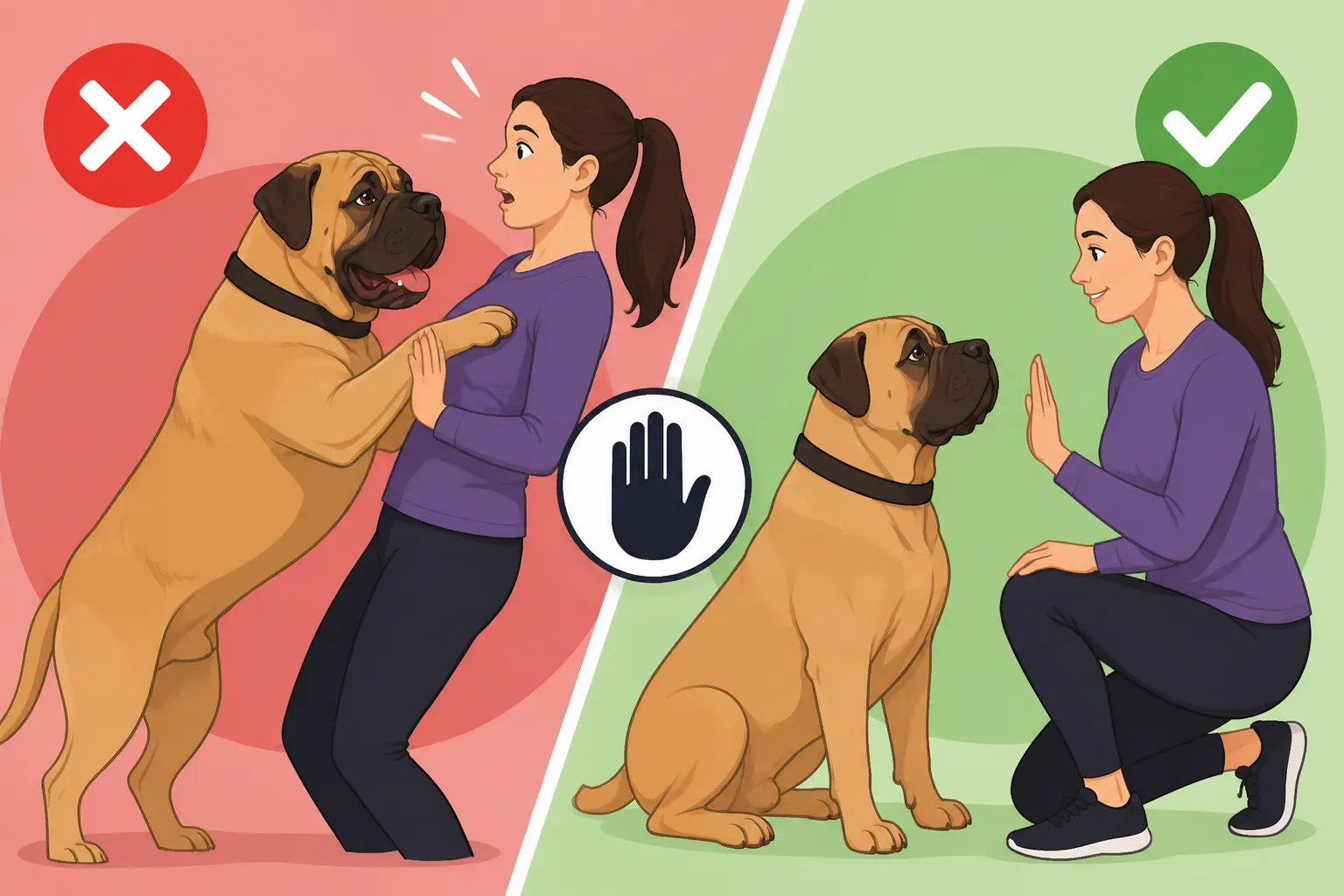
- "Sit for Petting": Implement a "sit for petting" rule. If your Bullmastiff wants attention, they must first offer a sit. If they lean, withdraw your attention immediately. The moment they sit, lavish them with praise and affection. This makes "sit" the default behavior for requesting interaction.
- Redirect to a Toy or Game: If your Bullmastiff is leaning out of boredom or a desire for play, redirect their energy. Instead of allowing the lean, immediately offer a favorite chew toy, or initiate a short game of tug (if appropriate). This channels their desire for engagement into an acceptable outlet. This can also tie into What Mental Work a Bullmastiff Needs to keep them engaged.
- Scheduled Affection: Ensure your Bullmastiff gets plenty of dedicated, structured affection throughout the day. This reduces their need to "demand" attention through leaning. Regular cuddle sessions, belly rubs, and one-on-one time on your terms can make a huge difference.
Remember, the goal isn't to eliminate their desire for closeness, but to shape how they express it. You still want that bond, those moments of shared peace, but without the risk of a tumble.
Addressing Specific Leaning Scenarios
Leaning doesn't always happen in the same context. Your Bullmastiff might lean differently when excited, when seeking attention, or when just standing around. Tailoring your response to the specific scenario can increase your success.
Leaning During Greetings
This is perhaps the most common and potentially most dangerous leaning scenario. An excited Bullmastiff, thrilled to see you or a guest, can come in with full force.
- Pre-emptive Action: Before guests even walk through the door, put your Bullmastiff on a leash, or send them to their "place" with a favorite long-lasting chew. The BAXTER & Bella program has excellent modules on managing greetings at the door, which are invaluable for large breeds.
- Controlled Greetings: When guests arrive, keep your Bullmastiff on a leash. Ask your guest to completely ignore the dog until your Bullmastiff offers a sit. Only when all four paws are on the floor and they are calm should the guest offer a quick, gentle pet. If the dog leans or jumps, the guest should immediately stand up, turn their back, and ignore them again. Repeat until your dog understands that calm behavior is the only way to get attention.
- Practice with Family: Don't wait for guests. Practice controlled greetings with family members who can pretend to be new arrivals. This allows you to work on the behavior in a low-stakes environment. Remind your dog that even during excited moments, their behavior needs to be respectful. It's a key part of teaching them how to behave with visitors, as discussed in How a Bullmastiff Behaves at a Front Door.
Leaning for Attention
Sometimes, the lean is a direct bid for your focus. You're watching TV, working on your computer, or reading, and suddenly, there's a heavy weight against your leg.
- Ignore the Lean: This is tough, but crucial. The moment you feel the lean, completely disengage. Don't speak, don't look, don't touch. If possible, calmly move away.
- Reward Polite Waiting: Wait for a moment when your Bullmastiff is not leaning, perhaps sitting calmly or lying nearby. At that precise moment, call them over, praise them, and give them the attention they craved. This teaches them that calm, polite behavior earns rewards, while leaning does not.
- Structured Attention: Incorporate short, frequent bursts of positive attention throughout the day on your terms. Call your dog for a quick pet, a mini-training session, or a quiet cuddle. This fulfills their need for connection and reduces the urgency to demand it through unwanted behaviors like leaning or Teaching a Bullmastiff Not to Jump Up.
Leaning on Furniture or Against Walls
If your Bullmastiff has decided your new sofa or the kitchen wall makes a great support system, you'll need to set boundaries for these specific areas.
- Physical Barriers: If the leaning is against furniture, use throws, cushions, or even temporary barriers (like a stack of boxes you found on Amazon) to make the area less appealing or inaccessible. This can deter them while you're training.
- "Off" Command for Furniture: If they're leaning on furniture you do allow them on sometimes, teach a strong "Off" command. This is different from "No lean" because it specifies "off the furniture." When they lean, give the "Off" command and gently guide them off. Reward them when all four paws are on the floor.
- Deterrents (Used Cautiously): For leaning against walls or areas you cannot easily barrier, some people use safe, non-toxic deterrent sprays (available on Amazon) with a scent dogs dislike, or place crinkly foil in the area. These should be used sparingly and never as a substitute for positive training, but as a short-term aid to break a stubborn habit.
- Provide an Alternative: Ensure your Bullmastiff has a comfortable, designated spot of their own where they can lean and relax without causing issues. A sturdy orthopedic bed, perhaps a bolstered one, can offer that secure, enclosed feeling they seek, providing a suitable alternative to leaning on your belongings or on you. This also helps with Bedding and Joints for a Hundred and Thirty Pound Bullmastiff.
Remember, teaching a Bullmastiff anything takes time and consistency. Their intelligence means they learn quickly, but their strong will means they'll test your boundaries. Stay patient, stay firm, and reward the behaviors you want to see, and you'll eventually have a Bullmastiff who shows affection without the unbalancing lean.
Disclaimer
This article is for general informational purposes only and does not constitute professional advice. Laws, prices and regulations vary by location and change over time. Consult a qualified professional for guidance on your specific situation.