Whether a Bullmastiff Can Do Obedience Trials
Many Bullmastiff owners, myself included, have looked at their powerful, sometimes stubborn, and undeniably intelligent companions and wondered if structured activities like obedience trials are even in the cards. It’s easy to feel like these gentle giants are too laid-back or too independent for the precision and strictness required, but let me tell you, that's not always the case! This guide will dive deep into whether a Bullmastiff can indeed participate and even excel in obedience trials, exploring their unique temperament, effective training strategies, and what you can realistically expect from your loyal friend in the ring.
The Bullmastiff Temperament in the Obedience Ring
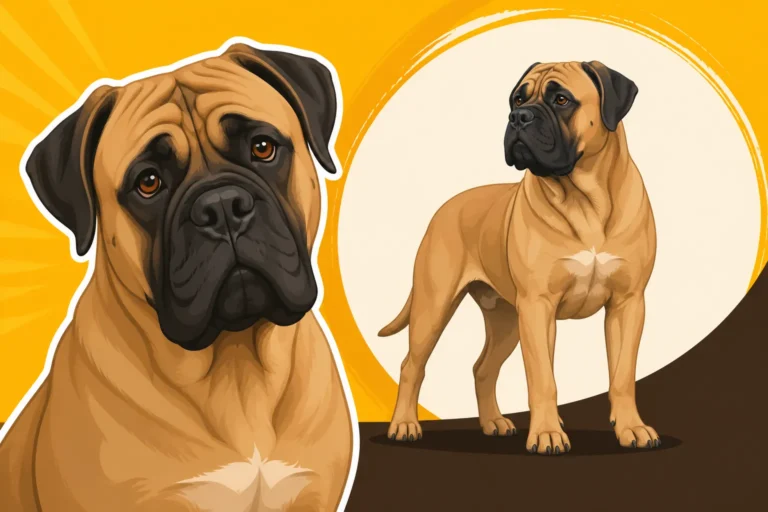
When we talk about obedience trials, people often picture breeds like Border Collies or German Shepherds, known for their laser focus and eagerness to please. A Bullmastiff? Well, they bring a different set of qualities to the table, and understanding these is the first step toward success. They weren't bred for lightning-fast retrieves or intricate agility courses; they were bred to think, to guard, and to hold.
The Bullmastiff's Deliberate Nature
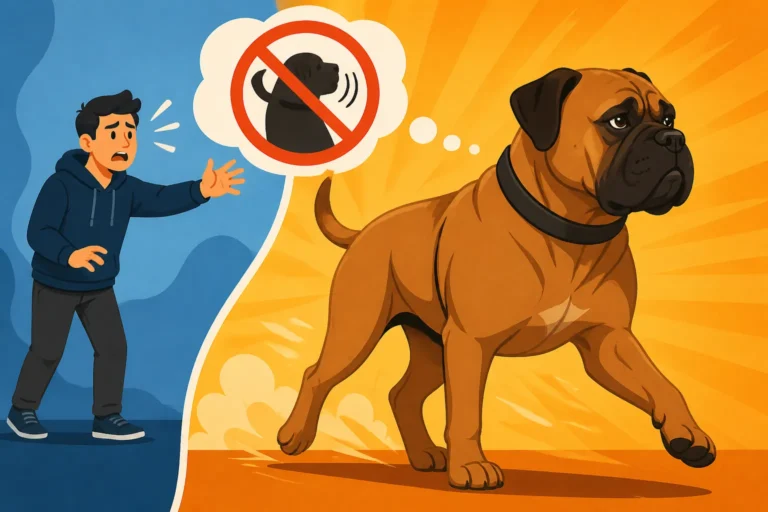
If you've spent any time with a Bullmastiff, you'll know they have a wonderfully thoughtful way of approaching the world. They're not impulsive. Instead, they often seem to take a moment, gathering all the information, before deciding on a course of action. This isn't true stubbornness in the way some might describe it; it's more of a deliberate processing of information. As I’ve written before, The Bullmastiff That Pauses to Decide Whether You Are Worth It, they evaluate if the command is truly worth their effort at that exact moment.
In the obedience ring, this can manifest as a slight delay in responding to a command. While other dogs might snap into a "sit" at the speed of light, your Bullmastiff might offer a slow, majestic descent, making sure every muscle is in the right place. This deliberate nature requires the handler to adjust their timing and expectations. You can’t rush a Bullmastiff, or you’ll often find them digging in their heels, figuratively speaking. It's about patience and celebrating their thoughtful compliance, rather than demanding instant robotic responses. They are capable of precision, but it comes with a certain gravitas.
Motivation and Drive for a Bullmastiff
Unlike some breeds that live to fetch or are eternally food-motivated, a Bullmastiff's drive for obedience can be a bit more nuanced. They are often deeply devoted to their family, and their desire to please you can be a powerful motivator. However, generic kibble or a squeaky toy might not always cut it when distractions are high.
Finding what truly lights up your Bullmastiff is key. Is it a high-value, super stinky treat like liverwurst? Is it a quick game of tug with their favorite rope? Or is it simply an effusive outpouring of praise from their beloved human? Many Bullmastiffs work best for genuine affection and a sense of shared accomplishment with their person. They’re less interested in performing for an abstract judge and more interested in the interaction with you. They want to connect. Understanding What Motivates a Bullmastiff is critical to unlock their potential in training. This often means switching up rewards to keep them engaged and making sure that the training feels like a positive bonding experience, not a chore.
The "Softness" Factor
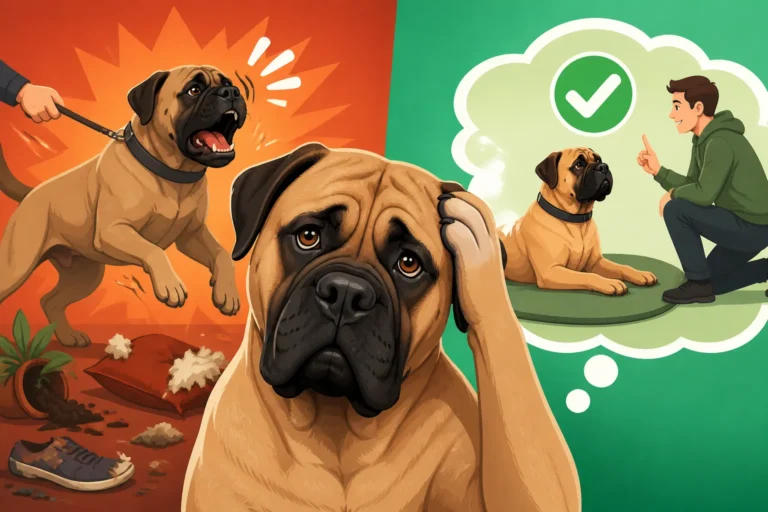
Despite their imposing size and their history as formidable guard dogs, Bullmastiffs are remarkably sensitive creatures. They respond poorly to harsh corrections or heavy-handed training methods. A sharp word or a physical reprimand can easily shut down a Bullmastiff, making them withdraw or become resentful. This is why many experienced trainers will tell you that Why Harsh Correction Fails on a Bullmastiff is a lesson every owner learns quickly.
In an obedience trial setting, where nerves can be high and precision is judged, it’s vital that your communication remains clear, consistent, and above all, positive. A Bullmastiff performing out of fear will look hesitant and unhappy, and it certainly won’t score well. Instead, focus on building their confidence through positive reinforcement, celebrating every small success, and ensuring that they view the obedience ring as a fun place to work with you. Their "softness" doesn't mean they can't handle pressure; it means they need to feel secure and supported by their handler to perform their best.
Training Strategies for Bullmastiffs in Obedience
Training a Bullmastiff for obedience trials requires a slightly different approach than you might take with other breeds. Their size, strength, and unique temperament mean that patience, consistency, and a strong positive relationship are your most valuable tools.
Patience and Consistency Are Paramount
The old adage "slow and steady wins the race" was practically written for Bullmastiff training. You won't achieve results overnight, and trying to rush things will almost certainly backfire. Instead, focus on short, frequent training sessions that are always fun and end on a positive note. Ten minutes of focused, joyful training several times a day is far more effective than one long, tedious hour that leaves both you and your dog frustrated.
Consistency is equally important. Everyone in the household needs to use the same commands and expectations. If "sit" means one thing to you and another to your partner, your Bullmastiff will quickly become confused and disengaged. Regular practice, even just a few minutes during walks or before meals, reinforces the behaviors you want to see. Remember, How Long a Bullmastiff Will Work in a Session is usually not very long, so keep it snappy and rewarding.
Building a Strong Foundation
Just like building a sturdy house, a strong foundation of basic obedience is absolutely essential. This starts from puppyhood. Focus on teaching crucial commands like "sit," "stay," "come," and "heel" with clear, kind, and consistent methods. Think of it as a game where your puppy learns that cooperating with you leads to wonderful rewards. Establishing this early bond and understanding of basic commands is outlined in guides like The First Year With a Bullmastiff Puppy.
For a Bullmastiff, foundational training also includes good manners around people and other dogs. This isn't just for the show ring; it's for living happily in the world. Enrolling in puppy classes and then moving on to basic and intermediate obedience classes at a local club or through an online program like BAXTER & Bella can provide structured guidance and valuable socialization. These early experiences shape their willingness to learn and perform later on.
Managing Size and Strength
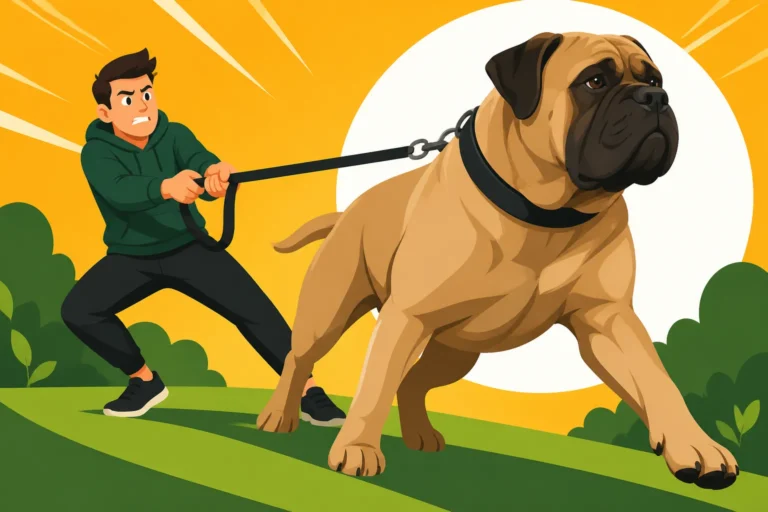
One of the biggest practical challenges of working with a Bullmastiff in obedience is their sheer size and power. A full-grown Bullmastiff can easily weigh over 100 pounds, making leash handling and control a serious consideration. Teaching a solid "heel" command isn't just about looking good in the ring; it's about safety for both of you. You need to be able to Training a Bullmastiff That Weighs More Than You Do effectively and calmly.
Training Tools for Leash Control:
| Tool Type | Description | Pros for Bullmastiffs | Cons for Bullmastiffs |
|---|---|---|---|
| Flat Collar | Standard collar around the neck. | Minimal interference, good for well-trained dogs. | Offers little control for a strong puller; can put strain on the neck. |
| Front-Clip Harness | Harness with leash attachment on the chest. Redirects pulling energy to the side. | Reduces pulling significantly without discomfort; good for teaching loose-leash walking. Easy to find options on Amazon. | Can sometimes cause an awkward gait; dog can still pull if very determined. |
| Head Halter | Fits over the muzzle and behind the ears, giving control of the dog's head. | Excellent control over the dog's direction and focus; humane alternative to choke/prong collars. | Some dogs initially resist wearing it; requires proper introduction to prevent negative associations. |
| Back-Clip Harness | Harness with leash attachment on the back. | Comfortable for the dog; good for hiking or casual walks. | Can encourage pulling as it allows the dog to lean into the harness. |
The goal is to teach them to walk politely by your side, whether you're in a busy park or a quiet training hall. This means starting early, using positive reinforcement, and finding equipment that helps you communicate effectively without resorting to force. Teaching a Bullmastiff to Walk on Leash is a crucial skill that impacts every other obedience exercise. Remember, Why a Bullmastiff Cannot Be Physically Made to Do Anything – you need their cooperation, not just their compliance.
Socialization for Focus
Obedience trials are often held indoors or outdoors where other dogs and people are present. A Bullmastiff that is overly distracted by the environment will struggle to perform. Proper socialization from a young age is therefore crucial, not just for their general well-being but also for their performance in trials. Exposing your Bullmastiff puppy to a variety of sights, sounds, people, and friendly dogs in a controlled, positive manner helps them develop into a confident and calm adult.
This doesn't mean they need to be best friends with every dog they meet, but they should be able to calmly observe others without becoming overly excited or anxious. A well-socialized Bullmastiff will be more likely to maintain focus on you, even with distractions, which is a significant advantage in the trial ring. Continue to expose them to new environments and gentle interactions throughout their lives, reinforcing that you are their anchor in any situation.
The Reality of Competing with a Bullmastiff
Taking your Bullmastiff into the obedience ring is an experience unlike any other. It comes with its own set of joys and challenges, and preparing for it means understanding the realities of competing with such a magnificent, yet distinct, breed.
Setting Realistic Expectations
Let's be honest: a Bullmastiff is unlikely to win the "Highest Scoring Dog in Trial" at every event. Their deliberate nature means they won't typically be the fastest to respond, and their sheer bulk means they might not execute a perfect, lightning-fast retrieve or jump with the same effortless grace as a lighter breed. However, that doesn't mean they can't achieve impressive scores and even titles.
Success with a Bullmastiff in obedience is often measured by different metrics. It's the joy of watching your massive dog hold a perfect three-minute "long sit" despite distractions, or the pride of a perfectly executed "group stay" where they ignore everything else and focus solely on you. Achieving these levels of control with a Bullmastiff is a testament to the strong bond and effective training you've built. Don’t compare your Bullmastiff to a different breed; celebrate their accomplishments as a Bullmastiff.
Finding the Right Trainer and Club
Choosing the right training environment is incredibly important for a Bullmastiff. Look for trainers who have experience with large, powerful breeds and who emphasize positive reinforcement and force-free methods. A trainer who understands the subtle cues of a Bullmastiff and respects their thoughtful nature will be far more effective than one who tries to apply a "one size fits all" approach. Local obedience clubs are often excellent resources, providing group classes, practice sessions, and a community of like-minded dog owners.
When you're searching, ask about their philosophy, observe a class if possible, and make sure the atmosphere feels supportive and positive. An understanding trainer can help you navigate the unique challenges, like a Bullmastiff's tendency to lean into you during a stand or stay, as discussed in Why a Bullmastiff Leans on People. If local options are limited, online training platforms can offer valuable insights and structured courses for foundational skills, which you can then practice in real-world settings.
Common Challenges and How to Overcome Them
Bullmastiffs bring certain traits to the obedience ring that can be challenging but are definitely manageable with the right approach.
- The "Bullmastiff Lean": During commands like "stand for exam" or "stay," a Bullmastiff might lean into their handler or nearby objects. This isn't usually an act of defiance, but rather a display of affection or seeking comfort. To counter this, teach them to hold a strong, independent "stand" with positive reinforcement for good posture. Practice in front of a mirror to ensure you're not inadvertently inviting the lean.
- Slower Transitions: Their deliberate nature means they might take a moment to transition from a "down" to a "sit," or to move from one exercise to the next. Build speed gradually through short, high-energy practice sessions, rewarding quick responses. Don't sacrifice accuracy for speed, but encourage fluidity.
- Retrieving: While some Bullmastiffs enjoy retrieving, it's not their instinctual passion like it is for a Labrador. A retrieve might be a slower, more methodical process. Practice with high-value retrieve items and make it a game, rewarding them enthusiastically for bringing the item all the way back to your hand.
- Distraction Management: Their guarding instinct means they are often very aware of their surroundings. In a trial with other dogs and people, this awareness can become a distraction. Consistent socialization and "proofing" commands in increasingly distracting environments are essential. Teach them that focusing on you, regardless of what's happening around them, leads to the best rewards.
Celebrating the Small Victories
The real magic of competing in obedience with a Bullmastiff isn't always about the ribbon or the score. It's about the journey. It's the moment your powerful dog looks up at you in the ring, eyes sparkling with understanding and willingness. It's the pride in knowing that you've harnessed their immense potential through mutual respect and positive communication.
Every time they execute a command correctly, every time they offer you their focus despite temptation, that's a victory. The bond you build through this training, the deep trust and understanding, is far more valuable than any trophy. Owners who embrace the unique qualities of their Bullmastiff often find that the experience is incredibly rewarding, proving that these magnificent dogs are capable of much more than just being a loyal couch potato.
Beyond Basic Obedience: Exploring Other Avenues
While traditional obedience trials are a fantastic goal, they're not the only path for a Bullmastiff and their owner. Many other dog sports and activities can also be a wonderful fit for their temperament and abilities.
Canine Good Citizen (CGC) and Beyond
A great stepping stone into structured activities is the American Kennel Club's Canine Good Citizen (CGC) program. This test focuses on basic manners and responsible dog ownership, ensuring your dog is a polite member of society. For a Bullmastiff, passing the CGC is a significant achievement that demonstrates their trainability and your dedication. As such, Whether a Bullmastiff Passes a Canine Good Citizen Test is a very common question, and the answer is absolutely, with the right training.
Beyond the basic CGC, there are advanced versions like Community Canine (CGCA) and Urban Canine Good Citizen (CGCU), which take the skills into more challenging real-world environments. These programs are often a perfect fit for a Bullmastiff's temperament, as they emphasize reliability and good behavior over speed or flash. It helps solidify their role as a wonderful companion both at home and out in the world.
Rally Obedience
If traditional obedience feels a bit too rigid, Rally Obedience might be just the ticket. Rally is often described as a more relaxed, "freestyle" version of obedience. Instead of a judge calling out commands, you navigate a course with numbered stations, each displaying a sign with an obedience exercise to perform (e.g., "sit-stay," "down," "figure 8"). You can talk to your dog, encourage them, and praise them throughout the course.
This less formal atmosphere can be incredibly appealing for Bullmastmastiff teams. It allows for more handler communication and encouragement, which often brings out the best in a Bullmastiff's willingness to work. The focus is still on teamwork and accuracy, but without the intense pressure of silence and rigid execution. It allows their personality to shine through while still demonstrating excellent manners and training.
Here's a quick comparison:
| Feature | Traditional Obedience Trials | Rally Obedience Trials |
|---|---|---|
| Handler Communication | Minimal verbal encouragement allowed; often silent once command is given. | Verbal encouragement, clapping, and talking to your dog is allowed and encouraged. |
| Course Structure | Judge gives commands; exercises performed in a set pattern (e.g., heel, sit-stay, retrieve). | Dog and handler navigate a course with stations, each having a sign with a specific exercise to perform. |
| Pace | Focus on precision and often a brisk pace for certain exercises. | More relaxed, flow-based; handlers can take their time to set up for each station. |
| Trial Environment | Can feel quite formal and serious. | More informal, fun, and supportive atmosphere. |
| Ideal for Bullmastiffs | Possible, but requires high level of focus and handler-dog bond to overcome deliberate nature and potential for slower responses. | Often an excellent fit, as it allows for more encouragement and less pressure on immediate, silent responses, playing to their strong bond with handlers. |
Therapy Work
For Bullmastiffs with truly stable, gentle, and calm temperaments, therapy dog work can be an incredibly rewarding avenue. Their imposing size often belies a deeply affectionate and comforting nature, making them wonderful visitors to hospitals, nursing homes, or schools. The calm demeanor that is sometimes a challenge in fast-paced obedience can be a huge asset in a therapy setting.
To become a therapy dog, your Bullmastiff will need to pass specific evaluations that test their reliability, gentleness, and ability to remain calm in various situations and around different people and equipment. It requires an advanced level of obedience and rock-solid temperament, but for many Bullmastiffs, it's a natural fit. If you're wondering Whether a Bullmastiff Makes a Therapy Dog, the answer is a resounding yes, for the right dog and handler team. The profound impact they can have on others truly showcases the best of the breed.
Ultimately, whether your Bullmastiff pursues competitive obedience or simply excels in being a polite, well-mannered companion, the journey of training and bonding is one of the most rewarding aspects of owning these incredible dogs.
Disclaimer
This article is for general informational purposes only and does not constitute professional advice. Laws, prices and regulations vary by location and change over time. Consult a qualified professional for guidance on your specific situation.