Why a Bullmastiff Bolts Its Food
It’s a familiar scenario for many Bullmastiff owners: you put down a freshly prepared bowl of food, and before you can even turn around, it's gone. That impressive, carefully measured meal vanishes in what feels like mere seconds, leaving you wondering if your gentle giant even tasted it. This rapid consumption, often referred to as "bolting" food, isn't just a quirky habit; it can be a real source of worry, especially with a breed prone to serious health issues like bloat. This comprehensive guide will explore the various reasons why your Bullmastiff might be inhaling their meals and, more importantly, what actionable steps you can take to slow them down and protect their health.
Understanding the "Why": Instinct and Evolution
The act of bolting food in dogs, including our beloved Bullmastiffs, isn't necessarily a sign of bad manners or extreme hunger, though it can certainly look that way. Often, it's rooted deeply in their evolutionary history and physiological makeup. Understanding these underlying instincts can help us approach the problem with more empathy and effective solutions.
The Ancestral Feast or Famine Mentality
Imagine a world where food wasn't handed to you twice a day in a ceramic bowl. For the ancestors of our domestic dogs, every meal was a hunt, and success was never guaranteed. When prey was caught or a carcass found, it was a race against time and competition. Other animals, and even pack members, would vie for the same resources. The dogs that ate fastest, consuming as much as possible before it could be stolen or scavenged, were the ones most likely to survive and pass on their genes. This "feast or famine" mentality is hardwired into their DNA.
Even though your Bullmastiff lives a life of luxury with a guaranteed meal, that primal instinct can still surface. In a multi-dog household, for example, the perceived competition, even if it's just another gentle Bullmastiff, can trigger this rapid eating behavior. They might feel an unspoken pressure to finish their portion before another dog might try to get at it, even if that's not actually happening. Even if your Bullmastiff is the only canine in the house, the sheer abundance of food, delivered predictably, can still activate that ancient, almost unconscious drive to consume quickly. They might not be thinking consciously about scarcity, but their body acts as if it's a possibility.
Rapid Ingestion and Nutrient Absorption
Another piece of the puzzle lies in canine physiology itself. Dogs are built differently from humans when it comes to digestion. Their teeth are designed more for tearing and crushing than for meticulous chewing. They don't have the same digestive enzymes in their saliva that humans do, meaning the breakdown of food largely begins in the stomach. This means that a dog doesn't need to chew every morsel to the same extent a human does for proper digestion. Their stomach acids are incredibly potent, capable of dissolving bone, and are highly efficient at breaking down quickly ingested food.
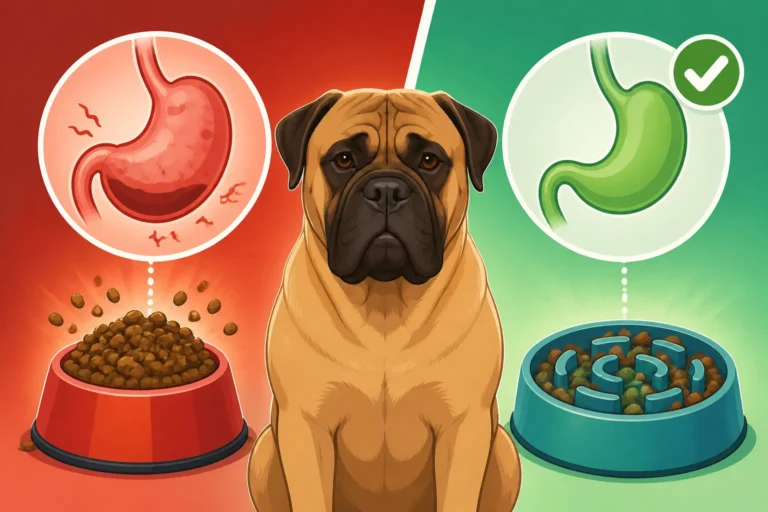
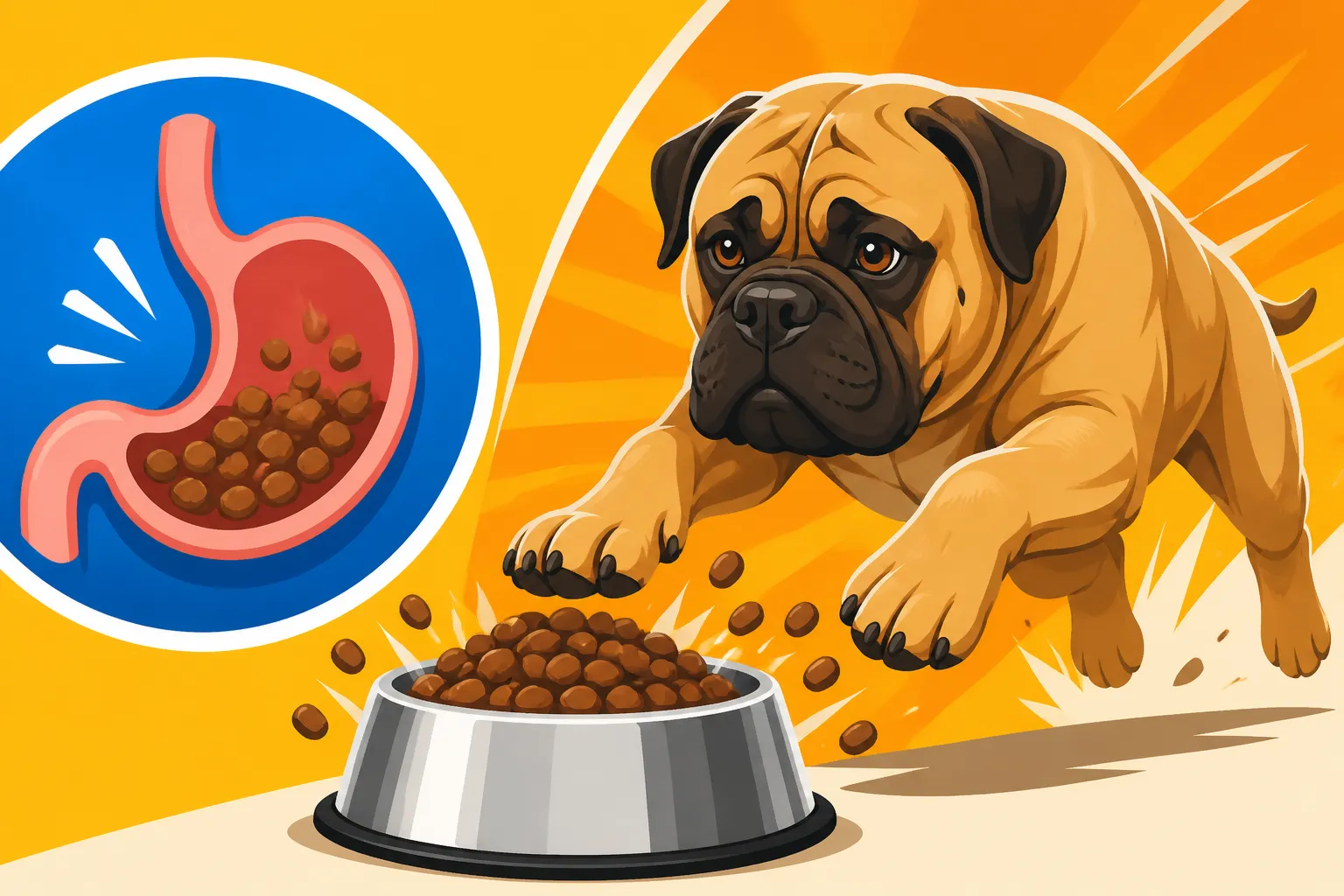
However, while they can digest rapidly consumed food, it doesn't mean it's always ideal. When a Bullmastiff bolts its food, it often swallows a significant amount of air along with it. This air can become trapped in the stomach, leading to discomfort, gas, and an increased risk of more serious issues. The rapid intake can also overwhelm their digestive system in other ways, sometimes leading to vomiting shortly after eating or loose stools. So, while their bodies are capable of handling fast eating, there are definite downsides that impact their immediate comfort and long-term health.
Bullmastiff Specifics: Size, Structure, and Health Risks
While ancestral instincts play a role in all dogs, certain characteristics of the Bullmastiff breed can exacerbate the tendency to bolt food and elevate the associated risks. Their unique physical attributes, combined with a notorious breed-specific health concern, make addressing fast eating an absolute priority for Bullmastiff owners.
The Brachycephalic Head and Wide Mouth
Bullmastiffs possess a distinctive, broad, and somewhat flattened face, a characteristic known as brachycephaly, though not as extreme as some other brachycephalic breeds. Their powerful, wide jaws and large mouths are well-suited for their original purpose – to catch and hold a poacher without biting or severely injuring them. This impressive oral structure, while effective for its historical role, can also contribute to their eating habits.
Unlike breeds with long, narrow muzzles and finer teeth, a Bullmastiff's wide mouth acts almost like a scoop. They can take in large quantities of food with each mouthful, and the structure of their mouth allows for minimal chewing before swallowing. This means that even if they tried to slow down, their physical build makes it very easy to gather and swallow food at an astonishing pace. It's not just about greed; their anatomy facilitates the behavior, making it harder for them to eat slowly by default. This is just one of the many reasons why Why a Bullmastiff Was Bred Not to Maul is so important to understand the breed. You can also explore What a Bullmastiff's Muzzle Length Should Be to learn more about their facial structure.
The Alarming Connection to Bloat (GDV)
This is perhaps the most critical reason why bolting food is a serious concern for Bullmastiff owners. Deep-chested, large breeds like Bullmastiffs are particularly susceptible to Gastric Dilatation-Volvulus, or GDV, more commonly known as bloat. Bloat is an emergency condition where the stomach fills with gas, food, or fluid (dilatation) and then twists (volvulus), cutting off blood supply and trapping the contents. It is excruciatingly painful and life-threatening, progressing very rapidly.
One of the significant risk factors for bloat is eating too quickly, which, as we discussed, leads to swallowing excessive air. This trapped air contributes to the stomach distending, which can then predispose it to twisting. The sheer size of a Bullmastiff's stomach means there's more surface area to fill and potentially twist. Witnessing your otherwise stoic Bullmastiff suddenly showing signs of discomfort, pacing, trying to vomit unsuccessfully, or developing a distended abdomen is terrifying. Every second counts with bloat, and without immediate veterinary intervention, it is usually fatal. This is why preventative measures, like slowing down eating, are not just about comfort; they're about survival. If you want to dive deeper into this, check out Bloat in a Bullmastiff and What Bloat Surgery Involves on a Bullmastiff. Owners often ask Whether a Gastropexy Is Worth It for a Bullmastiff for preventative measures.
Other Potential Health Ramifications
Beyond the life-threatening risk of bloat, a Bullmastiff that bolts its food can face a host of other, albeit less severe, health issues. Rapid eating often leads to indigestion. The stomach can become irritated from the quick influx of food and air, causing discomfort that might manifest as burping, excessive flatulence, or even vomiting soon after a meal. This can be particularly distressing for both dog and owner.
Over time, this habit can also make it difficult to manage your Bullmastiff's weight. When a dog eats too quickly, their brain doesn't always register fullness as efficiently as it would with slower eating. This can lead to them feeling unsatisfied and begging for more food, even if they've consumed an appropriate amount. Maintaining a lean body condition is crucial for a large breed like a Bullmastiff to protect their joints and overall longevity, so anything that contributes to overeating needs to be addressed.
Behavioral Roots: Environment and Learned Habits
Beyond biology and breed specifics, a Bullmastiff's tendency to bolt food can also stem from their environment, past experiences, and learned behaviors. Sometimes, what seems like a simple act of eating is actually a reflection of deeper psychological or habit-driven patterns.
Resource Guarding and Perceived Scarcity
Resource guarding is a natural, albeit often undesirable, behavior where a dog feels the need to protect valuable resources, such as food, toys, or even their human, from perceived threats. When it comes to food, a Bullmastiff might bolt their meal because they feel that someone or something might take it away. This isn't always aggressive; sometimes it's simply an intense drive to consume quickly to secure the resource.
This behavior can develop for various reasons. In multi-dog households, even peaceful ones, one dog might feel a subtle competition, leading them to eat faster. However, resource guarding can also happen in single-dog homes. Perhaps the dog had a history of scarcity, such as being a rescue dog who experienced hunger or had to compete for food in a previous situation. Even an owner's well-meaning actions, like constantly hovering over the bowl or removing it too soon, can inadvertently teach a dog to eat quickly out of fear of losing the food. It's a subtle dance between instinct and learned experience.
Lack of Engagement or Boredom
For many dogs, mealtime is the highlight of their day. If a Bullmastiff's daily routine lacks sufficient mental and physical stimulation, the excitement surrounding food can be amplified, leading them to inhale their meal in a rush. If there isn't much else to do, that ten-second eating frenzy might be the most "engaging" part of their morning or evening.
Think about it: a Bullmastiff, while not needing hours of intense exercise, still requires mental enrichment. They are intelligent, watchful dogs. If their day is largely spent napping and there are no puzzles, training sessions, or stimulating walks, the rapid consumption of food might be their way of expressing pent-up energy or a general lack of daily engagement. The meal becomes a quick burst of intense satisfaction, and then it's over, leaving them to return to their less-than-stimulating routine. This cycle can reinforce the bolting behavior as the primary source of excitement.
The Role of Early Learning and Reinforcement
Habits, good or bad, often start early. A Bullmastiff puppy, even from a young age, can develop fast-eating tendencies. If they're from a large litter, they might have had to compete vigorously with their siblings for access to their mother's milk or later, for solid food. This early competition can set a precedent for rapid eating that carries into adulthood.
Furthermore, how owners interact with their Bullmastiff around meal times can inadvertently reinforce fast eating. If a dog finishes quickly and immediately gets attention, a treat, or is let outside, they might associate speed with positive outcomes. Conversely, if an owner tries to slow a dog down by taking the bowl away and the dog immediately wolfs it down when it's returned, this also reinforces the idea that food might disappear, encouraging faster consumption. It's crucial for owners to be mindful of these subtle cues and ensure they are not accidentally rewarding rapid eating.
Practical Strategies to Slow Down Eating
Now that we've delved into the myriad reasons behind your Bullmastiff's lightning-fast eating, let's talk about tangible solutions. The good news is that there are many effective ways to slow down mealtime, reducing the risk of bloat and improving overall digestion and mealtime enjoyment for your beloved companion.
Specialized Bowls and Feeders
One of the most straightforward and effective methods to combat food bolting is to introduce specialized feeding equipment. These products are designed with various obstacles that force your Bullmastiff to eat around, through, or from multiple small compartments, thereby dramatically slowing down their intake.
- Slow Feeder Bowls: These are bowls with ridges, mazes, or pillars built into them. Instead of a wide-open surface, the food is dispersed into small pockets or channels, making it impossible for your Bullmastiff to scoop large mouthfuls. They have to work around the design, picking out smaller portions. You can find a huge variety of these bowls on platforms like Chewy or Amazon, ranging from simple plastic designs to more durable ceramic or stainless steel options. When choosing, consider the size of your Bullmastiff's muzzle and the depth of the bowl; you want something challenging but not frustrating.
- Puzzle Feeders and Interactive Toys: For the truly voracious eater or a Bullmastiff who needs more mental stimulation, puzzle feeders take slowing down eating to the next level. These often require your dog to manipulate the toy or solve a simple puzzle to dispense kibble. Think about things like KONG Wobblers, treat-dispensing balls, or snuffle mats, where food is hidden within fabric strips, forcing them to sniff and root it out. Using these can turn mealtime into a fun, engaging activity rather than a simple gobbling contest. Brands like Ollie and other fresh food providers also sometimes offer enrichment feeders or suggest creative ways to serve their food to promote slower eating. These are excellent ways to provide mental enrichment and slow down eating at the same time.
Feeding Schedules and Meal Distribution
Beyond the bowl itself, how and when you feed your Bullmastiff can also make a significant difference in slowing down their eating habits. Adjusting your feeding schedule can directly impact their hunger levels and the perceived urgency around meals.
- Multiple Smaller Meals: Instead of one or two large meals a day, consider breaking your Bullmastiff's daily food allowance into three or even four smaller meals. This reduces the amount of food available at any one time, naturally making it harder to bolt a huge quantity. Smaller meals also mean less air swallowed at once and less distension in the stomach, which can be particularly beneficial for preventing bloat. This strategy aligns well with advice on How Many Meals a Bullmastiff Should Have for general health.
- Consistency is Key: Dogs thrive on routine. Feeding your Bullmastiff at consistent times each day helps regulate their metabolism and reduces anxiety around meal times. When they know exactly when to expect their next meal, the frantic urgency to eat quickly can lessen, as the perceived scarcity diminishes. Avoid letting them go too long between meals, which can make them ravenously hungry and more likely to bolt their food. It's also vital that rest after eating is enforced, giving their stomach time to settle before any strenuous activity.
| Slow Feeder Type | Description | Pros | Cons | Best For |
|---|---|---|---|---|
| Maze/Ridge Bowls | Bowls with internal patterns, ridges, or compartments | Simple to use, affordable, easy to clean | Some dogs can still find ways to 'defeat' them quickly | Everyday use, mild to moderate bolters, beginners |
| Puzzle Feeders | Toys that dispense food as the dog interacts/solves a puzzle | High mental stimulation, very effective for slowing down | Can be messy, some dogs find them frustrating, more expensive | Bored dogs, smart dogs, serious bolters, enrichment |
| Snuffle Mats | Fabric mats with interwoven strips to hide kibble | Encourages natural foraging, soft on the nose | Can be chewed apart, harder to clean thoroughly, not for wet food | Scent work, moderate bolters, less messy than puzzles |
| Scattered Feeding | Spreading food over a clean floor or yard | Free, engages natural foraging, very effective for slowing | Can be messy, only suitable for dry kibble, requires clean space | Quick solution, high mental engagement |
Environmental Management and Training
Sometimes, slowing down a Bullmastiff's eating involves more than just a fancy bowl. Adjusting their feeding environment and incorporating simple training cues can also have a profound impact.
- Quiet, Undisturbed Feeding Area: Ensure your Bullmastiff eats in a calm, private space where they won't feel threatened or rushed. This means away from other pets, young children, or high-traffic areas of the home. A sense of security can significantly reduce any underlying anxiety that contributes to fast eating or resource guarding. If you have multiple dogs, always feed them in separate rooms or crates to prevent perceived competition.
- "Wait" Command and Hand Feeding: Teach your Bullmastiff a "wait" command before they approach their bowl. Place the bowl down, have them wait calmly for a few seconds, then give them a release cue like "okay" or "eat." Gradually increase the waiting time. You can also incorporate hand-feeding a portion of their meal, especially in the beginning, to build a positive association with your presence around their food and reinforce the idea that you are not a threat to their meal. For a high-drive chewer, you can even freeze some of their wet food or a paste-like treat in a durable toy from Chewy or Amazon, making them work for it over a longer period.
- Creative Food Delivery: Don't limit feeding to just a bowl! Scatter your Bullmastiff's kibble across a clean floor or in the yard (weather permitting) to encourage foraging behavior. This makes them use their nose and takes much longer than eating from a bowl. You can also use a portion of their daily kibble for training rewards throughout the day. This reduces the amount they receive in a single sitting and makes them "work" for their food mentally, providing valuable enrichment.
By implementing a combination of these strategies, you'll not only help your Bullmastiff slow down their eating, but you'll also contribute to their overall health, well-being, and mental stimulation. It's a small change that can make a monumental difference in the life of your gentle giant.
Disclaimer
This article is for general informational purposes only and does not constitute professional advice. Laws, prices and regulations vary by location and change over time. Consult a qualified professional for guidance on your specific situation.