When a Bullmastiff’s Mask Starts Going Gray
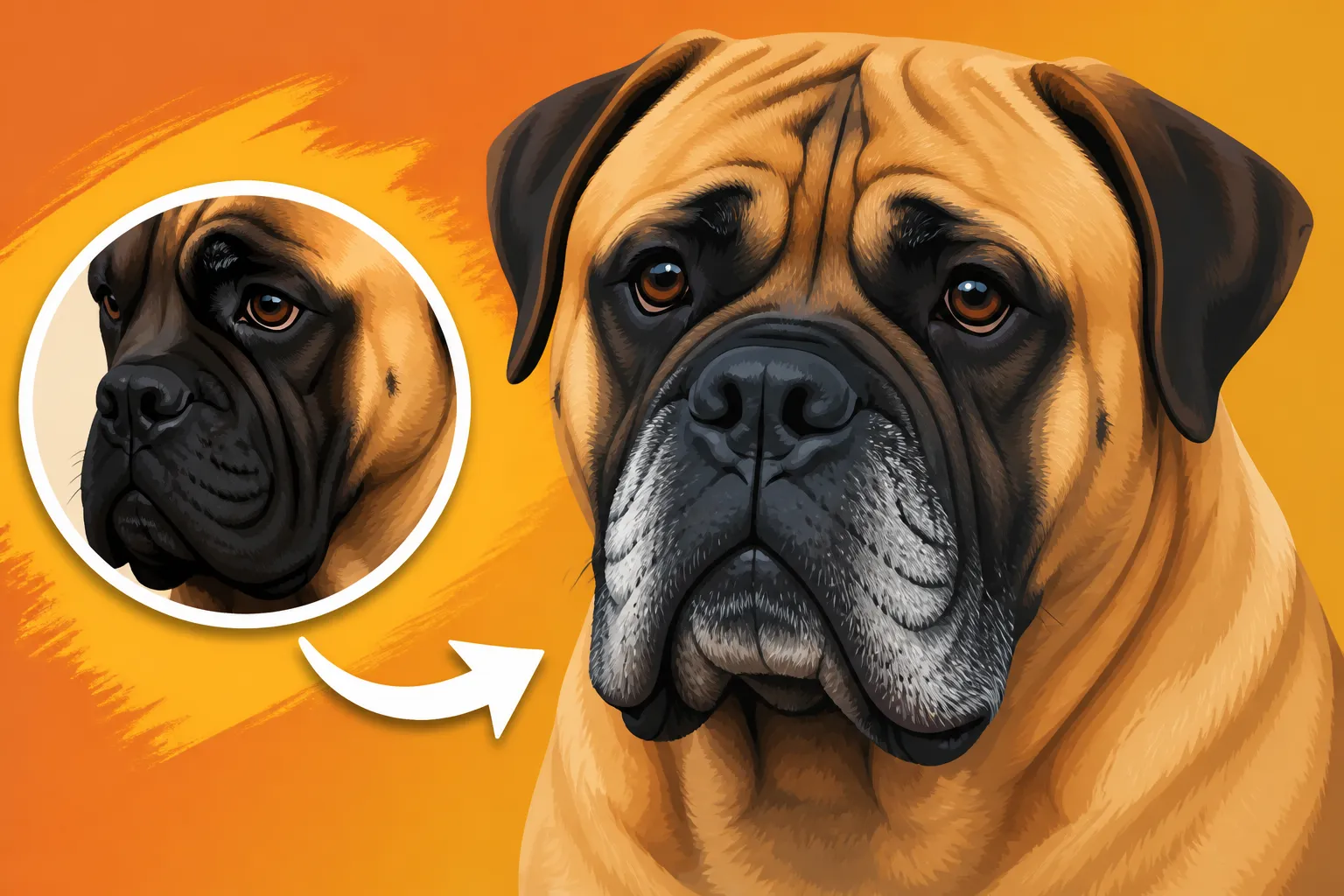
A Bullmastiff’s black mask may gradually pick up silver or white hairs as the dog ages, especially around the muzzle and chin. That change can be completely ordinary, but a sudden pale patch or irritated skin can look similar at first. This guide explains what normal graying looks like, when a color change deserves a vet’s attention, and how to care for your dog’s face without irritating it.
What a Bullmastiff’s black mask looks like as it ages
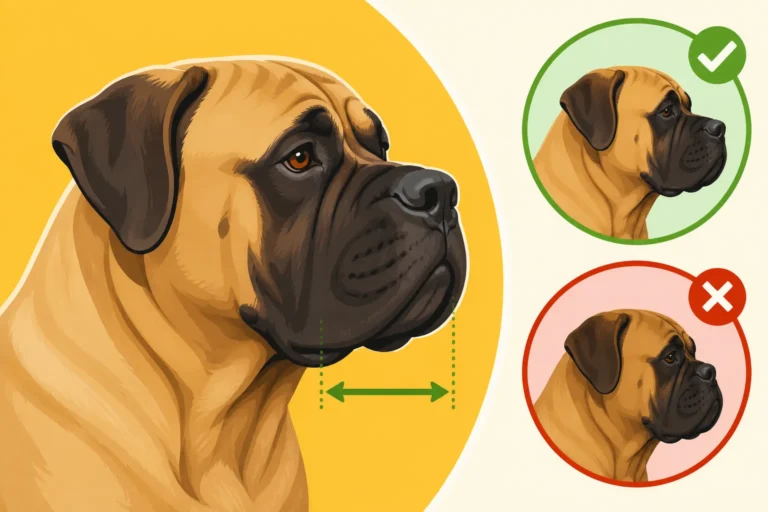
A Bullmastiff’s dark facial mask is a defining feature, but it does not have to stay uniformly black throughout the dog’s life. Individual hairs can lose color, making the muzzle appear salt-and-pepper, gray, or pale in places. The change often becomes noticeable around the chin and lips before it spreads farther across the face.
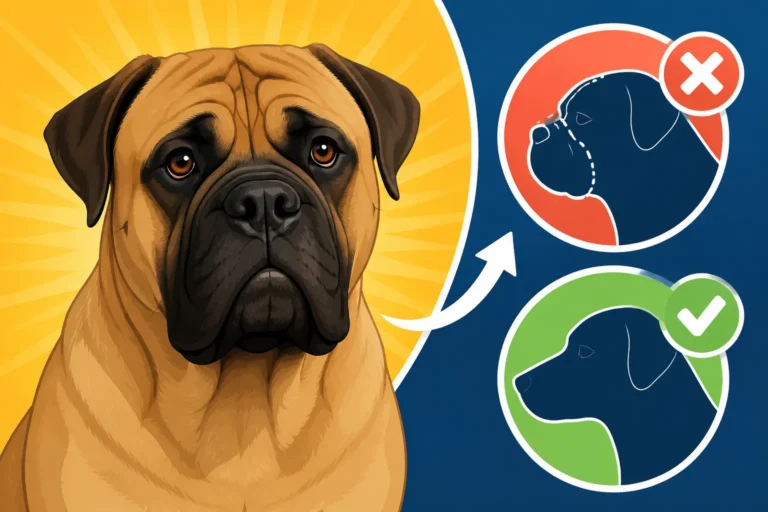
The mask is the color of the coat hair, not a guarantee that the skin underneath will always look dark. Understanding that difference helps you distinguish a few silver hairs from a change in the skin itself. For a description of the typical mask, see What a Bullmastiff's Black Mask Should Look Like.
Where graying often appears first
Many owners first spot gray hairs on the chin, around the lips, or along the sides of the muzzle. A close look may reveal that the coat is changing gradually: a few light hairs become more noticeable over time, while the rest of the mask remains dark. In some dogs, silver hairs also appear near the eyebrows or elsewhere on the face.
The pattern is not identical for every Bullmastiff. One dog might develop a frosted-looking muzzle, while another keeps a mostly dark face with only a small pale patch under the chin. Lighting can also make the change seem more dramatic; sunlight on a short, dark coat often brings out pale hairs that are easy to miss indoors.
Take a clear photo now and then from a similar angle and in similar light. That gives you a more reliable comparison than relying on memory, particularly if you find yourself checking the same tiny patch every day. Gradual changes in the hairs, without discomfort or skin symptoms, are generally less concerning than a sudden change in the skin.
Why the mask can turn gray
The most common explanation for a gradually graying muzzle is aging. As dogs get older, the color of some hairs can change, just as people may develop gray hair. There is no single age when this starts for every Bullmastiff, and the amount of gray does not reliably tell you how healthy, fit, or old a particular dog is.
Individual dogs also vary in their coat color and how that color changes over time. A few gray hairs do not mean the black mask has disappeared, and they do not necessarily signal illness. A Bullmastiff can be active and well while developing a noticeably silver muzzle.
Some research in dogs has associated early muzzle graying with behavioral traits such as anxiety, but a gray face by itself cannot diagnose stress or any other condition. It is better to consider the whole dog: changes in behavior, appetite, sleep, mobility, and comfort matter more than coat color alone. If other changes are worrying you, bring them up during a wellness visit. The Age a Bullmastiff Is Considered Senior offers more context on how age-related changes can vary.
Hair color versus skin color
Try to work out what has actually changed. If the hairs themselves are white or gray but the skin looks normal, you may be seeing ordinary coat graying. If the skin has become pale, pink, dark, crusty, or unusually smooth, that is a different observation and is worth documenting.
A Bullmastiff’s facial folds can make this harder to judge. Hair, moisture, saliva, and shadows collect around the lips and wrinkles, and the skin may be less visible until you gently part the coat. Use good lighting and avoid rubbing or scraping the area to inspect it.
A useful distinction is whether the change is gradual and limited to hair, or sudden and accompanied by a change in the skin. You do not need to make a diagnosis at home. A photo and a clear description of when you first noticed the change can help your veterinarian decide whether an exam is needed.
| What you notice | What it may suggest | A sensible next step |
|---|---|---|
| A few silver hairs appearing gradually on the chin or muzzle | Ordinary age-related coat change is possible | Take a photo and keep an eye on the area |
| A pale patch that appeared quickly or is spreading | A change in skin pigment or another skin issue may need checking | Contact your veterinarian, especially if it continues to change |
| Redness, swelling, itching, odor, sores, or discharge | Irritation, infection, or another problem may be present | Arrange veterinary advice rather than trying home treatments |
| Gray hairs plus a change in energy, appetite, or comfort | Coat color alone does not explain the wider change | Tell your veterinarian about both the coat and behavior changes |
When a gray mask deserves a closer look
A slowly changing muzzle with healthy-looking skin is usually a different situation from a sudden patch of discoloration. Still, it can be difficult to tell coat changes from skin changes in a dark-faced dog, especially when the area sits inside a fold. If the appearance seems unusual to you, asking your veterinary clinic is reasonable—even if the answer turns out to be reassuring.
Signs that are worth discussing with your vet
Contact your veterinarian if a light or dark area appears abruptly, grows noticeably, or affects the skin as well as the hair. Redness, scaling, crusts, sores, tenderness, swelling, persistent itching, or an unpleasant smell are reasons to have the area assessed. Discharge from the eyes or a change in how the dog holds them deserves attention too.
Watch for the way your Bullmastiff behaves. Pawing at the face, rubbing it against furniture, pulling away when you touch a particular spot, or seeming uncomfortable when eating can all add useful context. These signs do not tell you what the cause is, but they help your vet understand that the color change may not be the only issue.
If the dog seems unwell in other ways—for example, has a marked change in appetite, energy, or breathing—do not focus on the gray hairs as the explanation. Describe the broader changes to your veterinary team. Routine checks give you a chance to mention small observations before they become harder to interpret; How Often a Bullmastiff Needs a Wellness Exam explains why regular visits are useful.
What a vet may check
Your veterinarian may first look closely at the coat and skin, including the lips, nose, and facial folds. They may ask when you noticed the change, whether it has spread, and whether your dog scratches or rubs the area. A photograph from before the change can be surprisingly helpful, especially if the color looks different under clinic lighting.
If the skin is inflamed or the area has a sore, odor, or discharge, the vet may recommend additional examination or testing based on what they see. The right approach depends on the appearance and the dog’s other symptoms; a cosmetic-looking change does not automatically call for extensive tests.
You can prepare by noting whether the change is on the hairs or skin, when it began, and whether it seems to be getting larger. Mention any new grooming products or changes in face-cleaning routine. Those details help avoid guesswork and make it easier to decide whether the best plan is to monitor, treat a skin problem, or investigate another cause.
Caring for a Bullmastiff’s face as the mask changes
A graying muzzle does not need special coloring or cosmetic treatment. The practical goal is to keep the skin comfortable and clean, particularly in the folds where moisture and food residue can collect. Gentle, consistent care is more useful than trying to restore a dark color.
Clean and dry facial folds gently
If your Bullmastiff’s face needs wiping, use a soft, clean cloth and be gentle around the lips and wrinkles. Avoid scrubbing, especially if the skin is pink, sore, or sensitive. After cleaning a fold, dry it carefully; leaving moisture trapped against the skin can make irritation more likely.
Keep the routine simple and notice how your dog’s skin responds. If a particular wipe or cleanser seems to cause redness or itching, stop using it and ask your veterinarian what is suitable. Some owners look at pet-care supplies at Chewy, but check that any product is intended for dogs and appropriate for the face. If you are unsure whether a product is safe near the eyes or mouth, ask your vet before using it.
For step-by-step face care, see How to Clean a Bullmastiff's Face Wrinkles. If the folds smell bad, become red, or seem sore, that is not simply a grooming nuisance; Signs a Bullmastiff's Fold Is Infected can help you recognize signs to discuss with your vet.
Skip dyes and home remedies
Do not use human hair dye, bleach, peroxide, or color-restoring products on your Bullmastiff’s mask. Products designed for people can irritate a dog’s skin, and the face is especially vulnerable because a dog may lick the area or rub it into the eyes. Essential oils and strong fragranced products are not automatically safe just because they are marketed as natural.
Also avoid trying to remove a pale patch by repeatedly wiping or brushing it. If the change is in the hair pigment, rubbing will not restore the color. If it is a skin change, friction could make irritation worse and make the area harder for your vet to assess.
When shopping for basic grooming items, Chewy may be one place to compare dog-specific cloths or cleansers, but the label is not a substitute for veterinary guidance if the skin is already inflamed. For an uncomplicated gray muzzle, a clean cloth and a gentle routine may be all that is needed.
Keep an eye on other age-related changes
A graying face can arrive around the same time as other changes, but it is not a reliable measure of aging on its own. Your Bullmastiff may slow down, need more rest, or show changes in mobility as the years pass. Notice those changes separately rather than assuming gray hairs explain them.
It can help to keep a brief record of weight, appetite, activity, and any changes you see in the face or skin. If you already take photos for coat changes, you can also note when a new lump or skin mark appears. How to Check a Bullmastiff for Lumps describes a practical way to become familiar with your dog’s usual body, while What Changes in a Bullmastiff After Six covers broader age-related changes.
If you need grooming supplies, Chewy can be a convenient place to look for dog-safe basics, but avoid buying a medicated product simply because a patch looks different. The right response depends on whether you are seeing ordinary gray hairs or a skin condition. A veterinarian can help you tell the difference and suggest care that fits the actual problem.
What to remember when your Bullmastiff’s mask turns gray
A Bullmastiff’s mask can gradually become silvered with age, often beginning around the chin or muzzle. A few gray hairs, by themselves, do not mean your dog is sick or that the mask is abnormal. What matters most is whether the color change is gradual, whether it involves the skin, and whether your dog shows discomfort or other symptoms.
Take a photo if you want to track the change, keep facial folds clean and dry, and skip dyes or harsh home treatments. If the area changes quickly, becomes irritated, or comes with a change in your dog’s comfort or general health, ask your veterinarian to examine it. What a Bullmastiff's Coat Should Feel Like can also help you think about coat condition beyond color.
Disclaimer
This article is for general informational purposes only and does not constitute professional advice. Laws, prices and regulations vary by location and change over time. Consult a qualified professional for guidance on your specific situation.