Whether the Holding Instinct Survives in a Bullmastiff
One of the most profound questions new Bullmastiff owners, or even seasoned ones, often ask themselves is whether the ancient instincts of this magnificent breed still run strong beneath their calm, gentle demeanor. You might look at your sleeping giant, snoring softly on the rug, and wonder if the "holding instinct" that made them famous centuries ago truly survives in today's pet. This guide aims to peel back the layers of history and modern behavior to explore just how much of that original gamekeeper's companion remains in your beloved Bullmastiff.
Understanding the Bullmastiff's Original Purpose
To truly grasp whether the "holding instinct" survives, we first need to travel back in time to the rugged English estates where the Bullmastiff was first conceived. These weren't dogs bred for sport or companionship initially; they were working animals with a very specific, and rather dangerous, job.
The Gamekeeper's Need
Imagine vast, often unfenced, estates in 19th-century England. These lands were home to game animals – deer, pheasants, rabbits – that were valuable resources for the landowners. Poaching was a serious problem, and gamekeepers were tasked with protecting these assets, often alone and under the cover of darkness. They needed a dog that could track silently, cover ground quickly, and, most importantly, apprehend an intruder without maiming or killing them. A Mastiff was strong but perhaps too slow; a Bulldog was tenacious but too small to truly incapacitate a grown man. The answer? A thoughtful blend of both.
The gamekeepers weren't looking for a vicious attack dog. Their goal wasn't to inflict lethal damage on a poacher, but to prevent them from escaping, allowing the gamekeeper time to arrive and make an arrest. This required a dog with immense strength, a formidable presence, and a clear understanding of restraint. It was a fine line to walk, needing a dog capable of confronting a human threat directly, but with a built-in "off switch" or, more accurately, a "hold on" switch rather than a "tear apart" one. This historical context is vital when we discuss The Bullmastiff Was Built to Catch Poachers in the Dark.
Holding vs. Biting
The term "holding instinct" for a Bullmastiff isn't about biting and inflicting injury. Instead, it refers to their inherent ability and historical training to pin down a person, or to prevent movement, often by leaning, body-blocking, or using their immense weight to control. Think of it less as an aggressive assault and more as a sustained, unwavering detention. A Bullmastiff's wide skull, powerful jaws, and broad chest were all designed for this purpose. They were expected to use their bulk and strength to physically restrain, rather than to snap or tear.
This is a crucial distinction, as it shapes how we interpret their modern behaviors. While a Bullmastiff certainly can bite, their foundational design was for a different kind of confrontation. The early breeders carefully selected for temperament, prioritizing courage, strength, and a level head, rather than unbridled aggression. This careful selection is a big part of A Bullmastiff Was Bred to Hold a Man, Not Bite Him.
Tracing the Instinct in Modern Bullmastiffs
So, how much of this sophisticated "catch and hold" programming still exists in the Bullmastiff we invite into our homes today? The answer is nuanced, but many owners will tell you that the spirit of that gamekeeper's companion is undeniably still there, albeit often expressed in more subtle, domesticated ways.
Genetic Predisposition vs. Training
Like all breeds, Bullmastiffs carry genetic blueprints from their ancestors. These predispose them to certain temperaments and behaviors. The calm, confident, and protective nature of a Bullmastiff isn't just an accident; it's the result of generations of selective breeding for those very traits. However, simply having the genetic predisposition isn't enough; modern Bullmastiffs are no longer routinely trained to apprehend human intruders. Our cozy living rooms and fenced backyards are a far cry from the moonlit moors.
This means that while the capacity for the holding instinct might be present, its expression is heavily influenced by their environment, upbringing, and training. A Bullmastiff raised with proper socialization, positive reinforcement, and clear boundaries will channel any latent guarding instincts into acceptable, protective behaviors rather than aggressive ones. Conversely, a Bullmastiff lacking proper guidance might react inappropriately due to misunderstood instincts. This interplay between nature and nurture is key to understanding The Bullmastiff That Pauses to Decide Whether You Are Worth It.
Subtle Manifestations of the Holding Instinct
You might not see your Bullmastiff pinning down an Amazon delivery driver (and thank goodness for that!), but you’ll likely witness behaviors that are echoes of their historical role. These can be endearing, perplexing, or, at times, require careful management.
One common manifestation is the "Bullmastiff lean." Your dog might approach you or a guest and simply lean their entire 100+ pound body against you. It feels like a comforting hug, but it's also a subtle form of physical control, a way to establish presence and position. They're using their bulk, much like their ancestors might have used it to pin a poacher against a tree. Similarly, you might find your Bullmastiff strategically placing themselves between you and a perceived "threat" – whether that's a new visitor, another dog, or even a sudden noise outside. They’re creating a physical barrier, body-blocking you from what they consider a potential danger.
I’ve had Bullmastiffs who, when startled by a new sound, wouldn't bark wildly, but instead would quietly position themselves at the doorway, blocking the path, ears swiveling, assessing the situation. It’s a silent, watchful, and deeply rooted protective stance, a nod to Why a Bullmastiff Was Bred to Work Silently.
The Role of Socialization and Training
Given these ingrained protective tendencies, proper socialization and consistent training are absolutely non-negotiable for a Bullmastiff. These aren't just good ideas; they are essential for raising a well-adjusted, safe, and happy companion.
Early Socialization for a Balanced Dog
Starting early is paramount. A Bullmastiff puppy needs to experience a wide variety of sights, sounds, smells, people, and other friendly, vaccinated dogs during their critical socialization period (roughly 8-16 weeks). This helps them learn what is normal and what is truly a threat. Without this exposure, anything new or unfamiliar can be perceived as something to be guarded against. Take your puppy to safe, supervised puppy classes, expose them to different environments like parks (once fully vaccinated), and have a steady stream of approved, calm visitors to your home.
Think of it as building a robust mental database. The more positive experiences they have, the better equipped they are to distinguish between a friendly neighbor and an actual intruder. A well-socialized Bullmastiff learns to greet new people politely and confidently, rather than retreating with suspicion or acting overtly protective. This early foundation directly influences The First Year With a Bullmastiff Puppy. Training resources like those offered by BAXTER & Bella can be incredibly helpful for new puppy owners navigating this crucial stage, offering structured guidance to ensure your Bullmastiff learns appropriate responses from day one.
Training for Control and Appropriate Response
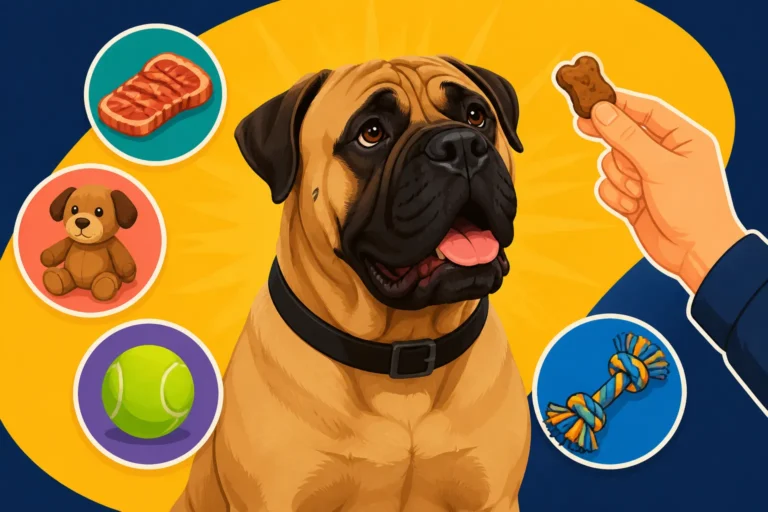
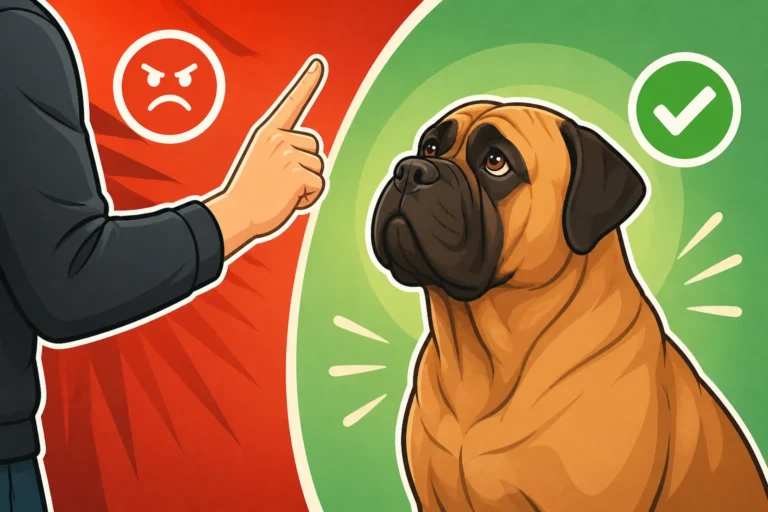
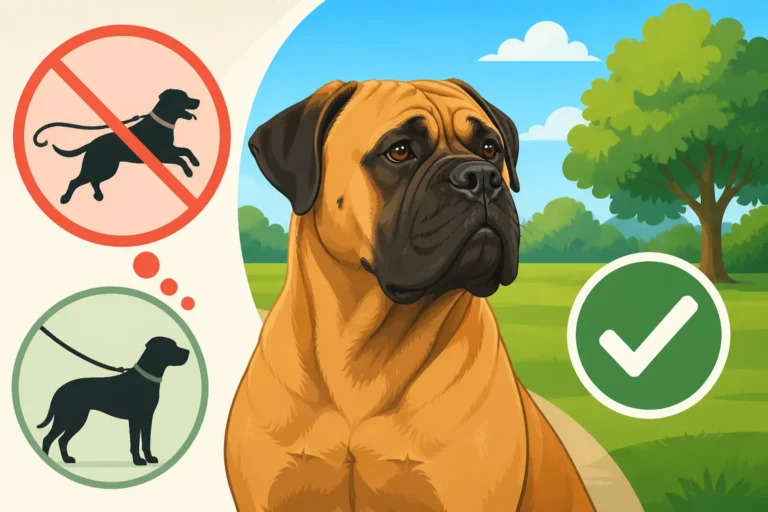
Given their size and strength, training your Bullmastiff is not just about manners; it's about control and safety. A "hold" command (or "stay," "wait," or "place") becomes incredibly important. You need to be able to redirect their attention and control their movements, especially if they decide to "lean" on an unsuspecting guest or become overly focused on something outside. Leash manners are also crucial, as a 130-pound dog with a strong will can easily pull you off your feet. Training should always be positive, consistent, and reward-based. Bullmastiffs are sensitive souls and respond poorly to harsh corrections.
Focus on teaching reliable recall, a solid "leave it," and a polite "go to your mat" command. These foundational behaviors give you the tools to manage situations where their protective instincts might kick in. Remember, they are formidable dogs, and teaching them to defer to your judgment is critical for harmonious living. You want them to be a vigilant companion, not an unruly enforcer. Mastering control is essential for Training a Bullmastiff That Weighs More Than You Do.
How the Holding Instinct Impacts Daily Life
Understanding the Bullmastiff's heritage helps explain some of their unique quirks and behaviors that might otherwise seem odd or simply part of their "personality."
Leaning and "Body Blocking"
The lean is perhaps the most classic manifestation of the holding instinct in a domestic setting. It's often interpreted as affection, and it certainly can be, but there's a primal component to it. When your Bullmastiff leans into you, they are connecting their body to yours, creating a physical presence. This can be comforting, but it can also be their way of claiming you, or subtly asserting themselves in a situation. If you have guests over, they might lean on them, too – a greeting, yes, but also a test, and a way to control space.
"Body blocking" takes this a step further. Your Bullmastiff might walk between you and another person, or stand squarely in a doorway, effectively creating a barrier. I've seen them do this with other dogs as well, gently but firmly preventing another dog from approaching their human too closely. It’s not aggression; it's usually a deep-seated desire to protect their "flock" and control the immediate environment. You'll often find them doing this when you least expect it, demonstrating Why a Bullmastiff Leans on People.
Interactions with Strangers and Visitors
This is where the holding instinct requires careful management. A Bullmastiff typically isn't effusively friendly with strangers. They tend to be reserved, observant, and sometimes aloof. They are evaluating. They are assessing whether the new person poses a threat. Their natural inclination might be to stand between you and the visitor, or to position themselves to block the entrance to a room. This isn't rudeness; it's their protective nature at work.
It's vital to introduce new people calmly and positively. Avoid excited greetings that can escalate tension. Have visitors largely ignore your Bullmastiff at first, allowing the dog to approach on their own terms. This reinforces that you are in control and that the visitor is not a threat. Never leave a Bullmastiff unsupervised with new or unfamiliar people, especially children, as their size alone can be intimidating, even if their intentions are good. Always be mindful of How a Bullmastiff Greets a Stranger.
| Behavior Manifestation | Original Gamekeeper Context | Modern Pet Context | Owner Management |
|---|---|---|---|
| Leaning | Used weight to pin/control | Affection, subtle control, asserting presence | Reinforce polite greetings; teach "off" command. |
| Body Blocking | Creating a physical barrier | Protecting "their" person, controlling space | Teach "place" or "stay"; lead introductions calmly. |
| Silent Vigilance | Tracking without noise | Observant, assessing new situations quietly | Socialize extensively; positive exposure to new stimuli. |
| Reserved Greetings | Cautious approach to threat | Aloofness, careful assessment of strangers | Manage introductions; don't force interaction; be the leader. |
| Guardian Position | Stationing at entry points | Guarding the home, family members | Establish boundaries; teach "wait" at doors; ensure clear authority. |
Responsible Ownership and the Holding Instinct
Owning a Bullmastiff means accepting and understanding these deep-rooted instincts. It’s about channeling them positively, ensuring your dog is a protector by nature, not a danger by misinterpretation or lack of training.
Understanding Your Dog's Signals
Your Bullmastiff communicates constantly, often subtly. Learning to read their body language is critical for managing their protective instincts. Look for changes in their posture, the set of their ears, the tension in their tail, and their facial expressions. A Bullmastiff that is standing stiffly, staring intently, with a low growl (or even just a deep rumble), is communicating discomfort or perceived threat, and this needs to be addressed before it escalates. They may also yawn, lip lick, or turn their head away if they are feeling stressed or uncomfortable. These are often precursors to more pronounced protective behaviors.
Being attuned to these signals allows you to intervene early, de-escalate situations, and reassure your Bullmastiff that you have things under control. This is part of How a Bullmastiff Hides Pain, but it also applies to how they hide anxiety or a building sense of protectiveness. Don't punish their communication, but rather understand it as information that helps you guide them.
When to Seek Professional Guidance
While the Bullmastiff's protective instincts are natural, they should always be manageable. If you find your Bullmastiff's protective behaviors are escalating, becoming aggressive, or are simply beyond your ability to manage effectively, it is absolutely essential to seek professional help. A certified professional dog trainer or a veterinary behaviorist can provide invaluable insight and create a tailored training plan. They can assess the root cause of the behavior and help you implement strategies to ensure your dog is a safe and well-behaved member of society.
Never hesitate to get help. These are powerful dogs, and their instincts, while admirable in their historical context, need to be carefully guided in our modern world. A good trainer can help reinforce the positive aspects of their guarding nature while mitigating any potential downsides. They can also help you find appropriate tools, like sturdy leashes and harnesses (many can be found on Amazon), to ensure you maintain control during training and walks.
Disclaimer
This article is for general informational purposes only and does not constitute professional advice. Laws, prices and regulations vary by location and change over time. Consult a qualified professional for guidance on your specific situation.