Whether a Bullmastiff Should Be Left With Children
It's a question many Bullmastiff owners, especially those with young families or those planning to expand their family, grapple with: "Can I truly trust my giant, loving dog completely with my kids?" The worry is real, and it’s valid. While Bullmastiffs are renowned for their calm and affectionate nature with their families, their immense size and powerful build mean that even an accidental bump can be significant for a small child. This guide is here to help you understand the dynamics of Bullmastiffs and children, offering realistic insights and actionable strategies to ensure a safe and harmonious home for everyone.
Understanding the Bullmastiff's Temperament Around Children
The Bullmastiff has earned a well-deserved reputation as a "gentle giant," a moniker that brings both comfort and, sometimes, a touch of misunderstanding. It’s important to delve into what this reputation truly means in the context of living with children.
The Gentle Giant Reputation vs. Reality
When people speak of Bullmastiffs as "gentle giants," they're often referring to their generally placid disposition, their tendency to be calm indoors, and their deep affection for their immediate family. This breed is known for being incredibly devoted and often surprisingly tolerant of the antics of their human companions. They're not typically high-strung or hyperactive; instead, they prefer to be close to their people, often leaning into them or following them from room to room. Their sheer size often makes people assume they must be aggressive to match, but historically, quite the opposite is true.
However, "gentle" does not equate to "incapable of harm" or "always tolerant, no matter what." A Bullmastiff can weigh over 100 pounds, sometimes significantly more. This means that even a playful nudge, an excited leap, or simply getting underfoot can inadvertently cause a child to fall or get hurt. It's not about malice; it's about physics. Owners sometimes forget that while their Bullmastiff might be the sweetest dog in the world, they are still a large, powerful animal with natural instincts. The frustration for parents often comes from loving their dog deeply but also feeling a constant, underlying anxiety about potential accidents, and that feeling is completely understandable.
Historical Purpose and Instincts
To truly grasp a Bullmastiff's nature, we need to look back at their origins. These dogs were developed in 19th-century England by gamekeepers to deter poachers. Their job was to track, silently apprehend, and hold poachers until the gamekeeper arrived. Crucially, they were bred not to maul or bite severely. The goal was control and restraint, not injury. This historical purpose instilled in the breed a strong protective instinct, combined with a remarkable ability for controlled power and an inherent desire to stick close to their charge—their human family.
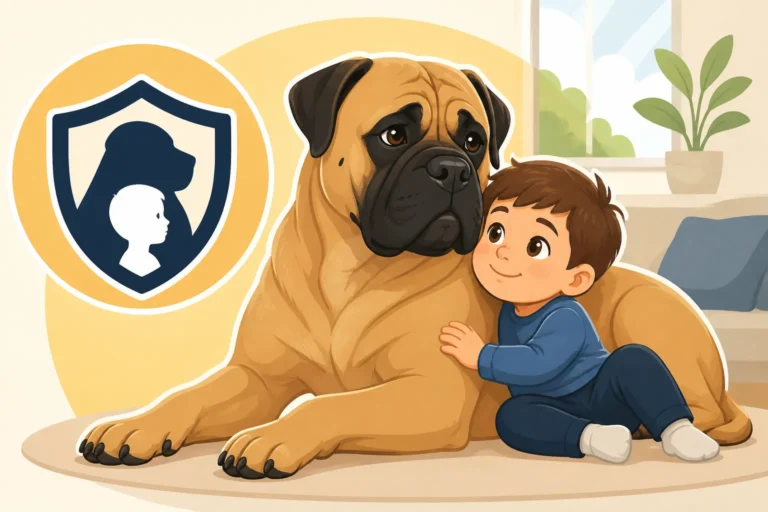
How does this translate to family life and children? Generally, it means a Bullmastiff is wired to be watchful and protective of "their" people. They are often inherently patient, possessing a steady temperament that allows them to tolerate a good deal of hustle and bustle. This is why many Bullmastiffs integrate so beautifully into family homes, becoming loyal companions to children. They often see children as part of their flock, worthy of their quiet guardianship. You'll often find them lying patiently near playing children, observing with a calm demeanor.
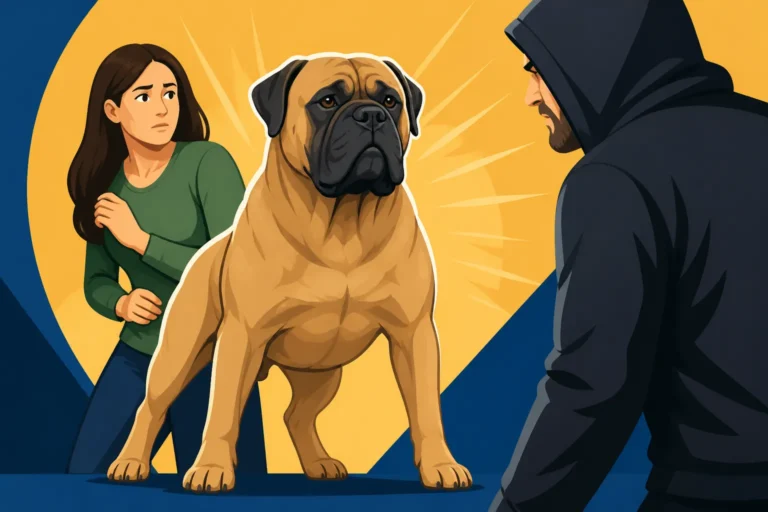
However, that protective instinct, while usually a positive trait, can sometimes be a double-edged sword if not properly managed. A Bullmastiff might decide that a boisterous playmate is a threat, or that a stranger approaching "their" child needs to be deterred. This isn't aggression in the common sense; it's an ingrained instinct to protect what they perceive as theirs. Understanding this deep-seated trait is crucial for ensuring that the Bullmastiff's protective nature remains a comfort, not a concern, especially around young ones. How Protective a Bullmastiff Is
The Risks and Realities of Unsupervised Interaction
Given their size and inherent instincts, the question of leaving a Bullmastiff unsupervised with children isn't just about aggression; it's about a range of potential scenarios where even the best-intentioned dog could pose a risk.
Accidental Injury Due to Size and Strength
Let's be brutally honest: a Bullmastiff is a huge dog. They can easily weigh more than a small child. Even a minor misstep or an exuberant moment can turn into a serious issue. Imagine a toddler, unsteady on their feet, walking past a Bullmastiff that suddenly stands up or shakes its head. The child could easily be knocked off balance and fall, hitting their head on furniture or the floor. It's not the dog being mean; it's simply a large, dense object moving unexpectedly. Many owners have experienced their Bullmastiff accidentally knocking over an adult with an excited lean or a wagging tail. Now imagine that force applied to a much smaller, more fragile human.
Consider also the sheer weight of a Bullmastiff. If a child's hand or foot happens to be in the wrong place when the dog decides to lie down, a serious crushing injury could occur. It’s a terrifying thought, but it’s a realistic one that every owner must acknowledge. While a Bullmastiff's temperament might be angelic, their physical presence alone demands vigilance. It’s this factor, more than any other, that makes dedicated supervision non-negotiable. It’s not about preventing attacks, but about preventing unfortunate, yet entirely foreseeable, accidents. Whether a Bullmastiff Knocks Over Toddlers
Misinterpretation of Dog Signals by Children
Children, particularly very young ones, are not born with an innate understanding of canine body language. They often interpret dog behavior through a human lens, which can lead to dangerous misunderstandings. A child might see a dog's stiff body and wide, "whale eye" as simply curious, when in fact, it's a clear signal of stress or discomfort. They might pull an ear, climb on a sleeping dog, or try to hug a dog that isn't comfortable with such close physical contact. From a child's perspective, they're just showing affection or playing; from the dog's perspective, their personal space is being invaded, or they're being hurt.
A dog, especially a large breed like a Bullmastiff, has limited ways to communicate its discomfort. It might first try subtle signals: yawning, lip-licking, turning its head away, or walking away. If these are ignored (as they often are by young children), the signals can escalate to a growl, a snarl, or even a snap. It's crucial to remember that it's profoundly unfair to expect any dog, no matter how gentle, to tolerate continuous harassment or discomfort without eventually reacting. Incidents often occur not because the dog is "bad," but because its attempts to communicate its distress were missed or ignored. This is why it’s imperative to teach children appropriate ways to interact with dogs, and just as importantly, to teach them when to leave a dog alone. Resources like BAXTER & Bella’s online training program can be invaluable for teaching both owners and children about canine communication and respectful interaction.
Resource Guarding and Protective Instincts
Bullmastiffs, like many breeds, can exhibit resource guarding. This is when a dog becomes possessive over certain items—food bowls, high-value treats, favorite toys, or even a preferred resting spot. A child approaching a Bullmastiff while it's eating, or attempting to take a cherished toy, can inadvertently trigger this instinct. While a well-socialized and trained Bullmastiff might tolerate a great deal, the potential for a protective reaction is always present, and it's amplified when a valuable resource is involved. This isn't about aggression towards the child, but a primal instinct to protect what's theirs.
Furthermore, the Bullmastiff's inherent protective instinct, mentioned earlier, can sometimes manifest in ways that are problematic if not managed. While they are often wonderful with the children in their immediate family, they might perceive other children, or even adults, as a threat to "their" children during boisterous play. A dog that steps between you and a perceived threat, or body-blocks a stranger approaching a child, is acting on its instinct. While this might seem endearing in some situations, it can become dangerous if the dog misreads a situation or acts on impulse. This nuanced aspect of their temperament highlights why active adult supervision is not just recommended, but absolutely essential. Whether a Bullmastiff Guards the Children
Essential Strategies for Safe Coexistence
The good news is that with proactive training, careful management, and a deep understanding of your Bullmastiff's needs, a harmonious home life with children is absolutely achievable. It's about setting everyone up for success.
Constant Supervision and Training
The absolute golden rule for any large dog, and especially a Bullmastiff, living with children is simple: never leave them unsupervised together, even for a moment. This applies to all children, but particularly infants, toddlers, and young children who don't yet understand dog behavior. "Unsupervised" means even if you just step into the next room for a minute; accidents happen in seconds. This isn't a judgment on your dog's character; it's a responsible safety protocol based on the realities of owning a powerful animal.
This constant supervision goes hand-in-hand with consistent training for both your Bullmastiff and your children. For your Bullmastiff, basic obedience is paramount. Commands like "sit," "stay," "leave it," "drop it," and "go to your mat/place" are not just party tricks; they are vital safety cues. These commands help manage impulse control and provide you with tools to redirect your dog if a situation starts to look iffy. Training needs to be ongoing and positive, recognizing that a Bullmastiff is intelligent but can also be deliberate in its responses. Working with a reputable online training program like BAXTER & Bella can provide structured lessons that make a huge difference in developing a well-behaved family member. Training a Bullmastiff That Weighs More Than You Do
For children, education is just as critical. They need to learn how to interact respectfully with the dog: no pulling ears or tails, no climbing on the dog, no disturbing the dog while it's eating or sleeping, and always asking permission before petting. Teach them to recognize when the dog wants to be left alone, and reinforce the idea that the dog has feelings and needs its space. These lessons are as much for the child's safety as for the dog's well-being.
Creating Safe Spaces for Both Dog and Child
Just as humans need personal space, so do dogs. It is absolutely essential to provide your Bullmastiff with a designated safe haven where they can retreat and be undisturbed. This might be a comfortable crate, a dog bed in a quiet corner, or even a specific room that is off-limits to children unless an adult is actively supervising interactions. This space allows your dog to decompress, especially after a busy play session or if children are being particularly boisterous. Teaching your Bullmastiff to "go to their place" on command is an excellent way to manage interactions.
Similarly, consider creating safe spaces for your children, particularly infants and toddlers. A playpen can be an invaluable tool for keeping a baby or young child separate from the dog while allowing them to be in the same room. Baby gates, readily available from retailers like Amazon, are fantastic for sectioning off areas of the home, providing clear boundaries between dog and child when direct supervision isn't possible, or when the dog simply needs a break. These physical barriers are not a sign of distrust; they are smart management tools that prevent accidents and reduce stress for everyone.
Socialization and Exposure
Early and positive socialization is absolutely fundamental for any Bullmastiff puppy, especially if they will be living with children. From a young age, expose your puppy to a wide variety of sights, sounds, people (including well-behaved children), and environments in a controlled and positive manner. This helps them develop into a confident, well-adjusted adult dog that is less likely to be fearful or reactive in new situations. Puppy classes are excellent for this, allowing your Bullmastiff to learn appropriate interactions with other dogs and people under supervised conditions. The First Year With a Bullmastiff Puppy
When it comes to children, carefully managed exposure is key. If you have children, involve them in the puppy's training and care (age-appropriately, of course). Teach them how to gently pet, how to toss a toy, and how to reward good behavior. If you don't have children but plan to, introduce your Bullmastiff to friends' or family members' children in positive, structured sessions. Always ensure these interactions are short, positive, and heavily supervised, with opportunities for the dog to retreat if needed. The goal isn't to force interactions but to create positive associations and build the dog's comfort level. Remember, socialization doesn't guarantee a specific temperament, but it provides the best possible foundation for a resilient and calm companion. A Bullmastiff With Children
Recognizing Warning Signs and When to Seek Professional Help
Even with the best intentions and proactive strategies, it's vital to be vigilant and understand your Bullmastiff's communication. Recognizing early warning signs can prevent serious incidents.
Subtle and Overt Warning Signals from Your Bullmastiff
Dogs communicate constantly, and it's our responsibility as owners to learn their language. A Bullmastiff might display a range of subtle signs indicating discomfort, stress, or a desire for space long before an overt growl or snap. These can include:
- Subtle Signals: Yawning when not tired, lip-licking (when no food is present), turning their head away, avoiding eye contact, sniffing the ground, a stiff body posture, whale eye (where the whites of their eyes are visible), tail tucked low or stiffly wagging. They might also try to walk away or put a barrier (like a piece of furniture) between themselves and the child.
- Overt Signals: A low growl, a snarl (showing teeth), a stiff bark directed at the child, a sudden lunge, or a snap (a quick bite without holding).
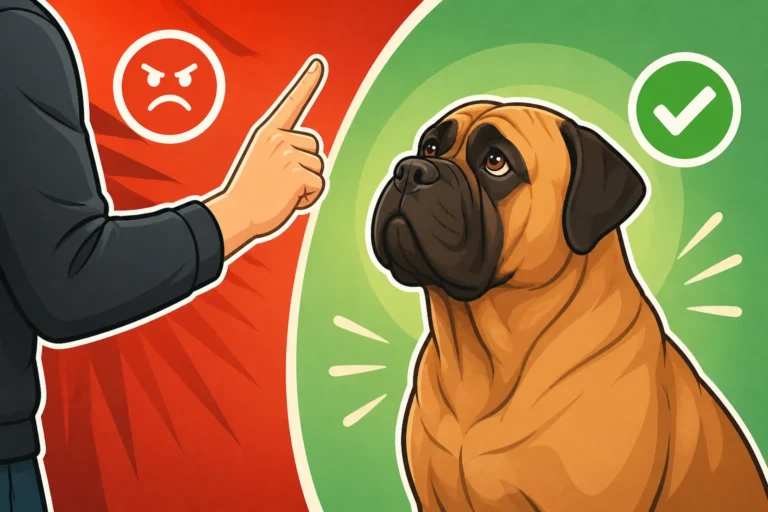
It's absolutely crucial to respect all of these signals. A growl, for instance, is not a sign of a "bad" dog; it's a vital warning. Punishing a growl can suppress this warning, leading to a dog that bites without any prior notice because it has learned its warnings are unacceptable. Instead, a growl should be an immediate signal for an adult to intervene, separate the dog and child, and assess what caused the discomfort. Understanding How Sensitive a Bullmastiff Is can help you interpret these signs.
When Professional Intervention is Necessary
Sometimes, despite all your best efforts, you might notice consistent signs of discomfort, fear, or aggression from your Bullmastiff towards children. Perhaps your dog frequently growls, snaps, or hides when children are present, or you're seeing resource guarding that you can't manage effectively. If your dog has ever actually nipped or bitten a child, even lightly, it's an immediate red flag that requires professional help. Do not try to "fix" significant behavioral issues on your own, especially when children's safety is at stake.
In these situations, it's time to seek out a certified professional dog trainer or, even better, a veterinary behaviorist. These professionals have specialized knowledge and experience to assess your dog's behavior, identify the underlying causes, and develop a safe and effective behavior modification plan. They can provide guidance on management strategies, training techniques, and sometimes even medication, to help your Bullmastiff feel more comfortable and reduce the risk of incidents. Remember, advocating for your dog's well-being and the safety of your children means seeking expert help when you need it. It's a sign of a responsible owner, not a failing one.
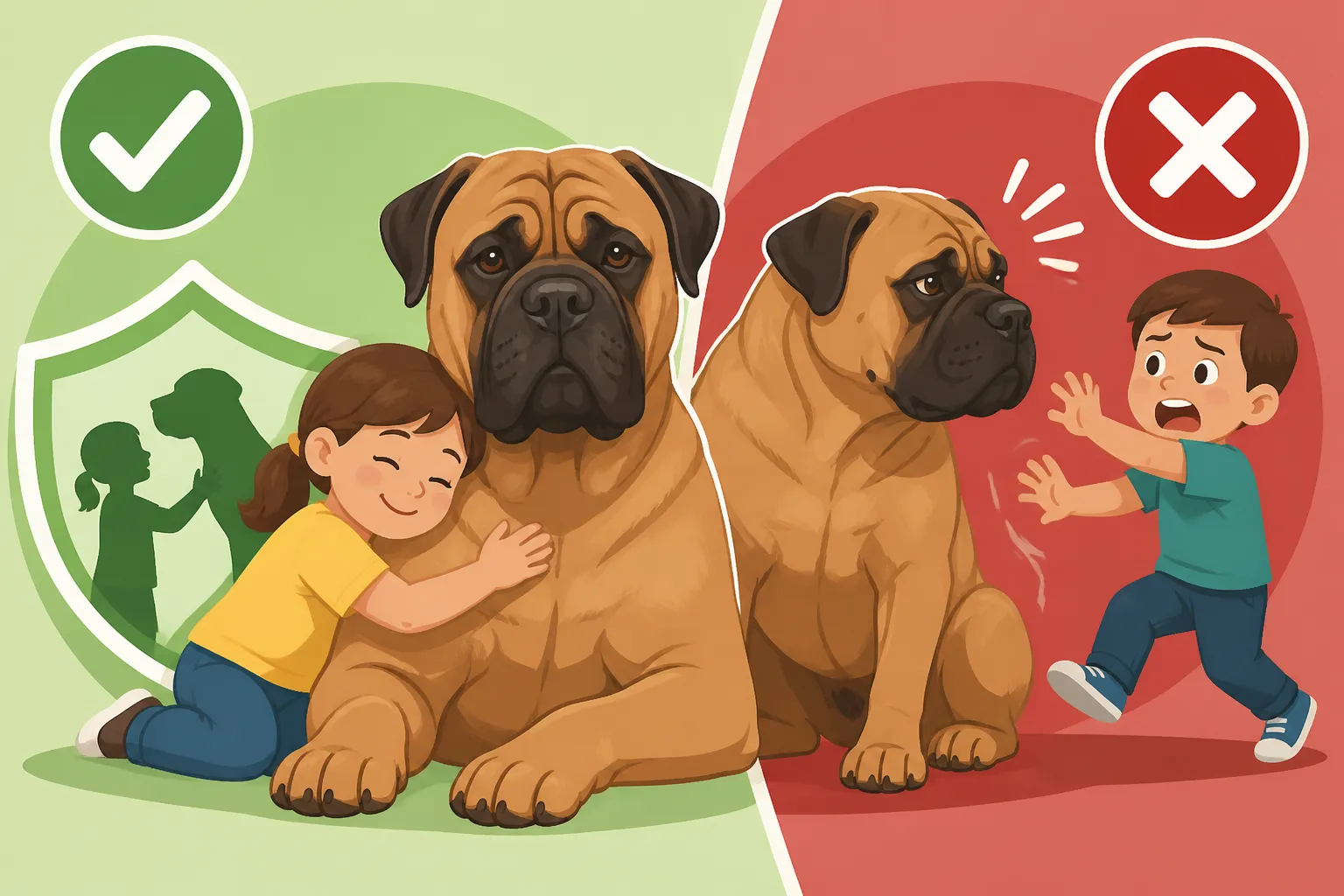
Here’s a quick overview of why active supervision is non-negotiable:
| Aspect | Supervised Interaction | Unsupervised Interaction |
|---|---|---|
| Safety | Maximized; immediate intervention possible | Severely compromised; high risk of injury |
| Learning & Bonding | Positive reinforcement, teaching mutual respect | Potential for negative experiences, fear, or aggression |
| Dog's Comfort | Retreats available, boundaries maintained | Dog may feel trapped or overwhelmed |
| Child's Safety | Guided interaction, prevention of accidental harm | Child may provoke without realizing, accidental injury |
| Risk of Incident | Low, with proper management | High, even with a "good" dog |
Ultimately, owning a Bullmastiff with children can be an incredibly rewarding experience, filling your home with love, loyalty, and laughter. But it demands constant vigilance, clear boundaries, and ongoing education for every member of the family. With careful management, responsible training, and a deep respect for both your dog's instincts and your children's safety, you can foster a truly harmonious environment where everyone thrives. For more insights on how to manage these relationships, consider reading How a Bullmastiff Handles a Toddler and When to Start Training a Bullmastiff Puppy.
Disclaimer
This article is for general informational purposes only and does not constitute professional advice. Laws, prices and regulations vary by location and change over time. Consult a qualified professional for guidance on your specific situation.