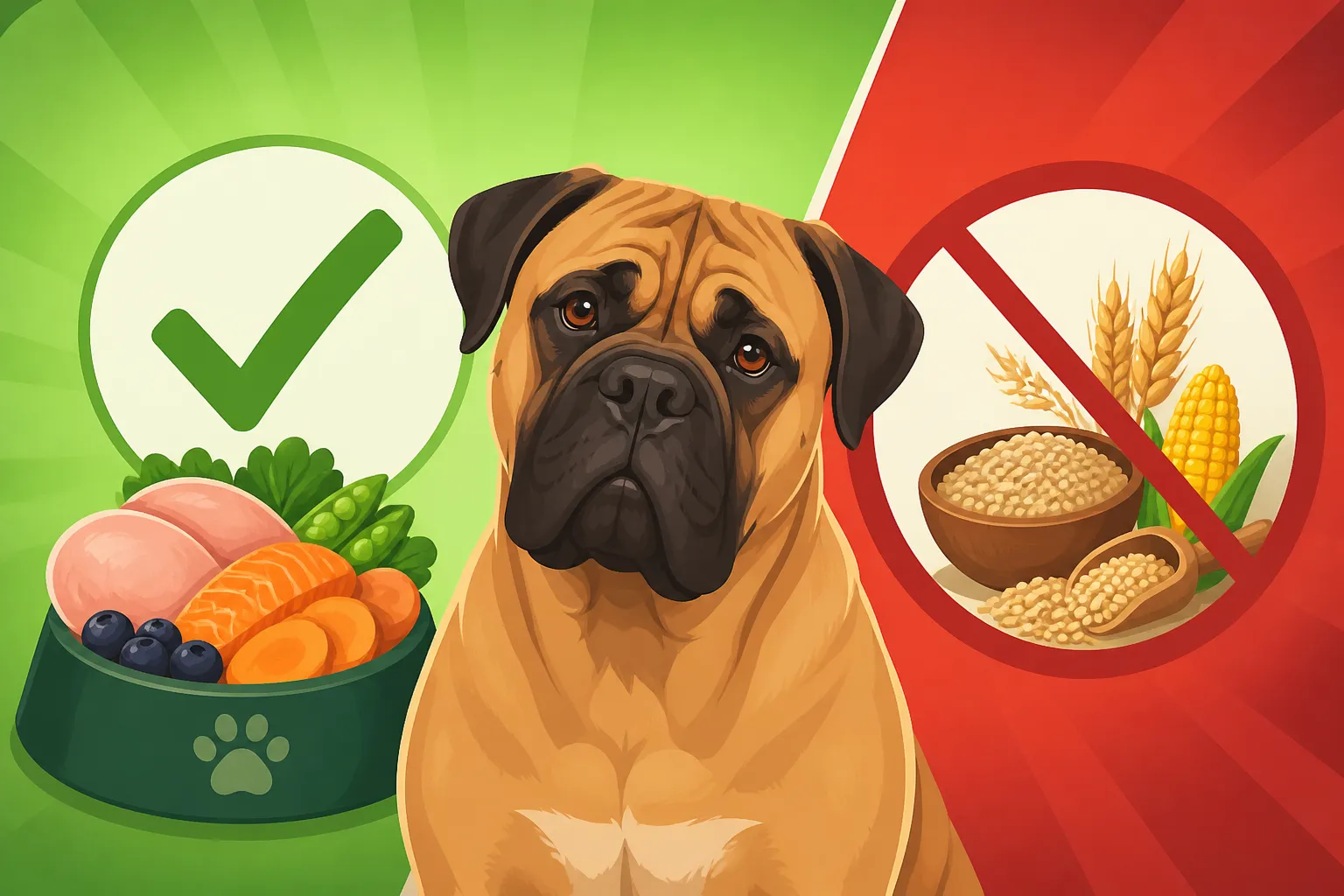
Whether a Bullmastiff Should Eat Grain Free
It can be incredibly confusing to navigate the world of dog food, especially when you’re trying to do the absolute best for your beloved Bullmastiff. One of the biggest debates that causes a lot of head-scratching and worry among owners is whether a grain-free diet is truly healthier. This guide aims to cut through the noise, validate your concerns about what you're feeding your big companion, and provide clear, empathetic insights into the grain-free discussion for Bullmastiffs.
The Grain-Free Trend and Why It Became Popular for Dogs
It feels like just yesterday every pet store shelf was overflowing with "grain-free" options, touted as the pinnacle of canine nutrition. As a Bullmastiff owner, you’re naturally inclined to seek out what seems like the most wholesome and natural choice for your gentle giant, and for a long time, grain-free felt like the clear answer.
Tracing the Origins of the Grain-Free Movement
The initial push for grain-free dog food really started gaining traction years ago, fueled by the idea that dogs, being descendants of wolves, should eat a diet that mimics what their wild ancestors would have consumed. The logic was simple: wolves don't forage for wheat or corn, so why should our domestic dogs eat it? This ancestral diet concept resonated deeply with many owners who wanted to get "back to basics" with their pet's food. There was also a growing belief that grains were a common allergen for dogs, leading to skin issues, digestive upset, and other problems. Owners, frustrated with recurring health issues in their dogs, often turned to grain-free in hopes of finding relief, feeling like they were finally addressing the root cause of their pet's discomfort.
We all want the best for our dogs, and when marketing campaigns emphasize phrases like "natural," "ancestral," and "allergen-friendly," it’s easy to feel like you're making an informed, positive choice. For Bullmastiff owners, who are often keenly aware of their breed's unique health considerations and desire to extend their lifespan, the allure of a "healthier" diet option was incredibly strong. The ingredients listed in many conventional foods, with their complex names and often less-than-appetizing descriptions, also made people wary. It's totally understandable to question what's truly going into your dog's bowl when you're faced with ingredients you can barely pronounce.
Misconceptions About Grains and Canine Digestion
Here's where things get a bit more nuanced. While the ancestral argument sounds compelling on the surface, modern domestic dogs are not wolves. Over thousands of years of co-evolution with humans, dogs have developed significant dietary adaptations. One of the most notable changes is their ability to digest carbohydrates, including grains, far more efficiently than their wolf ancestors. Their bodies produce more copies of the amylase gene, which is crucial for breaking down starch. This means that a dog's digestive system is actually quite capable of processing and utilizing nutrients from grains.
The idea that grains are merely "fillers" or inherently bad for dogs is a major misconception that took hold during the grain-free surge. Quality grains like rice, oats, barley, and corn are excellent sources of energy, fiber, and essential nutrients. They provide complex carbohydrates that fuel your Bullmastiff's muscles and brain, and fiber that aids in healthy digestion. It's also easy to confuse a gluten intolerance (rare in dogs, more common in specific breeds like Irish Setters) with a general grain allergy, which is even rarer. Most often, if a dog has food allergies, they are typically to protein sources like beef, chicken, dairy, or soy, rather than grains themselves. So, if your Bullmastiff is scratching or has an upset tummy, looking at protein sources first, under veterinary guidance, is usually the more productive path before demonizing all grains.
Understanding the Nutritional Needs of a Bullmastiff
Feeding a Bullmastiff isn't like feeding a smaller dog; their sheer size and rapid growth as puppies demand a very specific nutritional approach. Getting it right can make a huge difference in their long-term health and well-being.
The Macro-Nutrient Balance for a Giant Breed
For a giant breed like the Bullmastiff, the right balance of macro-nutrients – protein, fat, and carbohydrates – is absolutely crucial. These aren't just buzzwords; they're the building blocks that support their massive bone structure, powerful musculature, and overall health.
- Protein is paramount. It supports muscle development, tissue repair, and immune function. Given that a Bullmastiff can easily weigh over 100 pounds, ensuring adequate, high-quality protein from sources like chicken, beef, lamb, or fish is essential. However, it's not about "more is always better." An excessive amount of protein, especially in a puppy, can sometimes contribute to issues rather than solve them.
- Fats are concentrated sources of energy and are vital for healthy skin, a shiny coat, and nutrient absorption. They also make food palatable. Again, quality matters here, with beneficial fats typically coming from animal sources and certain plant oils.
- Carbohydrates, including healthy grains, provide sustained energy. For a large, active (though not hyperactive) dog like a Bullmastiff, these complex carbs are important for keeping them fueled throughout the day without causing sudden sugar spikes. They also contribute fiber, which is essential for healthy bowel movements and gut health.
When considering a Bullmastiff puppy, managing their growth rate is perhaps one of the most critical dietary considerations. Feeding a Bullmastiff Puppy So It Grows Slowly is key. Rapid growth can put undue stress on developing joints, increasing the risk of orthopedic problems like hip and elbow dysplasia, which Bullmastiffs are already prone to. Many large breed puppy foods are specifically formulated with controlled calcium and phosphorus levels, and appropriate protein-to-fat ratios, to encourage a slower, steadier growth curve. This often means carefully balancing all macro-nutrients, including carbohydrates, which play a role in energy provision without over-fueling growth.
Potential Health Concerns and Dietary Connections
Bullmastiffs, unfortunately, come with their own set of potential health challenges, and diet can play a significant role in managing or even mitigating some of these risks. For instance, joint health is a lifelong concern. Maintaining a lean body condition through proper diet and exercise is perhaps the single best thing you can do to protect your Bullmastiff’s joints. Keeping a Bullmastiff Lean Is the Best Thing You Can Do cannot be stressed enough; extra weight puts immense strain on hips, elbows, and knees.
Another serious health concern that has emerged in recent years, directly linked to diet, is Canine Dilated Cardiomyopathy (DCM). This is a heartbreaking heart condition where the heart's pumping ability becomes weakened, leading to fluid buildup and eventually heart failure. We'll delve deeper into this, but it's important to recognize that for Bullmastiffs, who can be predisposed to heart conditions like Subaortic Stenosis Is There Before a Bullmastiff's First Birthday, any dietary factor that could potentially impact cardiac health needs to be taken extremely seriously. The thought of inadvertently causing harm through diet is a heavy burden for any loving owner, and it's why this discussion about grain-free food is so important.
The Grain-Free Debate: Benefits, Risks, and Considerations
The grain-free movement, while well-intentioned in its origins, has become far more complex than simply removing grains from your dog's bowl. For Bullmastiff owners, understanding the nuances is crucial.
When Grain-Free Might (Rarely) Be Appropriate
Let’s be clear: true grain allergies in dogs are exceedingly rare. If your Bullmastiff is truly allergic to a specific grain, such as wheat, then a grain-free diet would indeed be beneficial. However, diagnosing a true grain allergy is not as simple as switching foods and seeing an improvement. Often, improvements seen with a grain-free diet are due to a change in protein source, or simply moving to a higher quality food overall, rather than the absence of grains.
A proper diagnosis usually involves an elimination diet, under the strict guidance of a veterinarian or a veterinary dermatologist. This means feeding a novel protein and carbohydrate source (ingredients your dog has never eaten before) for several weeks, then reintroducing potential allergens one by one to pinpoint the exact culprit. Only after such a rigorous process, which often feels like a full-time job, can you confidently say your Bullmastiff has a grain allergy. Without this, you might be avoiding grains unnecessarily and potentially missing the real cause of their symptoms.
The Link Between Grain-Free Diets and Canine Dilated Cardiomyopathy (DCM)
This is the most critical aspect of the grain-free discussion for any dog owner, but especially for those with large and giant breeds like Bullmastiffs, who are already at risk for heart issues. In recent years, the veterinary community and regulatory bodies like the FDA have noted a troubling increase in cases of Canine Dilated Cardiomyopathy (DCM) in breeds not typically predisposed to the condition, as well as in at-risk breeds. What was the common thread? Many of these dogs were consuming grain-free or "boutique" pet foods.
The suspected link primarily centers around ingredients used to replace grains. Instead of corn, wheat, or rice, many grain-free formulations rely heavily on legumes (like peas, lentils, chickpeas) and potatoes (both white and sweet potatoes) as primary carbohydrate sources. While these ingredients aren't inherently bad, their high inclusion in these diets, particularly in the top ingredient slots, is thought to potentially interfere with the absorption or synthesis of taurine, an essential amino acid critical for heart health. Some theories also suggest other unknown compounds in these ingredients might play a role, or that specific processing methods are a factor.
It's a scary thought to think that a diet intended to be healthy could potentially harm your beloved companion. Owners often feel a deep sense of guilt and anxiety when they learn about this potential link, especially if they've been feeding grain-free for years. It's important to remember that this research is ongoing, and it doesn't mean all grain-free diets are bad, nor does it mean every dog on a grain-free diet will develop DCM. However, the evidence is strong enough that many veterinary cardiologists and nutritionists now advise against feeding grain-free diets unless there is a very specific, diagnosed medical reason to do so.
For a Bullmastiff owner, whose dog already faces potential heart concerns like Dilated Cardiomyopathy in a Bullmastiff, adding another potential risk factor to the mix is something to seriously consider. When you're looking at food options, whether on your local pet store shelf or browsing online through retailers like Chewy or Amazon, pay very close attention to the ingredient list. If peas, lentils, or potatoes are among the first five ingredients and your Bullmastiff is on a grain-free diet, it's definitely a conversation to have with your vet.
Evaluating Commercial Grain-Free Dog Foods
If, after consulting your vet, you still feel a grain-free diet is necessary, how do you choose wisely? The key is to look beyond the "grain-free" label and scrutinize the overall nutritional quality and formulation.
Here’s what to look for:
- AAFCO Statement: Always check for an AAFCO (Association of American Feed Control Officials) statement on the label. This ensures the food is formulated to meet the nutritional levels established by AAFCO Dog Food Nutrient Profiles for a specific life stage (e.g., "for growth and reproduction," "for maintenance," or "for all life stages"). This is a basic stamp of approval for nutritional completeness.
- Reputable Brands: Opt for brands that have board-certified veterinary nutritionists on staff, conduct feeding trials, and have a long history of research and quality control. These companies are usually transparent about their ingredient sourcing and manufacturing processes. Avoid "boutique" brands that rely heavily on marketing fads without solid scientific backing.
- Ingredient Quality and Balance: Focus on the quality of the protein sources (named meats like chicken meal, lamb, beef), the types of fats, and the overall balance of ingredients. If a grain-free food is still high in quality protein and fat, with appropriate carbohydrate sources that aren't only legumes and potatoes high up on the list, it might be formulated more carefully.
- Legume and Potato Content: As discussed, if you do consider grain-free, try to find options where legumes and potatoes are not the predominant carbohydrate sources, especially if your Bullmastiff is otherwise healthy. This is where researching brands thoroughly, perhaps checking reviews and ingredient lists on platforms like Chewy or Amazon, can be helpful. Some brands, like Ollie, focus on fresh, human-grade ingredients, and while they may offer grain-free options, it's essential to understand their full ingredient profile and consult with your vet.
Making an Informed Decision for Your Bullmastiff's Diet
Choosing the right food for your Bullmastiff can feel like a daunting task, especially with so much conflicting information out there. But ultimately, an informed decision involves a partnership with your veterinarian and a deep understanding of your dog's individual needs.
Consulting Your Veterinarian – The Most Important Step
I cannot emphasize this enough: your veterinarian is your most valuable resource when it comes to your Bullmastiff's diet. Before making any significant changes to your dog's food, especially concerning something as impactful as going grain-free (or returning to grains), schedule a consultation with your vet. They understand your Bullmastiff's medical history, any predispositions they might have, and can provide advice tailored to your specific dog.
During your How Often a Bullmastiff Needs a Wellness Exam, bring a picture of your current dog food bag (or jot down the top ingredients) and be prepared to discuss any concerns you have. Your vet can assess your Bullmastiff's overall health, recommend specific diets, or refer you to a veterinary nutritionist if needed. They can also perform tests to rule out actual food allergies if you suspect them, rather than relying on guesswork. This professional guidance ensures that any dietary changes are safe, appropriate, and genuinely beneficial for your Bullmastiff's long-term health.
Transitioning Your Bullmastiff's Food Safely
If, after consulting with your vet, you decide to change your Bullmastiff's diet, a slow and gradual transition is absolutely key. Sudden changes can lead to digestive upset – think vomiting, diarrhea, or a very unhappy Bullmastiff.
Here’s a typical transition schedule:
| Day(s) | Old Food | New Food |
|---|---|---|
| 1-3 | 75% | 25% |
| 4-6 | 50% | 50% |
| 7-9 | 25% | 75% |
| 10+ | 0% | 100% |
This schedule allows your Bullmastiff's digestive system to gradually adapt to the new ingredients. Some Bullmastiffs, especially those with sensitive stomachs, might need an even slower transition, stretching it out over two to three weeks.
During this period, keep a close eye on your Bullmastiff. Monitor their stool for any changes in consistency or frequency. Watch for signs of discomfort, such as bloating, reduced appetite, or lethargy. Observing their energy levels, coat condition, and overall demeanor can also give you clues as to how they are adjusting. Don't hesitate to contact your vet if you notice any concerning symptoms. Remember, patience is a virtue when transitioning a giant breed’s diet; their systems are sensitive to abrupt changes.
Beyond Grain-Free: Focusing on Overall Nutritional Quality
The grain-free trend has, thankfully, shifted many owners' focus to the quality of ingredients, which is a positive outcome. However, it's crucial to understand that "grain-free" does not automatically equate to "healthy" or "superior." The real goal is to provide your Bullmastiff with a high-quality, complete, and balanced diet that supports their unique needs throughout every stage of their life.
For an adult Bullmastiff, understanding How Much an Adult Bullmastiff Eats and ensuring they receive appropriate calories is vital. Overfeeding, regardless of whether the food is grain-inclusive or grain-free, leads to obesity, which exacerbates joint problems and can shorten their lifespan. Always refer to the feeding guidelines on the bag as a starting point, but adjust based on your Bullmastiff's activity level, metabolism, and body condition. Being able to feel their ribs easily, but not see them, is a good indicator of What an Adult Bullmastiff Should Weigh. If you start to notice Signs a Bullmastiff Is Overweight, it's time to re-evaluate their portion sizes and treat intake.
Whether you choose a grain-inclusive or a grain-free diet (under veterinary guidance), prioritize these factors:
- Named Meat as the First Ingredient: Look for foods where a specific meat (chicken, beef, lamb, etc.) or meat meal (e.g., chicken meal) is listed first, indicating a primary protein source.
- AAFCO Statement: This is non-negotiable for ensuring nutritional completeness.
- Appropriate for Life Stage: Choose food specifically formulated for your Bullmastiff's age (puppy, adult, senior). Why a Bullmastiff Puppy Needs Large Breed Food is especially important to remember.
- Reputable Manufacturer: Stick with brands that have a proven track record, conduct research, and employ veterinary nutritionists.
- Hydration: Always ensure your Bullmastiff has access to fresh, clean water.
Ultimately, the best diet for your Bullmastiff isn't about avoiding one specific ingredient group but rather about providing wholesome, balanced nutrition that is tailored to their individual health needs and minimizes known risks. Your Bullmastiff deserves the very best, and that includes a diet chosen with careful consideration and professional advice.
Disclaimer
This article is for general informational purposes only and does not constitute professional advice. Laws, prices and regulations vary by location and change over time. Consult a qualified professional for guidance on your specific situation.