How Many Pounds Over a Bullmastiff Usually Is
It's incredibly easy for our beloved Bullmastiffs to pack on a few extra pounds, often without us even realizing it until it starts affecting their energy or joint health. This guide is here to shed some light on just how commonly Bullmastiffs carry excess weight and what that means for their health and longevity, offering practical ways to help them stay at their ideal, lean physique.
The Subtle Creep: Why Bullmastiffs Tend to Be Overweight
Bullmastiffs are magnificent dogs, powerful and substantial, but that very size can make it deceptively easy for them to become overweight. Many owners, myself included at times, might initially misinterpret their solid build as healthy weight, not realizing that what appears "big boned" can actually be several pounds of excess fat. Their calm demeanor and lower energy requirements compared to some other breeds also contribute; they aren't always zooming around, burning off every treat or extra bite of kibble.
Understanding the "Ideal" Bullmastiff Physique
A Bullmastiff's ideal weight isn't just about a number on a scale; it's about their body condition. These dogs should be muscular, with good bone, but they absolutely should not be chunky or soft. When you run your hands over their sides, you should be able to feel their ribs without pressing too hard, much like feeling the back of your hand. Their waist should be discernible when viewed from above, and they should have a slight tuck-up from their chest to their abdomen when viewed from the side. This athletic, powerful build is what helps protect their joints and allows them to move freely throughout their relatively short lives. Anything beyond this lean condition starts to add unnecessary strain.
When we consider What an Adult Bullmastiff Should Weigh, it's important to remember that averages are just that – averages. Individual Bullmastiffs can vary in height and bone structure. A male might ideally weigh a good twenty pounds more than a female, but even within genders, there's a healthy range. What's crucial is that their body condition reflects a healthy weight, not just meeting a numerical target.
The Slippery Slope of Extra Pounds
It truly is a slippery slope. That extra spoonful of kibble at each meal, the handful of treats given out of love, or the table scraps that seem too small to matter—they all add up quickly for a dog of this size. Think about it: a seemingly minor calorie surplus each day can accumulate into a significant weight gain over weeks and months. Because Bullmastiffs are naturally laid-back and might not always show immediate signs of discomfort, these extra pounds can quietly build up. One day, you might realize your usually eager companion is a bit slower to rise, or less enthusiastic about their daily stroll, and that's often when the weight has become a real issue. It's a common story in Bullmastiff households, and it's a testament to how easily they can gain.
Recognizing the Signs: Is Your Bullmastiff Carrying Too Much?
It's natural to want to spoil our dogs, and Bullmastiffs, with their gentle eyes and calm presence, are particularly good at melting our hearts for an extra treat. However, discerning whether they are truly at a healthy weight requires a bit of objective assessment. It's not about making them skinny; it's about keeping them healthy and agile.
The Rib Test and Body Condition Scoring
The most reliable way to tell if your Bullmastiff is carrying extra weight is not the scale alone, but by regularly performing the "rib test" and understanding body condition scoring. You want to be able to feel your dog's ribs easily, without having to press hard, but they shouldn't be visibly prominent or sharp. Imagine feeling the back of your hand – that's the ideal. If you have to dig your fingers in to feel them, your Bullmastiff is definitely carrying too much weight. Similarly, you should be able to feel their hip bones and the base of their tail without thick layers of fat obscuring them.
Body condition scoring, or BCS, is a standardized way for veterinarians to assess a dog's fat reserves. It typically uses a scale of 1 to 9, where 1 is emaciated, 9 is obese, and 4 or 5 is ideal. For a Bullmastiff, an ideal score means:
- Ribs: Easily palpable without excess fat cover.
- Waist: Clearly visible when viewed from above, with an hourglass shape.
- Abdominal Tuck: A distinct tuck-up of the abdomen when viewed from the side.
- Musculature: Well-developed muscles, without excess fat.
If you're unsure, your vet can give you a professional assessment during a routine check-up. They can show you exactly how to perform the rib test and discuss Signs a Bullmastiff Is Overweight with you, helping you maintain a realistic perspective on your dog's condition.
Here's a simplified look at the Body Condition Score (BCS) for Bullmastiffs:
| BCS Score | Description | What You Feel/See |
|---|---|---|
| 1-3 | Underweight | Ribs, spine, pelvic bones, and other bony prominences easily visible from a distance. No discernible fat. |
| 4-5 | Ideal Weight | Ribs easily palpable with minimal fat covering. Waist easily noted when viewed from above. Abdominal tuck present. |
| 6-7 | Overweight | Ribs palpable with slight excess fat covering. Waist discernable but not prominent. Slight abdominal tuck. |
| 8-9 | Obese | Ribs difficult to feel under a thick fat layer. No waist. Abdominal tuck absent or bulging. Obvious fat deposits. |
Common Misconceptions About a "Healthy" Bullmastiff
One of the biggest hurdles in recognizing excess weight in Bullmastiffs is the common perception that "bigger is better" for a large, powerful breed. We often see images of massive, heavily-boned dogs, and while Bullmastiffs are indeed substantial, this doesn't equate to being fat. A truly healthy Bullmastiff is powerful and muscular, not round and soft.
Many owners might think a slight layer of fat makes their dog look "filled out" or prevents them from looking too lean, but this mindset can quickly lead to an overweight dog. It's a tough balance, especially when you love seeing your dog enjoy their food. However, that extra padding is not protecting their joints; it's stressing them. It's vital to break away from the idea that a truly big dog needs to carry a significant fat layer. In reality, Keeping a Bullmastiff Lean Is the Best Thing You Can Do for their long-term well-being.
The Real Numbers: How Many Pounds Over is "Normal"?
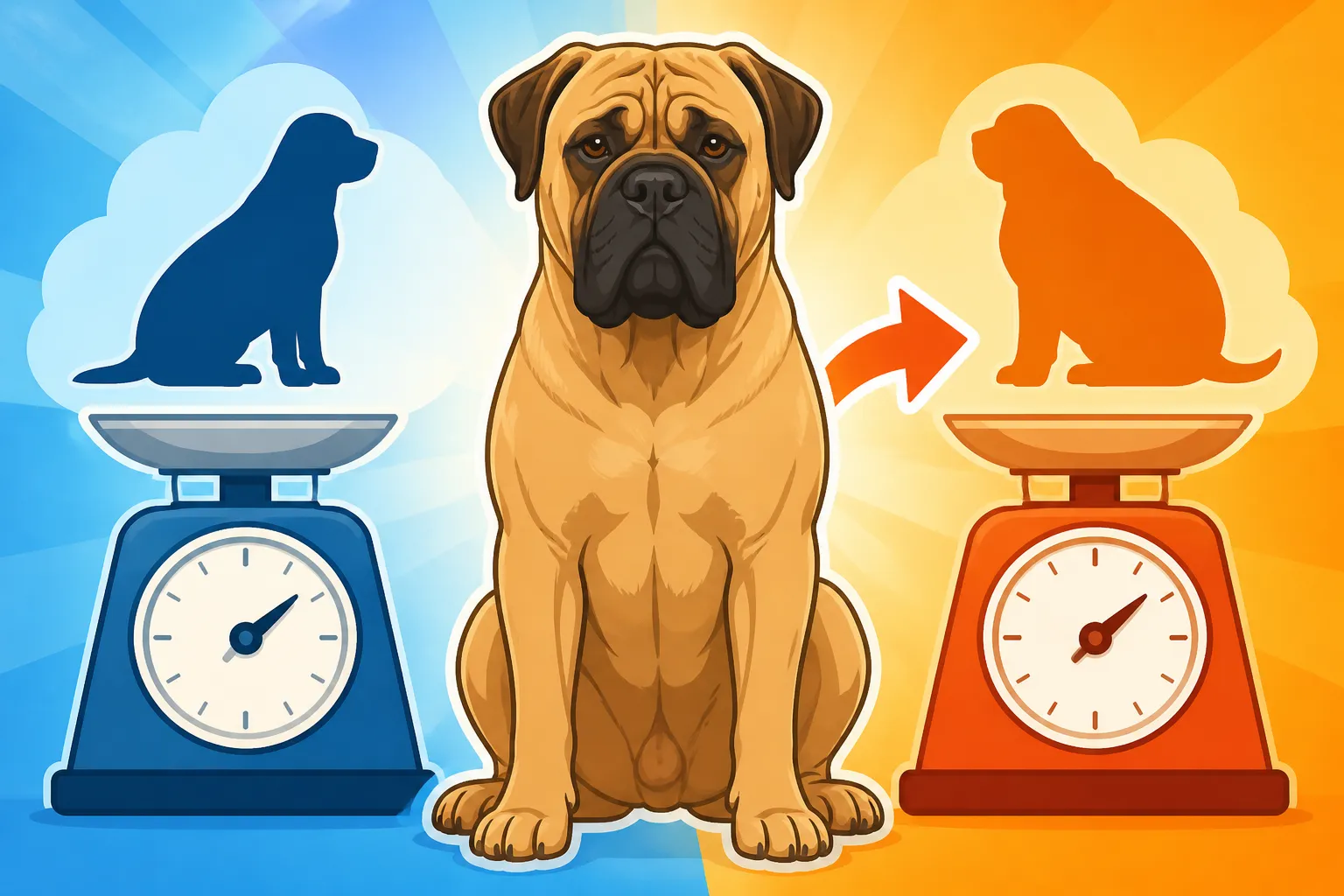
It's disheartening, but for a Bullmastiff, being "a few pounds over" is often far more than just a trivial amount. Because they are already large dogs, those seemingly small increments on the scale translate to a much higher percentage of their ideal body weight compared to a smaller breed. It's not uncommon for a Bullmastiff to be 10, 20, or even 30 pounds over their healthy weight, and sadly, this has become almost "normal" in many households.
When a Few Pounds Becomes a Significant Health Risk
For a 100-pound female Bullmastiff, being just 10 pounds overweight means she's carrying 10% more body mass than she should. For a 130-pound male, an extra 20 pounds is over 15% more. Imagine yourself carrying an extra 10-20% of your own body weight constantly – it’s a lot! For our Bullmastiffs, this translates directly into increased stress on their joints, especially their hips and elbows, which are already prone to issues like dysplasia. That seemingly harmless extra weight can exacerbate arthritis, make existing joint problems worse, and significantly increase their discomfort.
Beyond joint problems, being overweight drastically increases the risk of other serious health concerns. It can contribute to heart disease, make breathing more difficult, especially in a brachycephalic breed like the Bullmastiff who already struggles with heat, and even impact their metabolic health. Diabetes is a very real risk, as are certain types of cancer, which our Bullmastiffs are already sadly predisposed to. How Many Years an Overweight Bullmastiff Loses is a stark reminder of the serious consequences of allowing them to be anything but lean.
The Long-Term Impact of Being Overweight
The long-term effects of carrying excess weight are profound. An overweight Bullmastiff is likely to be less active, creating a vicious cycle where less activity leads to more weight gain. This sedentary lifestyle, combined with the physical burden, diminishes their quality of life. They might struggle to get up from a comfortable bed, or find it harder to navigate stairs. Playtime becomes less appealing, and their overall zest for life can wane. It’s not just about lifespan; it’s about their health span – the years they spend feeling good and active.
Moreover, the added strain on their respiratory system, which is already a concern due to their short muzzle, can lead to overheating more easily. Why a Bullmastiff Overheats So Easily is a critical piece of knowledge for any owner, and excess weight only compounds this danger, making even mild exertion in warm weather risky. This cumulative impact means vet bills can pile up faster, and their golden years, which are already too few, can be overshadowed by preventable health struggles.
Strategies for a Leaner, Healthier Bullmastiff
Getting a Bullmastiff to a healthy weight, or keeping them there, requires dedication, consistency, and a realistic approach. It’s not about crash diets or extreme exercise, which can be dangerous for a large breed. It’s about sustainable changes that fit into your daily life and improve their overall well-being.
Diet Adjustments and Portion Control
The cornerstone of weight management for a Bullmastiff is their diet. Many people vastly overestimate How Much an Adult Bullmastiff Eats and, even more commonly, underestimate the caloric density of treats and table scraps. The first step is to accurately measure your Bullmastiff's food. Don't eyeball it! Use a precise measuring cup for every single meal. If you're currently free-feeding, switch to scheduled meals. For adult Bullmastiffs, two meals a day is typical, which also helps with Meal Timing and Bloat in a Bullmastiff.
Consider switching to a high-quality, large-breed adult formula if you haven't already, and work with your vet to determine the appropriate portion size based on your dog's current weight, ideal weight, and activity level. Many brands, like those found on Chewy or Amazon, offer specific "weight management" formulas that are lower in calories but still provide essential nutrients. Remember, your vet might recommend a significant reduction in their current food intake to initiate weight loss. Treats should be healthy, low-calorie options, or even just a piece of their regular kibble used as a reward. Products like the fresh food options from Ollie can also be beneficial as their portions are often precisely calibrated to your dog's needs, making it easier to control calorie intake.
If you are thinking about Getting Weight Off a Bullmastiff, consider these key steps:
- Accurate Measurement: Ditch the guesswork. Use a kitchen scale for precision, especially if your vet has prescribed a specific calorie count.
- Calorie Deficit: Your vet will help you calculate a safe, effective calorie reduction. This isn't about starvation, but about consistent, moderate intake reduction.
- High-Fiber, Low-Calorie: Look for dog foods that offer good satiety with fewer calories. Adding some plain green beans (no salt!) or cooked pumpkin to meals can help them feel full.
- Treat Audit: Every calorie counts. Cut out high-calorie treats. Use small pieces of carrots, apples (no seeds), or even just a piece of their regular kibble as rewards.
- No Table Scraps: This is a hard one, but absolutely crucial. Your Bullmastiff doesn't need human food, and it throws off their carefully balanced diet.
Smart Exercise for Weight Management
While diet is primary, exercise plays a vital supporting role. Bullmastiffs are not high-energy dogs, so intense, prolonged workouts aren't necessary or even good for them. Instead, focus on consistent, moderate activity that promotes mobility and builds lean muscle without overtaxing their joints.
Daily walks are essential. Aim for a couple of shorter walks (20-30 minutes) rather than one long, exhausting trek, especially if your dog is currently overweight. Keep the pace brisk but comfortable, allowing them to sniff and explore. Avoid vigorous activity during the hottest parts of the day, as Eighty Degrees Is Dangerous for a Bullmastiff. Leash training is also critical here; How to Walk a Bullmastiff That Outweighs You becomes even more challenging with an overweight dog, so a well-behaved dog on a leash is safer for both of you.
Consider incorporating low-impact activities like swimming if a safe, accessible option is available. This allows them to burn calories and build muscle without putting strain on their joints. Interactive puzzle toys can also provide mental stimulation and some gentle physical activity indoors, helping to burn a few extra calories. Remember, the goal is consistent movement, not extreme exertion. Building muscle naturally helps burn more calories even at rest.
The Role of Regular Vet Checks
Regular veterinary check-ups are non-negotiable for weight management. Your vet is your best partner in assessing your Bullmastiff's progress, adjusting their diet plan, and monitoring their overall health. They can recommend specific food brands, discuss the benefits of Whether a Bullmastiff Needs Joint Supplements, and rule out any underlying medical conditions that might be contributing to weight gain (like hypothyroidism, which is unfortunately common in the breed).
At each visit, your vet will weigh your Bullmastiff and assess their body condition score, giving you objective feedback. Don't be shy about asking for specific calorie recommendations or for help creating a diet plan that works for your household. They can also offer advice on appropriate exercise levels and guide you on what to expect as your Bullmastiff gradually sheds those excess pounds. This partnership is key to ensuring your Bullmastiff lives the longest, healthiest, and happiest life possible.
Disclaimer
This article is for general informational purposes only and does not constitute professional advice. Laws, prices and regulations vary by location and change over time. Consult a qualified professional for guidance on your specific situation.