Which Brush Suits a Bullmastiff
If you've ever owned a Bullmastiff, you know that despite their short, sleek coats, these magnificent dogs can shed. A lot. It's a common frustration to find those stiff, short hairs clinging to everything, from your sofa to your "clean" laundry. But beyond just managing the tumbleweeds of fur, regular brushing is crucial for maintaining your Bullmastiff's skin health, coat vitality, and even strengthening the bond you share. This guide will walk you through the best brushes for your Bullmastiff and how to use them effectively to keep their coat looking its best and minimize shedding around your home.
Understanding Your Bullmastiff's Coat: More Than Just "Short Hair"
It’s easy to look at a Bullmastiff with their dense, short fur and think, "Oh, they must be low maintenance in the grooming department." Many first-time owners are surprised to learn this isn't entirely true! While they don't have the long, flowing locks of a Collie or the intricate grooming needs of a Poodle, a Bullmastiff's coat has its own unique characteristics that demand specific attention, especially when it comes to shedding and skin health.
The Bullmastiff's Unique Double Coat
What many people don't realize is that your Bullmastiff, despite appearances, often possesses a double coat. It's not as obvious as a Siberian Husky's, but it's there. They have a dense, hard, short outer coat that acts as a protective layer, shielding them from the elements. Beneath that, especially in cooler climates or during seasonal changes, they can develop a softer, finer undercoat. This undercoat provides insulation, keeping them warm in winter and helping to regulate their temperature. When this undercoat "blows" or sheds, it can lead to a significant amount of loose hair, far more than you might expect from a "short-haired" dog. This is why you'll often see distinct shedding cycles, typically in spring and fall, but some Bullmastiffs seem to shed year-round, making regular grooming a constant task. Understanding this helps you choose the right tools, as you're not just grooming the top layer, but also working to loosen and remove that underlying fuzzy shedding hair. How Much a Bullmastiff Sheds delves deeper into what to expect from your Bullmastiff's shedding habits throughout the year.
Why Even Short-Haired Dogs Need Brushing
Brushing your Bullmastiff isn't just about collecting loose hair to keep your house cleaner, though that's certainly a major benefit. It plays a vital role in their overall health and well-being. Firstly, regular brushing helps distribute natural skin oils throughout their coat, leading to a healthier, shinier appearance. These oils act as a natural conditioner, preventing dryness and keeping their skin supple. Secondly, it stimulates circulation in the skin, which is beneficial for skin health and can even promote new hair growth. For a breed prone to certain skin sensitivities, like Skin Allergies in a Bullmastiff, this circulation can be a gentle way to maintain their skin barrier.
Beyond the physical benefits, brushing is an excellent opportunity for you to perform a quick "health check" on your dog. As you run your hands and a brush over their body, you can feel for any new lumps, bumps, hot spots, or skin irritations that might indicate a problem. This early detection can be invaluable for catching issues before they become more serious. It's also a fantastic way to bond with your Bullmastiff. These dogs thrive on human connection, and a calm, consistent grooming session can become a cherished part of your routine, a quiet moment of affection and reassurance. How Often a Bullmastiff Needs Brushing can give you more insight into setting up a consistent grooming schedule.
The Best Brushes for a Bullmastiff's Specific Needs
Choosing the right brush is paramount to effective grooming for your Bullmastiff. Because of their unique coat structure—short, dense, and often with a significant undercoat—you'll likely find that a single brush isn't enough to tackle all aspects of their grooming needs. A combination of tools will give you the best results, allowing you to manage shedding, promote skin health, and keep their coat gleaming. It's about having the right tool for the right job, whether it's daily maintenance or seasonal deshedding.
Rubber Curry Brushes and Grooming Mitts
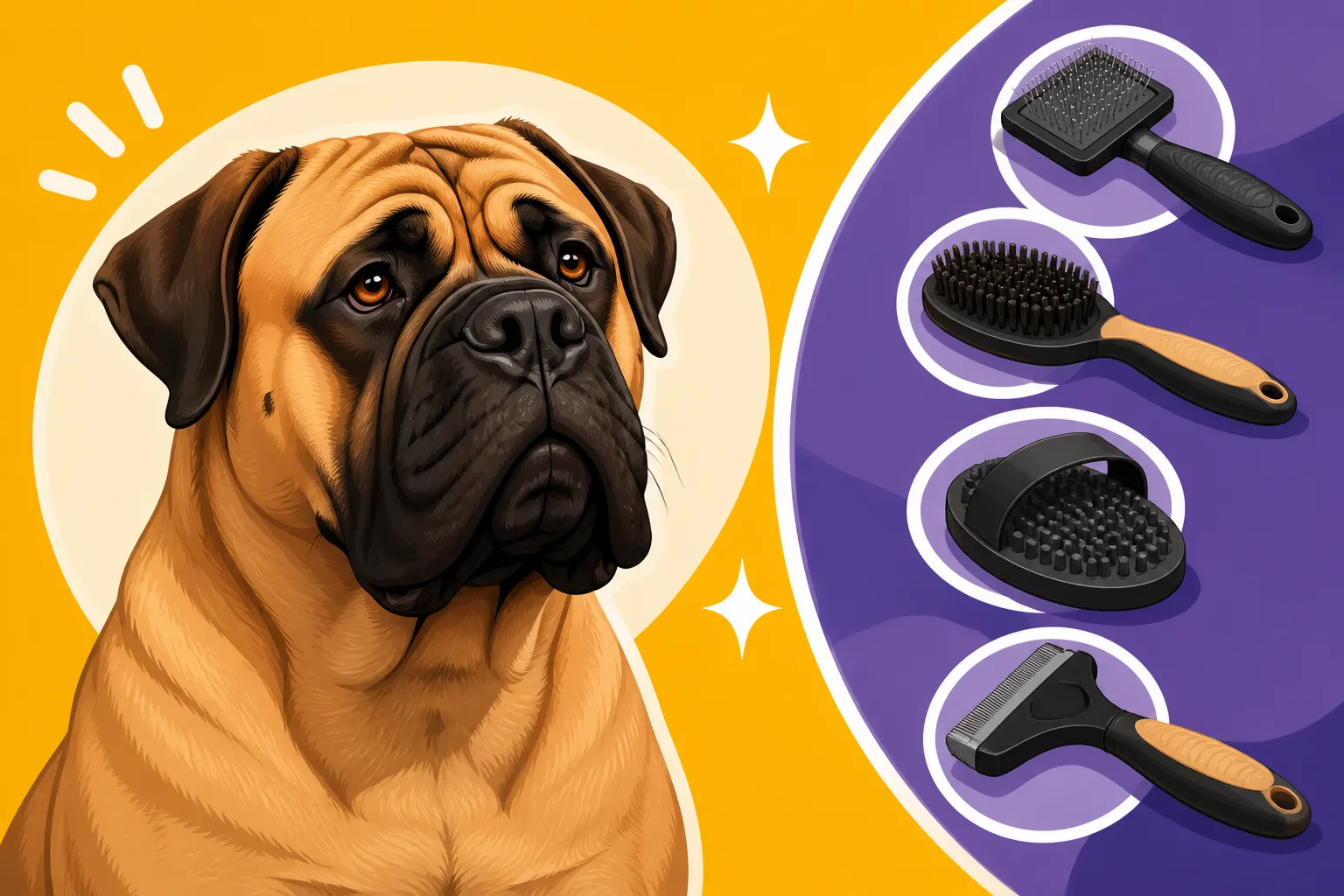
For everyday grooming and for dogs who might be sensitive to more aggressive tools, rubber curry brushes or grooming mitts are absolute champions for Bullmastiffs. These tools, often readily available on platforms like Amazon or Chewy, are designed with soft rubber nubs or bristles that are incredibly gentle on the skin while being highly effective at loosening and collecting loose hair, dirt, and dander.
Think of it like a soothing massage for your dog. The flexible rubber contours to your Bullmastiff's body, and the nubs work to gently pull out dead hairs from both the topcoat and the shedding undercoat without irritating the skin. This is particularly beneficial for dogs with sensitive skin or those prone to minor irritations in their folds, as discussed in The Wrinkles and Folds on a Bullmastiff's Face. Regular use of a rubber curry brush can also stimulate blood flow to the skin, which encourages a healthy coat and can even distribute natural oils for a beautiful shine. Many owners find these brushes perfect for daily touch-ups or even during bath time to help lather shampoo and scrub away loose fur. They're easy to clean – just peel off the collected hair – and remarkably durable. Look for options with a comfortable hand grip, as you'll be using it frequently.
Shedding Blades and Deshedding Tools
When your Bullmastiff is actively "blowing coat" during peak shedding seasons, a rubber curry brush might not be quite enough to keep up. This is where dedicated shedding blades or deshedding tools come into their own. These tools are engineered to reach deep into the coat, past the top layer, to effectively remove the loose undercoat that causes the most mess. Brands offer various designs, from metal loops with fine teeth to more robust rakes.
The key with these tools is to use them correctly and sparingly. A shedding blade, often a serrated metal loop, should be used with a light touch, pulling gently in the direction of hair growth. Its purpose is to scrape away the loose, dead hairs that are already detached, preventing them from falling out all over your home. Deshedding tools, like those you might find on Amazon, feature fine, closely spaced teeth that pull out shedding undercoat. While incredibly effective, it's crucial not to over-brush with these. Too much pressure or too frequent use can irritate your Bullmastiff's skin or even damage the healthy topcoat. Focus on areas where shedding is heaviest, typically along the back, flanks, and hindquarters. Use short, gentle strokes and watch for any signs of discomfort from your dog. When used properly, these tools can dramatically reduce the amount of hair your Bullmastiff sheds indoors, making your life a whole lot cleaner during those heavy shedding times.
Bristle Brushes for Shine and Distribution
Once you’ve removed the bulk of the loose hair with a curry comb or deshedding tool, a good quality bristle brush is the perfect finishing tool for your Bullmastiff. These brushes are usually made with natural boar bristles or firm synthetic bristles that are spaced closely together. They are not designed for deep deshedding but rather for refining the coat and enhancing its natural beauty.
A bristle brush works wonders by smoothing the outer coat, giving it that characteristic Bullmastiff sheen. More importantly, it helps to evenly distribute the natural oils produced by your dog's skin, which are vital for a healthy, protective coat. These oils nourish the hair follicles and contribute to the coat's strength and resilience. Running a bristle brush over your Bullmastiff's fur after a deshedding session will not only make their coat look fantastic but also feel incredibly soft and sleek. It's also a great way to remove any lingering dust or debris. For an aging Bullmastiff, whose skin might become drier, this regular oil distribution can be particularly beneficial, contributing to the care discussed in Caring for an Aging Bullmastiff. Choose a brush with bristles that are firm enough to penetrate the short, dense coat but not so stiff that they scratch the skin. Many pet owners choose to use a bristle brush for a few minutes daily, transforming it into a relaxing ritual that keeps the coat healthy and gleaming between more intensive deshedding sessions.
Making Brushing a Positive Experience for Your Bullmastiff
Grooming, especially for a large, powerful breed like the Bullmastiff, should never feel like a chore for either of you. Establishing a positive association with brushing from an early age can make a world of difference. Your Bullmastiff needs to view grooming as a calm, comfortable, and even enjoyable activity, not something to be endured or feared. Consistency, patience, and positive reinforcement are your best friends here.
Establishing a Brushing Routine
The key to successful grooming with a Bullmastiff is consistency. Aim for at least a couple of brushing sessions per week, even when shedding isn't at its peak. During heavy shedding seasons, you might find yourself brushing daily. The regularity prevents mats (unlikely for a short-haired Bullmastiff, but still good practice for skin health) and keeps the amount of loose hair manageable. Choose a quiet time of day when your Bullmastiff is relaxed, perhaps after a short walk or a play session when they’re a bit tired.
Start small, with short sessions of just a few minutes, especially with a puppy. Introduce the brush gently, letting them sniff it. Begin by brushing areas they enjoy, like their shoulders or flanks, and gradually move to more sensitive spots. Always use positive reinforcement: lavish praise, offer small, high-value treats, and keep your tone calm and reassuring. If your Bullmastiff gets squirmy or shows signs of discomfort, don't force it. Take a break and try again later. Over time, these consistent, positive experiences will teach your dog that brushing is a pleasant part of their life, turning a potentially challenging task into an enjoyable bonding opportunity. A well-established routine also makes it easier to keep their coat in top condition, reflecting what a healthy What a Bullmastiff's Coat Should Feel Like should be.
Proper Brushing Technique for Maximum Effectiveness
Once you have the right tools and your Bullmastiff is accustomed to brushing, technique becomes important for maximizing effectiveness. Always brush in the direction of hair growth, never against it, as this can irritate the skin and pull unnecessarily on the hair. Use gentle, even strokes, making sure to cover all areas of your dog's body. For the dense coat of a Bullmastiff, you might need to use a slightly firmer pressure with a rubber curry comb to reach the undercoat, but always monitor your dog's reaction.
When using a deshedding tool, remember to use short, light strokes. These tools are very efficient, so you don't need to press hard or go over the same spot repeatedly. Focus on pulling out the loose, dead undercoat without tugging on the healthy guard hairs. After deshedding, a quick pass with a bristle brush can help collect any remaining surface hair and smooth the coat, leaving it shiny. Don't forget those often-missed spots: the chest, under the chin, and especially around the tail and hindquarters, where shedding hair can accumulate. Regularly cleaning your brushes during the session will ensure they remain effective and don't just spread hair around. You can often find durable, easy-to-clean brushes perfect for this task when browsing on Chewy or Amazon.
Dealing with Stubborn Shedding and Skin Concerns
Sometimes, even with consistent brushing, you might notice periods of particularly heavy shedding or spot some skin concerns. For stubborn shedding, especially during seasonal coat blows, increasing the frequency of your deshedding sessions to every day or every other day for a week or two can make a huge difference. Consider doing these sessions outdoors to contain the flying fur! Also, ensure your Bullmastiff is on a high-quality diet. Good nutrition plays a significant role in coat health, providing the essential fatty acids and vitamins needed for strong, healthy hair and skin.
During your brushing sessions, pay close attention to your Bullmastiff's skin. Look for any redness, flakiness, rashes, or areas where they seem sensitive. Bullmastiffs, with their unique facial folds, can be prone to Skin Fold Infections on a Bullmastiff if not kept clean and dry. Brushing can help you identify these spots early. If you notice persistent skin issues, excessive scratching, or dull, brittle hair despite regular grooming and a good diet, it's always best to consult your veterinarian. They can help rule out underlying health problems, allergies, or parasites that might be contributing to the issue. Sometimes a simple change in diet or a medicated shampoo can resolve the problem, but a professional diagnosis is always the safest bet.
Here's a quick overview of common brush types and their uses for your Bullmastiff:
| Brush Type | Primary Function | Best For | Frequency |
|---|---|---|---|
| Rubber Curry Brush | Loosening and collecting loose hair, massaging skin | Daily grooming, stimulating circulation | Daily to every other day, or at bath time |
| Deshedding Tool | Reaching deep to remove loose undercoat, reducing shed | Seasonal shedding, heavy coat blows | 1-2 times per week during peak shedding, with caution |
| Bristle Brush | Smoothing topcoat, distributing oils, adding shine | Finishing touch, daily shine, removing dust | Daily |
Disclaimer
This article is for general informational purposes only and does not constitute professional advice. Laws, prices and regulations vary by location and change over time. Consult a qualified professional for guidance on your specific situation.