Whether a Bullmastiff Needs a Slow Feeder
It's incredibly frustrating to watch your beloved Bullmastiff practically inhale their meal in seconds, only to hear alarming gurgles or see them look uncomfortable afterward. You worry about choking, upset stomachs, and of course, the ever-present shadow of bloat, a terrifying reality for our deep-chested companions. This guide is here to explore whether a slow feeder is truly the answer to these mealtime woes, offering practical insights into your Bullmastiff's eating habits and the benefits of a more deliberate dining experience.
The Perils of a Fast Eater: Why Bullmastiffs Bolt Their Food
Watching a Bullmastiff devour a meal in what feels like mere seconds can be both amusing and deeply concerning. Their powerful jaws and sheer enthusiasm for food often lead to them gulping down kibble faster than is healthy. This isn't just a quirky habit; it carries significant health risks that every Bullmastiff owner should understand and actively work to mitigate. It’s natural for them to be food-driven, but we have a responsibility to guide them toward safer eating practices.
The Immediate Risks: Choking and Indigestion
When your Bullmastiff eats too quickly, they're not just rushing their meal; they're also swallowing a considerable amount of air along with their food. This rapid ingestion can lead to immediate, uncomfortable, and potentially dangerous consequences. Choking is a very real threat, especially with larger kibble sizes or if they get a bit too excited and don't chew properly. A Bullmastiff, being such a large and powerful dog, can find themselves in a precarious situation if food gets lodged in their throat, and the panic can make it even worse.
Beyond the immediate choking hazard, swallowing air causes gas and indigestion. You might notice your dog burping excessively, displaying signs of an upset stomach, or even vomiting undigested food shortly after eating. This isn't just unpleasant for them; it can lead to chronic discomfort and may exacerbate other digestive issues. Imagine how you would feel if you ate a large meal in under a minute – the bloated, heavy sensation is amplified for a dog whose digestive system isn't designed for such rapid intake.
The Big One: Bloat (Gastric Dilatation-Volvulus)
While choking and indigestion are concerning, the most serious and life-threatening risk associated with fast eating in Bullmastiffs is Gastric Dilatation-Volvulus, commonly known as bloat. This isn't just a tummy ache; it's an emergency where the stomach fills with gas and can then twist upon itself, cutting off blood supply and trapping air and food. Bullmastiffs are a deep-chested breed, making them particularly susceptible to this condition. It's one of the top fears for any Bullmastiff owner, and understanding its connection to eating speed is crucial. Bloat in a Bullmastiff is a terrifying prospect, and anything we can do to reduce the risk is worth considering.
The rapid ingestion of food, especially when coupled with gulping air, contributes to the stomach distension that precedes bloat. While the exact causes are complex and multifactorial, fast eating is consistently cited as a significant risk factor. The distended stomach puts pressure on other organs and, in severe cases, can rotate. Symptoms can come on quickly and include retching without producing anything, a distended abdomen, restlessness, and signs of extreme pain. This condition requires immediate veterinary intervention and often emergency surgery, and even then, the prognosis can be guarded. Preventing it, where possible, is always the better route.
Behavioral Habits and Anxiety
Sometimes, rapid eating isn't just about hunger; it can be a learned behavior or even a sign of underlying anxiety or resource guarding. In multi-dog households, dogs might feel the need to eat quickly to ensure they get their share before another dog approaches. This competitive drive, even if unfounded in your home, can become ingrained. Even single dogs might have been exposed to situations where food was scarce or competition was present, leading to a "scarf and barf" approach to mealtime.
Anxiety can also manifest as fast eating. A dog that feels insecure or stressed might rush their food as a coping mechanism, or as a way to quickly "get it over with" in a perceived high-stress environment. It's important to observe your Bullmastiff's overall demeanor at meal times. Do they seem stressed? Are they looking around nervously? Addressing these underlying behavioral or environmental factors, alongside implementing slow feeding, can create a much calmer and healthier eating experience. Sometimes, a simple change in routine, like feeding them in a quiet, undisturbed space, can make a difference.
Understanding Bullmastiff Eating Habits
Bullmastiffs, like all dogs, have a unique set of behaviors and predispositions when it comes to eating. Their history, physical build, and individual experiences all play a role in how they approach their food bowl. It's not just about being hungry; it's about instinct, genetics, and environment. Recognizing these factors helps us understand why your Bullmastiff might be such a speedy eater and how best to address it.
Instinctual Behavior vs. Learned Habits
At their core, dogs are opportunistic scavengers. In the wild, food sources were unpredictable, and competition was fierce. Eating quickly was a survival mechanism – get your share while you can, before a pack mate or rival animal takes it. This primal instinct is still present in our domesticated Bullmastiffs, even if their last meal was only hours ago and their next is guaranteed. For many dogs, especially those who come from situations where food was scarce or shared among many, this instinct can be particularly strong.
However, learned habits also play a huge role. If a Bullmastiff puppy was raised in a large litter where they had to compete for food, that behavior of fast eating can become deeply ingrained. Similarly, if owners inadvertently reinforce fast eating by immediately refilling a bowl or showing excitement around rapid consumption, the dog learns that speed is rewarded. Our routines and reactions as owners can subtly shape their eating habits over time, sometimes without us even realizing it. It's important to remember that these giants might be gentle, but their ancient instincts are still at play.
The Role of Breed-Specific Traits
Bullmastiffs are substantial dogs, originally bred for guarding and protection. They are powerful, muscular, and typically have a healthy appetite to fuel their large frames. Their deep chests, while magnificent, are also a structural characteristic linked to a higher risk of bloat, making rapid eating a particular concern for the breed. Why a Bullmastiff Was Bred to Work Silently speaks to their controlled power, and that control can be applied to eating too.
Their sheer size means they need a significant amount of food, and for a dog that can weigh well over a hundred pounds, How Much Food a Bullmastiff Needs is a lot to get through. This volume, combined with a naturally eager eating style, sets the stage for fast consumption. Unlike smaller breeds, a Bullmastiff's larger mouth and throat can make it easier to gulp down larger quantities of kibble in one go. Understanding these breed-specific traits is key to implementing effective feeding strategies that are tailored to their unique needs and risks.
Early Experiences and Mealtime Routine
A Bullmastiff's eating habits are often shaped from their earliest days. Puppies who are free-fed, or who have limited access to food, may develop anxiety around meal times, leading them to gorge when food is available. Conversely, puppies who are fed in a consistent, calm environment and taught to eat at a steady pace are less likely to develop problematic fast-eating behaviors. Feeding a Bullmastiff Puppy So It Grows Slowly is not just about bone development; it's also about fostering healthy habits.
The consistency of your mealtime routine plays a huge part. Feeding at the same times each day, in the same location, with minimal distractions, can help establish a predictable and therefore less stressful eating environment. If your Bullmastiff is used to chaos around their bowl, with people walking by constantly or other pets vying for attention, they might feel pressured to eat quickly. Establishing a serene mealtime ritual can go a long way in calming their approach to food. Consider feeding them in a quiet room or their crate to minimize distractions and help them focus on eating at a healthy pace.
What is a Slow Feeder and How Does It Work?
If you've ever watched your Bullmastiff vacuum their meal in thirty seconds flat, you've probably wondered if there's a better way. Enter the slow feeder – a simple yet ingenious tool designed to transform mealtime into a more deliberate, and safer, experience. It’s not just about a different bowl; it’s about a different approach to eating that benefits their health and digestion.
Design and Mechanics of Slow Feeder Bowls
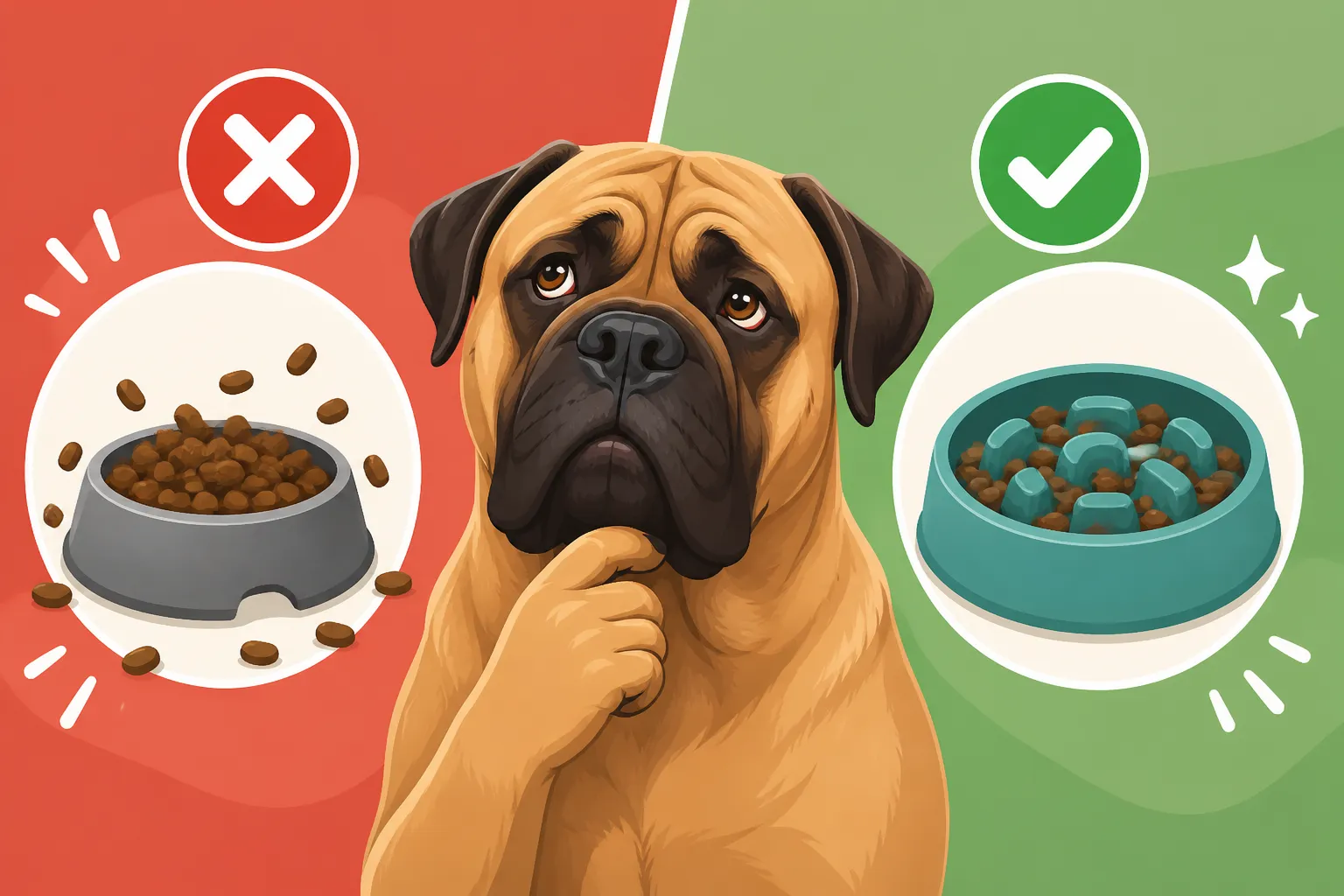
At its core, a slow feeder bowl is designed to make it harder for your dog to gulp down large mouthfuls of food. Instead of a smooth, open surface, these bowls feature various obstacles, ridges, mazes, or pillars that force the dog to work around them to get to their kibble. This isn't about making eating frustrating, but rather making it engaging and slower. Imagine trying to eat soup with a fork – that's the general idea, adapted for kibble.
The mechanics are quite straightforward: the physical barriers within the bowl prevent your Bullmastiff from taking huge scoops. They have to use their tongue, nose, and teeth more precisely, moving the food around the obstacles to pick up individual pieces or smaller portions. This deliberate effort naturally slows down their consumption, often extending a typical 30-second meal to several minutes. This increased meal duration means less air swallowed, more time for saliva to mix with food, and a greater sense of satiety by the time they finish.
Different Types of Slow Feeders
The market for slow feeders has exploded, offering a wide array of options to suit different dogs and owners. You can find these bowls readily available on major pet supply sites like Chewy and Amazon, with designs ranging from simple to quite intricate.
Here’s a look at some common types:
- Maze Bowls: These are probably the most common, featuring raised ridges and patterns that create a maze-like path for the food. Your Bullmastiff has to push the kibble along these paths.
- Puzzle Bowls/Mats: More advanced options include bowls with removable compartments, sliding covers, or silicone snuffle mats that require your dog to use their problem-solving skills to get their food. These offer mental stimulation in addition to slowing eating.
- Elevated Slow Feeders: Some slow feeders come with adjustable stands, which can be beneficial for large breeds like Bullmastiffs. What Bowl Height Suits a Bullmastiff is a common question, and for some, an elevated feeder can promote better posture, although the link between elevated bowls and bloat is debated – the main benefit here is the slow feeding itself.
- Interactive Toys/Dispensers: These aren't bowls but toys that dispense kibble as your dog plays with them. Think Kong Wobblers or similar treat-dispensing balls. They combine feeding with enrichment.
| Slow Feeder Type | Description | Pros | Cons |
|---|---|---|---|
| Maze Bowls | Raised ridges/patterns, forcing dog to navigate for food. | Widely available, effective, easy to clean. | Can be too easy for very determined eaters; not much mental work. |
| Puzzle Bowls/Mats | Compartments, sliding parts, or fabric strands that hide food. | High mental stimulation, very effective at slowing. | Can be harder to clean; some dogs might destroy puzzle elements. |
| Interactive Toys | Balls or devices that dispense food as dog plays. | Excellent for mental enrichment, prolongs mealtime significantly. | Can be messy; requires supervision; some dogs may not "play" with them. |
| Lick Mats | Textured silicone mats that wet food/soft treats are smeared onto. | Calming, very slow consumption for wet food, easy to clean. | Not suitable for dry kibble unless mixed with wet food. |
The Science Behind Slower Eating
The benefits of slower eating go beyond just preventing choking. When a Bullmastiff eats slowly, several positive physiological changes occur. Firstly, they swallow less air, which directly reduces the risk of gas accumulation and stomach distension – a primary factor in bloat. This is a critical point for our deep-chested friends.
Secondly, slowing down allows for better digestion. Saliva contains enzymes that begin the digestive process in the mouth. When food is rushed, these enzymes have little time to act. Slower eating also gives the stomach time to signal to the brain that it's filling up, leading to a greater sense of satiety. This can be particularly helpful if your Bullmastiff is on a diet or tends to beg for more food, as feeling full helps manage their appetite. For a dog that needs to maintain a lean weight, which is vital for joint health and overall lifespan, a slow feeder can be a valuable tool. Keeping a Bullmastiff Lean Is the Best Thing You Can Do for their long-term health, and controlled eating habits contribute to this.
Deciding if a Slow Feeder is Right for Your Bullmastiff
You've learned about the potential risks of fast eating and what slow feeders are all about. Now, the big question is: does your Bullmastiff actually need one? It's not a one-size-fits-all answer, but by observing your dog and understanding their specific behaviors, you can make an informed decision that prioritizes their health and well-being.
Identifying the Signs of Fast Eating
The most obvious sign is simply how quickly their bowl becomes empty. If your Bullmastiff finishes their entire meal in under a minute or two, they are likely eating too fast. But there are other, more subtle indicators to watch for:
- Gulping and Swallowing Air: You might actually hear them gulping, or see their throat working excessively as they swallow. This often leads to burping after meals.
- Coughing or Choking: Any instance of coughing or gagging during or immediately after eating is a clear red flag.
- Post-Meal Vomiting: If your Bullmastiff consistently throws up undigested food shortly after eating, it's a sign their digestive system is being overwhelmed.
- Bloating or Gas: An uncomfortably distended belly, excessive flatulence, or signs of abdominal discomfort after meals can indicate air ingestion and indigestion. Signs a Bullmastiff Is Bloating are critical to recognize, and prevention starts with proper eating habits.
- Food Guarding Tendencies: Even in a single-dog household, a history of feeling competitive over food can lead to rapid eating.
If you observe any of these signs regularly, especially the rapid consumption, a slow feeder is definitely worth considering. It's about proactive care, especially for a breed with such a high risk of bloat.
Weighing the Pros and Cons
Like any tool, slow feeders come with their advantages and potential drawbacks. For a Bullmastiff, the pros often far outweigh the cons, but it's important to consider your individual dog and household.
Pros of Slow Feeders:
- Reduces Bloat Risk: This is arguably the biggest benefit for Bullmastiffs, as it significantly lowers the amount of air swallowed during meals. Whether a Gastropexy Is Worth It for a Bullmastiff is a major surgery, and dietary interventions like slow feeders are a far less invasive preventative.
- Prevents Choking and Vomiting: By forcing smaller mouthfuls, it makes choking less likely and gives the digestive system a better chance to process food without immediate regurgitation.
- Improves Digestion: Slower eating allows more time for saliva to mix with food, aiding the initial stages of digestion.
- Increases Satiety: Taking longer to eat can make your Bullmastiff feel fuller and more satisfied, which can help with weight management and reduce begging.
- Mental Stimulation: Especially with puzzle-style slow feeders, it provides an engaging activity that enriches their daily routine.
- Promotes Calm Meal Times: It can help anxious eaters develop a more relaxed approach to food.
Cons of Slow Feeders:
- Initial Frustration: Some Bullmastiffs, especially very food-driven ones, might be initially frustrated by the new challenge.
- Chewing/Damage: A determined Bullmastiff might try to chew or destroy the slow feeder if they find it too challenging or frustrating. Look for durable, well-made options from reputable brands.
- Cleaning: Intricate designs can be a bit more difficult to clean than a standard bowl, though many are dishwasher safe.
- Learning Curve: It might take a few meals for your Bullmastiff to adapt to the new method of eating.
For the vast majority of Bullmastiffs, especially those who gulp their food, the benefits of a slow feeder in preventing serious health issues far outweigh these minor inconveniences.
When to Consult Your Vet
While a slow feeder is a great step for many fast eaters, it's always wise to involve your veterinarian, especially if your Bullmastiff is exhibiting significant symptoms. If your dog is frequently choking, vomiting, or showing signs of severe indigestion or bloating, these aren't just habits; they could indicate underlying medical conditions that need professional diagnosis and treatment.
Your vet can help rule out issues like megaesophagus, extreme food sensitivities, or other gastrointestinal disorders that might contribute to rapid eating or its negative consequences. They can also offer personalized advice on diet, meal frequency (How Many Meals a Bullmastiff Should Have), and the best slow feeding strategies for your individual Bullmastiff's health profile. Don't hesitate to reach out to them if you have any concerns; they are your best partner in ensuring your Bullmastiff's long-term health.
Implementing and Optimizing Slow Feeding
Once you've decided a slow feeder is the right choice for your Bullmastiff, the next step is to introduce it effectively and integrate it into their routine. It's not always as simple as just swapping out bowls; a little thought and consistency can make all the difference in ensuring a successful transition.
Introducing a Slow Feeder to Your Bullmastiff
Bringing a new slow feeder into your Bullmastiff’s mealtime routine should be a gradual and positive experience. Don't just spring it on them and expect immediate acceptance, especially if they're particularly food-motivated. The goal is to make it a manageable challenge, not a source of stress. Start by choosing a slow feeder design that isn't overly complex for their first try. Many excellent options are available from pet retailers like Chewy or on Amazon, with various levels of difficulty.
On the first few occasions, consider scattering a small amount of kibble on top of the slow feeder's easier sections, or even mixing it with a bit of a high-value treat, just to pique their interest and encourage them to investigate. You might even mix their regular kibble with some softened food, like a bit of plain yogurt or wet food, in the crevices to make it more appealing and easier to retrieve. Always supervise their initial interactions to ensure they aren't becoming overly frustrated or trying to chew the bowl itself. Positive reinforcement, like praising them for engaging with the feeder, can help build a positive association. Remember, consistency is key, and every successful meal in the slow feeder is a step towards better health.
Beyond the Bowl: Other Slow Feeding Strategies
While slow feeder bowls are fantastic, they aren't the only way to slow down a hungry Bullmastiff. A multi-pronged approach can often yield the best results, addressing both physical and behavioral aspects of fast eating.
- Meal Spreading: Instead of putting all their food in one bowl, spread it out on a large baking sheet or an old, clean towel. This forces them to walk around and pick up individual pieces, turning mealtime into a scavenger hunt.
- Food Dispensing Toys: Investing in interactive food-dispensing toys, like a Kong Wobbler or similar puzzle toys, can turn meals into a fun and mentally stimulating activity. Your Bullmastiff has to roll, nudge, or manipulate the toy to get the kibble out. This not only slows down eating but also provides valuable mental enrichment, helping to prevent boredom which can lead to other issues like What a Bullmastiff Does to Furniture. You can often find a good selection of these toys from various brands online, including through stores like Chewy or Amazon.
- Multiple Small Meals: Instead of two large meals, consider offering three or four smaller meals throughout the day. This reduces the sheer volume of food consumed at one time, which can lessen the feeling of urgency and prevent extreme hunger. How Many Meals a Bullmastiff Should Have is an important consideration for bloat prevention.
- "Hand-Feeding" Portions: For a particularly problematic eater, you might even consider hand-feeding small portions of their meal, making them wait patiently between each handful. This takes more time and dedication but can be incredibly effective for retraining eating habits and strengthening your bond.
- Using a Muffin Tin: For a simple, inexpensive slow feeder, try placing small amounts of kibble in each cup of a muffin tin. Your Bullmastiff will have to move from cup to cup, slowing them down significantly.
Pairing these strategies with the slow feeder bowl can give your Bullmastiff a variety of engaging ways to eat at a healthier pace.
Monitoring Progress and Making Adjustments
Implementing a slow feeding strategy isn't a "set it and forget it" task. It requires ongoing observation and a willingness to adjust based on your Bullmastiff's individual response. Pay close attention to how long it takes them to finish their meals. Are they still finishing too quickly, even with the slow feeder? Or are they taking a significantly longer, healthier amount of time? An ideal mealtime for a Bullmastiff using a slow feeder might be anywhere from 10 to 20 minutes, a vast improvement from mere seconds.
Also, observe their post-meal behavior. Are they still burping, gassy, or showing signs of discomfort? Is their stool consistent? Positive changes in these areas indicate that the slow feeder is working. If they seem overly frustrated or are trying to chew through the bowl, the feeder might be too challenging. In such cases, consider switching to a simpler design or trying a different slow-feeding method. Conversely, if the current slow feeder has become too easy, you might upgrade to a more complex puzzle feeder. Brands like Ollie, known for their tailored nutrition plans, might also offer guidance on mealtime practices that complement their food, ensuring optimal digestion. Remember, the goal is consistent, healthy eating habits that contribute to your Bullmastiff's overall well-being and longevity. Why a Bullmastiff's Short Life Concentrates Its Cost means every measure we take for their health truly counts.
Disclaimer
This article is for general informational purposes only and does not constitute professional advice. Laws, prices and regulations vary by location and change over time. Consult a qualified professional for guidance on your specific situation.