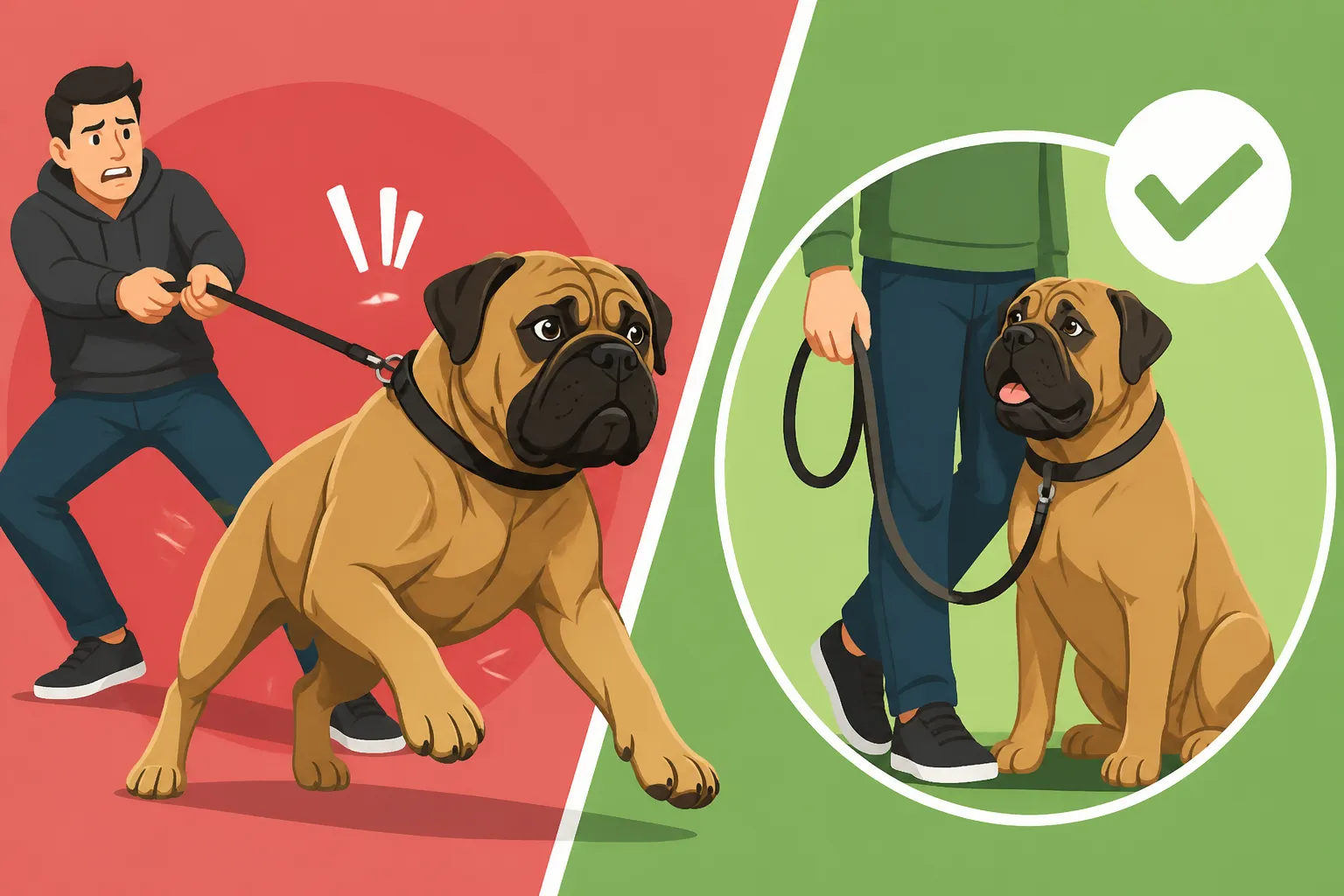
Whether a Bullmastiff Pulls on Leash
Many Bullmastiff owners, especially those new to large breeds, find themselves literally dragged down the street by their enthusiastic giants, leading to frustrating walks and even physical strain. This comprehensive guide is here to unravel the complexities of why Bullmastiffs pull on the leash and equip you with practical strategies, tools, and training philosophies to transform your walks into enjoyable, stress-free experiences for both you and your powerful companion.
Understanding Why Your Bullmastiff Pulls on Leash
A Bullmastiff's natural strength and desire to explore can quickly turn a pleasant stroll into a tug-of-war. It's not usually defiance; it's often a combination of instinct, conditioning, and sheer physical capability that leads them to pull. Understanding these root causes is the first step toward effective training.
Their Natural Drive and Purpose
Let's face it, Bullmastiffs weren't originally bred for a leisurely heel beside a stroller. They were developed to be powerful, silent guardians, capable of covering ground quickly and holding a poacher without causing injury. This ingrained drive to move forward with purpose, combined with their substantial weight and musculature, means that simply asking them to 'walk nicely' without proper guidance often goes against their very nature. They have a job to do, even if that job now is just getting to the next interesting sniff spot.
Imagine your Bullmastiff catching a scent—perhaps a deer from last night or a squirrel that just darted across the path. Their ancestral programming kicks in, telling them to investigate, to pursue, to guard. This isn't naughtiness; it's a powerful instinct. Without consistent training to redirect this drive, the leash becomes merely a suggestion, easily overpowered by their sheer will and physical prowess. It’s a bit like asking a locomotive to stop on a dime; it requires immense counter-force and careful handling.
Think about a time you've seen a small dog pull its owner. Annoying, perhaps, but rarely dangerous. Now magnify that by 100+ pounds. A Bullmastiff's capacity to pull is immense. They were literally bred to hold a man, and that strength translates directly to their ability to drag you down the street if they decide there's something more interesting a few feet ahead. Their deep chest and powerful shoulders are built for leverage, making them exceptionally good at pulling against resistance, whether it's a gamekeeper or a tasty dropped hotdog wrapper.
The Sheer Physics of a Large Dog
When you're dealing with a dog that can easily weigh upwards of 100 to 130 pounds, the physics of leash walking change dramatically. Your Bullmastiff has a lower center of gravity and a muscle mass that far exceeds most human capabilities. If your dog decides to surge forward, the leverage is entirely in their favor. It’s not just about brute strength; it's about momentum and mass.
Even if you're a strong individual, maintaining control over a large, determined Bullmastiff can be a constant battle of wills and physics. A sudden lunge can easily unbalance you, especially on uneven terrain or if you're caught off guard. This isn't a reflection of your ability as an owner, but rather the reality of managing such a powerful animal. It requires specific tools and training techniques designed to counteract this natural advantage. This is where learning How to Walk a Bullmastiff That Outweighs You becomes absolutely crucial for both your safety and your dog's enjoyment of walks.
Without effective training that teaches them to yield to leash pressure and walk calmly, every walk becomes a workout, and not the good kind. The dog learns that pulling gets them where they want to go, reinforcing the unwanted behavior. They experience the sensation of being pulled forward by the leash as a normal part of walking, rather than a signal to slow down or stop. This positive feedback loop—pulling equals progress—is incredibly hard to break once established, which is why early intervention and consistent training are key.
Lack of Early Leash Education
Many owners make the mistake of assuming that a dog will naturally understand how to walk on a leash. While some smaller, less driven breeds might pick it up with minimal effort, a Bullmastiff absolutely requires dedicated, early leash education. A puppy that pulls lightly might seem cute, but that same behavior in an adult dog is a serious safety hazard.
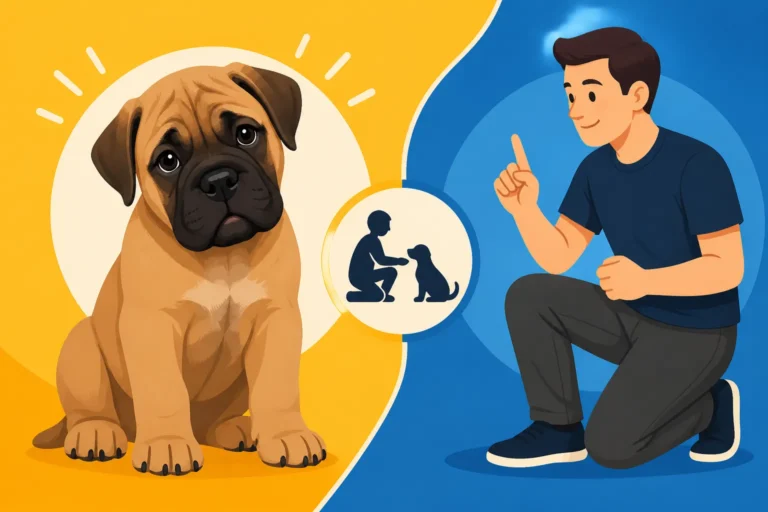
The foundation for good leash manners should begin the moment your Bullmastiff puppy comes home. Even a small puppy has an incredible amount of curiosity and the beginnings of that powerful drive. Delaying this training means you're trying to re-teach a deeply ingrained habit later, which is always harder than teaching it correctly from the start. Think of it like trying to correct a bad golf swing after years of practice; it takes a lot more effort than learning it right the first time.
Puppies need to learn that a loose leash means forward motion and a taut leash means stop. This basic concept, often referred to as "leash pressure training," needs to be taught patiently and consistently. Without it, the leash simply becomes a constant source of pressure on their neck or chest, which they learn to ignore because the reward of moving forward or sniffing something interesting outweighs the discomfort. This is why understanding When to Start Training a Bullmastiff Puppy is so important for setting them up for success.
The Impact of a Pulling Bullmastiff on Daily Life
A Bullmastiff that pulls on the leash isn't just an inconvenience; it can genuinely impact your quality of life, your dog's safety, and the enjoyment you both get from your time together. It turns what should be a relaxing bonding experience into a source of stress and anxiety.
Physical Strain on Owner and Dog
Let's be brutally honest: walking a pulling Bullmastiff is exhausting. The constant jarring on your arm, shoulder, and back can lead to real physical discomfort, aches, and even injuries over time. Many Bullmastiff owners find themselves choosing shorter, less frequent walks simply because the physical toll is too high. This isn't sustainable for a breed that, while not requiring extensive exercise, still benefits greatly from regular, controlled outings.
Beyond the owner, the dog can also experience physical strain. Constant pulling against a collar, particularly a traditional flat buckle collar, puts pressure on their trachea, neck, and spine. You might hear them coughing or gagging, which is a clear sign of discomfort and potential damage. While a sturdy Bullmastiff seems impervious, repetitive strain is still strain. Hips and Elbows Under a Hundred and Thirty Pound Bullmastiff are already areas of concern for the breed, and constant jarring from pulling doesn't do them any favors.
Moreover, if your dog is constantly in a state of pulling, they are likely overstimulated and not truly enjoying the walk. They're focused on dragging you to the next point of interest, rather than calmly exploring and engaging with their environment. A truly enjoyable walk should be a partnership, where both parties are comfortable and relaxed.
Safety Concerns for Everyone
A Bullmastiff pulling on leash presents significant safety risks. For you, the owner, there's the danger of being pulled over, especially on slick surfaces or if your dog makes a sudden lunge. Bruises, sprains, or even broken bones are not uncommon for owners of large, powerful dogs who haven't mastered leash manners. Imagine a child or an elderly family member trying to walk such a dog; it's simply not safe.
Beyond the immediate physical danger to the owner, a pulling Bullmastiff can be a hazard to others. If your dog suddenly pulls into the path of a cyclist, lunges at another dog, or knocks over a pedestrian, the consequences can be severe. Even if your dog means no harm, their sheer size and power mean that accidental contact can cause serious injury. This is a critical reason why every Bullmastiff owner must commit to solid leash training; it's about public safety as much as personal convenience.
Furthermore, a dog that is constantly pulling is often less responsive to commands. If you need to quickly get their attention, change direction, or prevent them from getting into something dangerous (like dropped food or broken glass), a dog with a loose leash history is much more likely to obey. A dog whose attention is entirely focused on straining against the leash is a dog whose ears are often 'off' to your verbal cues.
Strained Relationship and Enjoyment
When every walk is a struggle, it inevitably strains the bond you share with your Bullmastiff. What should be a joyful routine becomes a chore, and you might start to dread taking your dog out. This frustration can inadvertently lead to impatience or inconsistent training on your part, further exacerbating the pulling behavior. It creates a negative cycle that deprives both of you of the simple pleasure of a shared walk.
Think about it: if you're constantly fighting your dog, are you truly present and enjoying their company? Are you able to notice their subtle cues, or are you too focused on just staying upright and preventing them from dragging you? Good leash manners allow for a more engaged and present walking experience, fostering a deeper connection and mutual respect.
Ultimately, a Bullmastiff that walks politely on a leash is a dog that can go more places and participate in more activities with you. They can join you for errands, visit dog-friendly parks, or simply enjoy a quiet stroll through the neighborhood without causing chaos. This increased freedom and inclusion enriches their life and strengthens your relationship, making all the training effort worthwhile.
Essential Equipment for Effective Leash Training
Choosing the right equipment is absolutely foundational when you're working with a Bullmastiff. The wrong tools can make training harder, cause discomfort, or even be ineffective against their strength. The goal is to find equipment that aids communication, provides control, and is comfortable for your dog.
Understanding Different Collar Types
For a Bullmastiff, a standard flat buckle collar is often not enough to prevent pulling once they get going, especially if they haven't been properly trained from a young age. While necessary for ID tags, it doesn't offer much in the way of leverage or redirection for a powerful puller. A Bullmastiff can easily "choke down" on a flat collar, meaning they pull hard enough to restrict their own breathing without it deterring them.
Many owners turn to slip collars (choke chains) or prong collars (pinch collars) out of desperation. These tools work by applying pressure around the neck. A prong collar, when used correctly and fitted properly, distributes pressure more evenly around the neck, mimicking a mother dog's bite, and can be very effective in gaining a dog's attention and encouraging them to yield. However, they are not for everyone and require careful education on their proper use to avoid causing pain or fear, which can damage trust. Misuse can lead to injury.
A Martingale collar is another option, often favored for breeds with necks larger than their heads, like Greyhounds, but also useful for Bullmastiffs. It's a type of limited-slip collar that tightens only to a certain point, preventing the dog from backing out of it while also being less harsh than a full slip chain. This can offer a good balance of security and control without the severity of a prong collar, making it a good "bridge" tool for many.
The Role of a Well-Fitting Harness
For many Bullmastiff owners, a front-clip harness is a game-changer. Unlike back-clip harnesses that often encourage pulling by allowing the dog to lean into their strength, a front-clip harness redirects your dog's forward momentum. When your Bullmastiff pulls, the leash attachment point on their chest turns them to the side, making it physically awkward for them to continue pulling straight ahead. This makes them much more manageable and helps teach them that pulling actually hinders their progress.
When selecting a harness, fit is paramount. A poorly fitting harness can chafe, restrict movement, or allow your dog to slip out. Look for brands that offer robust construction and adjustable straps to accommodate your Bullmastiff's deep chest and broad shoulders. You want one that doesn't restrict their natural gait or rub in sensitive areas like the armpits. A quick search on Amazon for "Bullmastiff front-clip harness" will show you many options, but always measure your dog carefully against the manufacturer's sizing guide.
Another type is the head halter or head collar. This tool works by controlling the dog's head, much like a halter on a horse. Where the head goes, the body follows. For a Bullmastiff, this can provide immense control and is excellent for training. However, some dogs find them uncomfortable or restrictive at first, and they require a period of positive introduction and conditioning to ensure your dog accepts it happily. It's important to never yank on a head halter, as it can injure the neck. For a deeper dive into harness options, you might find Which Harness Suits a Bullmastiff helpful.
Here's a quick comparison of popular leash tools:
| Tool Type | Pros | Cons | Best For |
|---|---|---|---|
| Flat Buckle Collar | Good for ID tags, lightweight. | Little control over strong pullers; can cause tracheal damage from pulling. | ID tags, already leash-trained dogs. |
| Martingale Collar | Prevents escape, gentle tightening, less harsh than slip chains. | Still applies pressure to the neck if dog pulls hard. | Dogs that back out of collars; moderate pullers. |
| Front-Clip Harness | Redirects pulling, reduces pressure on neck, easy to use. | Can sometimes tangle legs if not fitted well; some dogs dislike chest strap. | Strong pullers, dogs with neck issues, general training. |
| Head Halter | Excellent control, good for strong pullers, prevents lunging. | Some dogs resist it initially; requires careful introduction and handling. | Very strong pullers, dogs needing precise control, reactivity issues. |
| Prong Collar | Provides clear communication, effective for stubborn pullers. | Requires proper fitting and expert handling to avoid pain/fear; controversial. | Experienced handlers, severe pullers (often with professional guidance). |
Choosing the Right Leash and Handling It
The leash itself is often overlooked. For a Bullmastiff, a sturdy, comfortable leash is non-negotiable. A thin, flimsy leash won't give you the confidence or control you need. Look for a 6-foot leash made of durable nylon or leather with solid hardware. Retractable leashes are generally not recommended for large dogs, as they offer no control, can teach pulling, and pose a significant safety risk if the dog suddenly bolts.
How you hold the leash is just as important as the leash itself. Avoid wrapping the leash around your hand or wrist, which can lead to injury if your Bullmastiff lunges unexpectedly. Instead, create a loop with excess slack and hold the main part of the leash firmly but comfortably in your hand. This allows you to drop the leash quickly if necessary (in a safe, enclosed area, of course) or to absorb shocks more effectively.
Learning to handle the leash properly goes hand-in-hand with teaching your Bullmastiff Teaching a Bullmastiff to Walk on Leash. Your grip should be firm enough to maintain control, but relaxed enough that you're not constantly yanking or creating tension. The leash should mostly be slack, only becoming taut as a signal to redirect or slow down. This teaches your dog that pressure means 'check in' with you, rather than 'pull harder.'
Foundational Training Principles to Prevent Pulling
Effective leash training for a Bullmastiff isn't about overpowering them; it's about teaching them why walking nicely is rewarding. This requires consistency, patience, and a deep understanding of positive reinforcement.
Starting Early: Puppy Pointers
The absolute best time to start leash training your Bullmastiff is as a puppy. Even before they are fully vaccinated and ready for public walks, you can begin conditioning them to wearing a collar and leash around the house and yard. Let them drag a lightweight leash, under supervision, so they get used to the feeling without any pressure. Attach the leash during play or feeding so they associate it with positive experiences.
Once they're comfortable, start introducing gentle pressure and release. When the puppy pulls, stop moving. The instant they loosen the leash, even for a second, praise them enthusiastically and offer a tiny, high-value treat, then continue walking. This "stop-start" method is incredibly effective because it teaches them that pulling gets them nowhere, but a loose leash earns them rewards and forward motion. This is a crucial concept, as Why a Bullmastiff Must Be Trained Before It Is Strong becomes incredibly clear once they hit adolescence.
Short, frequent training sessions are far more effective than long, arduous ones, especially for a puppy. Keep them fun and end on a positive note. Five to ten minutes, several times a day, is ideal. Focus on making the leash a positive object and associating it with good things like treats, praise, and getting to explore interesting smells after walking politely.
The Power of Positive Reinforcement
Bullmastiffs are intelligent and can be sensitive, so positive reinforcement is by far the most effective training method. They respond much better to being rewarded for doing something right than to being punished for doing something wrong. When your Bullmastiff walks on a loose leash, mark that behavior immediately with a verbal marker ("Yes!" or a clicker) and follow it with a high-value treat.
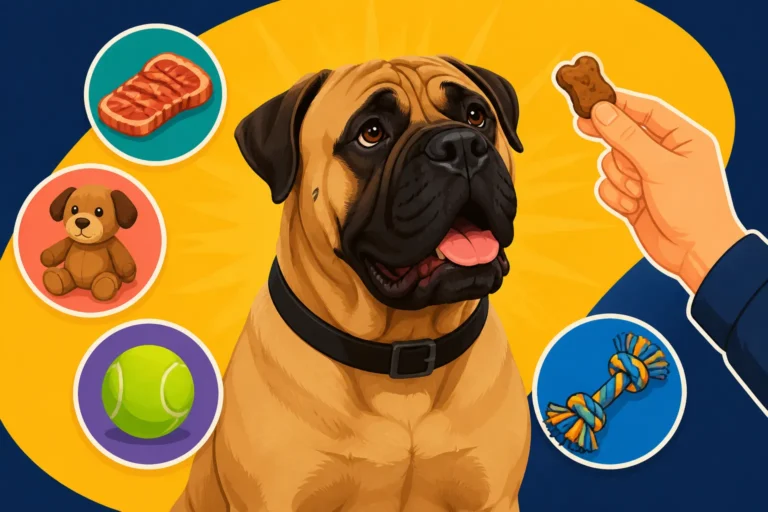
High-value treats are key here. For a Bullmastiff, kibble often isn't enough to compete with the allure of a new smell or another dog. Think small pieces of cooked chicken, cheese, or hotdogs. These are the "jackpots" that make them think, "Wow, walking nicely is really worth it!" You'll be amazed at how quickly they connect their loose-leash walking with these incredible rewards. Consider exploring online resources like BAXTER & Bella for structured puppy training programs that emphasize positive methods, which can be invaluable for owners.
Consistency is another non-negotiable aspect of positive reinforcement. Every person who walks the dog must use the same commands and methods. If one person allows pulling and another doesn't, you're sending mixed signals, which confuses your Bullmastiff and slows down progress. Everyone in the household needs to be on the same page for maximum effectiveness.
Consistency and Short, Engaging Sessions
Bullmastiffs, despite their imposing size, are often quite sensitive and can get bored or frustrated with repetitive, drawn-out training. Their intelligent minds prefer to solve problems rather than drill them endlessly. This is why keeping training sessions short, focused, and fun is crucial. Aim for 5-10 minute bursts multiple times a day, rather than one long, draining session.
During these short sessions, work on one specific aspect of leash manners, like stopping when the leash tightens, or walking beside you for a few steps. When your Bullmastiff performs the desired action, even for a brief moment, praise and reward immediately. This quick feedback loop helps them understand exactly what you're asking for. Over time, you can gradually increase the duration and difficulty. For more insights into how their temperament influences training, check out How Trainable a Bullmastiff Is.
It’s also important to vary your training locations. Start in a low-distraction environment like your home or backyard, then gradually move to slightly more distracting areas like a quiet street, and eventually to busier parks. Each new environment is a teaching opportunity, and by gradually increasing the challenge, you set your Bullmastiff up for success rather than overwhelming them. Remember, every walk is a training session, even if it’s just a short potty break.
Advanced Techniques and Problem Solving for Persistent Pullers
Sometimes, despite your best efforts, your Bullmastiff might still struggle with pulling. This is where advanced techniques and knowing when to seek professional help come into play. Don't get discouraged; even the most stubborn pullers can learn good manners with the right approach.
Addressing Specific Pulling Triggers
Does your Bullmastiff only pull when they see another dog? Or a squirrel? Or perhaps when they know they're heading to the dog park? Identifying specific triggers is vital for targeted training. If it's other dogs, work on desensitization and counter-conditioning. Start by walking your dog at a distance where they notice other dogs but don't react by pulling. Every time they look at another dog calmly, reward them. Gradually decrease the distance as they remain calm.
For dogs that pull towards exciting destinations, practice the "Premack Principle": they only get to go to the exciting place if they walk calmly. If they pull, you stop or even turn around. This teaches them that calm walking leads to the reward, while pulling removes it. This can be particularly effective for a determined Bullmastiff who really wants to get somewhere. You're effectively leveraging their desire to get to a specific spot as motivation for good behavior.
Another common trigger is simply the excitement of being outside. For these dogs, you might need to start with shorter, less stimulating walks, focusing purely on calm walking techniques before gradually increasing exposure to more exciting environments. Practicing commands like "Watch Me" or "Focus" to redirect their attention before they even have a chance to pull can also be incredibly helpful. This can also tie into teaching your Bullmastiff to Teach a Bullmastiff to Wait at a Door.
When to Seek Professional Guidance
If you've consistently applied positive reinforcement techniques, used appropriate equipment like a front-clip harness, and still find yourself struggling, it might be time to call in a professional. A certified professional dog trainer or a veterinary behaviorist can observe your Bullmastiff's specific behaviors, identify underlying issues you might be missing, and tailor a training plan just for you. They can teach you nuances in timing, leash handling, and motivation that make all the difference.
There's no shame in seeking help. Bullmastiffs are powerful dogs, and their training can be challenging. A good trainer acts as a coach, empowering you with the skills and confidence to work with your dog effectively. They can also help address more complex issues like reactivity or aggression that might be contributing to pulling, as these require specialized knowledge and approaches. It's an investment in your dog's future and your peace of mind.
When looking for a trainer, seek out someone who uses positive, force-free methods and has experience with large breeds. Ask for references and observe a session if possible. A good trainer will teach you, the owner, how to work with your dog, rather than simply "fixing" the dog for you. They will explain their methods clearly and ensure you're comfortable with the techniques.
Desensitization and Counter-Conditioning
These are powerful techniques often used when a Bullmastiff pulls due to over-excitement, fear, or reactivity towards specific stimuli. Desensitization means gradually exposing your dog to the trigger at a low intensity, so they learn it's not a big deal. Counter-conditioning involves changing your dog's emotional response to that trigger, from negative (or over-excited) to positive.
For example, if your Bullmastiff pulls wildly when they see another dog, you'd start by finding a distance where they notice the other dog but don't react by pulling. At that distance, every time they look calmly at the other dog, you give them a super high-value treat. This teaches them, "Other dog = delicious treat!" Gradually, over many sessions, you'd decrease the distance, always ensuring they remain calm and always rewarding that calm observation. The goal is to create a positive association, so the sight of another dog becomes a signal for a reward, not a cue to pull.
This process requires immense patience and keen observation of your dog's body language. You need to identify their "threshold" – the point at which they become overstimulated or reactive. Staying below that threshold is key to successful desensitization and counter-conditioning. If they pull, you've gone too far too fast. This methodical approach can transform walks for dogs that once seemed impossible to manage. Understanding What Motivates a Bullmastiff will be a huge asset in this process.
Maintaining Good Leash Manners Throughout Your Bullmastiff's Life
Training isn't a one-and-done event, especially with a Bullmastiff. Maintaining good leash manners requires ongoing effort, adaptability, and understanding that your dog's needs and behaviors can change over time.
Regular Practice in Varied Environments
Once your Bullmastiff has a solid grasp of loose-leash walking in a familiar, low-distraction environment, it's crucial to generalize that behavior to new places. Don't expect them to automatically transfer their calm walking skills from your quiet street to a bustling farmers' market. Each new environment introduces new sights, sounds, and smells, which can be highly distracting for a Bullmastiff.
Continue to practice your leash manners in a variety of settings: different neighborhoods, local parks, even a pet-friendly hardware store. Start with short durations in new places, and gradually increase the time as your dog shows they can maintain their focus and calm demeanor. Always remember to bring those high-value treats! Reinforcing good behavior in challenging situations makes it stronger and more reliable. This constant exposure in controlled ways also aids in What a Bullmastiff Needs Every Day, Which Is Less Than You Think, as it provides mental stimulation alongside physical activity.
Varying your walking routes also keeps things interesting for your Bullmastiff and helps them learn that loose-leash walking is expected everywhere, not just on their "usual" path. It prevents them from anticipating turns or destinations and instead encourages them to pay attention to you as their guide. This ongoing practice builds confidence in both of you and solidifies those good habits for the long haul.
Managing Distractions and Over-Stimulation
Bullmastiffs are naturally observant dogs, and distractions are an inevitable part of life outside the home. The key is to teach your Bullmastiff to manage these distractions without resorting to pulling. This involves a combination of proactive management and active training. If you see a potential distraction ahead—another dog, a person, or something interesting on the ground—try to get your Bullmastiff's attention before they notice it or become fixated.
Use your "Watch Me" or "Focus" command, and reward them for looking at you instead of the distraction. This teaches them to check in with you rather than launching themselves forward. If a distraction is too intense and your dog is clearly struggling, increase the distance or temporarily move behind a barrier until they can recompose themselves. Pushing them past their threshold will only reinforce the pulling behavior. For tips on how to handle the sheer size and strength when these distractions hit, revisit How to Walk a Bullmastiff That Outweighs You.
Remember, you are your Bullmastiff's advocate. Sometimes, managing distractions means choosing quieter walking times or routes, especially during peak hours. It’s about setting your dog up for success, not constantly putting them in situations where they are bound to fail. The more successful, calm walks you have, the more those behaviors become ingrained. Consider how this impacts their overall well-being and how much How Much Exercise a Bullmastiff Needs is quality exercise versus a constant struggle.
The Importance of Ongoing Socialization
While often thought of as something for puppies, socialization is an ongoing process for Bullmastiffs throughout their lives, and it directly impacts leash manners. A well-socialized Bullmastiff is generally more confident and less likely to react with fear or over-excitement to novel situations, people, or other dogs they encounter on walks. This confidence translates to a calmer demeanor and less pulling.
However, "socialization" doesn't mean letting your Bullmastiff greet every dog and person they see. For a large, powerful breed, appropriate socialization often means teaching them to calmly observe their environment and other beings without necessarily interacting. Think of it as exposure to the world without requiring engagement. A dog that can walk past a barking dog or a group of children without reacting is a well-socialized dog.
Continue to expose your Bullmastiff to a variety of safe, positive experiences. This might include calm, supervised interactions with known, friendly dogs, or simply sitting on a bench at a distance from a busy park, rewarding them for quietly watching the world go by. This continuous, positive exposure helps reinforce their confidence and good manners, ensuring that walks remain enjoyable for years to come. Ultimately, this contributes to a The First Year With a Bullmastiff Puppy being a success story and not a struggle.
Disclaimer
This article is for general informational purposes only and does not constitute professional advice. Laws, prices and regulations vary by location and change over time. Consult a qualified professional for guidance on your specific situation.