How Short a Bullmastiff’s Training Session Should Be
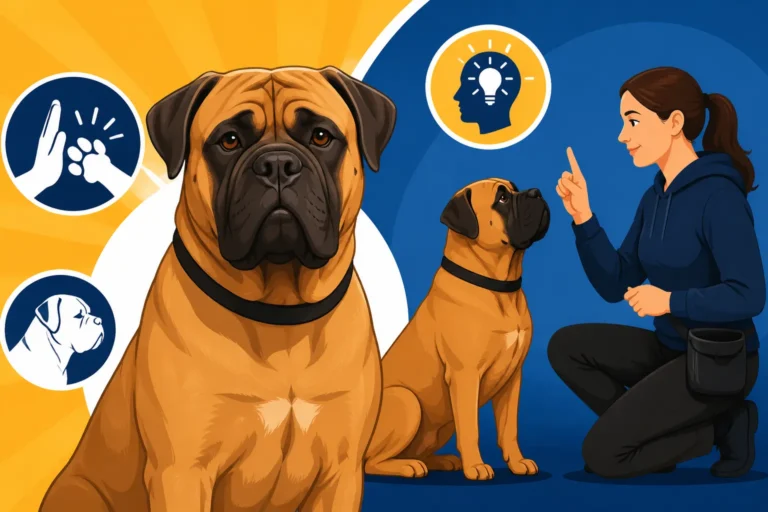
It's a common misconception that because Bullmastiffs are big dogs, they need long, arduous training sessions to learn. In reality, trying to push your gentle giant through extended periods of repetitive commands can lead to frustration for both of you, diminishing the effectiveness of your efforts and potentially souring their attitude toward training. This guide will explore the ideal length for your Bullmastiff's training sessions, tailoring advice to their age and unique temperament to ensure positive, lasting results.
Why Bullmastiffs Demand Thoughtful Training Session Lengths
Bullmastiffs are magnificent dogs, known for their calm demeanor and protective instincts. However, their intelligence comes with a healthy dose of independence and a distinct "what's in it for me?" mindset. Unlike some breeds that live to please their human, a Bullmastiff often needs convincing, and overly long or boring training sessions are the fastest way to lose their attention and cooperation.
Understanding the Bullmastiff Temperament
Bullmastiffs are not typically high-energy, frenetic learners. They are thinkers, observers, and often deliberate in their responses. This isn't laziness; it's just how they're wired. When you give a command, a Bullmastiff often pauses to process, weigh their options, and decide if complying is worth their effort or if there's something more interesting happening. This contemplative nature means that expecting rapid-fire repetitions for an extended period is a losing battle. They'll simply tune you out or, worse, decide that training isn't worth their time. Why a Bullmastiff Pauses Before Obeying They appreciate a clear request, a moment to think, and a fair reward for their cooperation. Pushing them past their mental comfort zone often results in them shutting down, making the session counterproductive.
The Bullmastiff Attention Span
While intelligent, Bullmastiffs don't have an endless capacity for focused, repetitive tasks, especially as puppies. They get bored easily, and once boredom sets in, disengagement follows swiftly. Imagine trying to force a teenager to do algebra for two hours straight when they'd rather be on their phone; you'll get similar levels of enthusiasm. For a Bullmastiff, once their interest wanes, their focus is gone, and any further attempts at training become ineffective. You might see them start to sniff the ground, look away, or simply wander off. This isn't disrespect; it's their way of saying, "I'm done for now, thanks." Keeping sessions short and sweet capitalizes on their peak attention and prevents them from associating training with tedium.
Physical Limitations and Comfort
Beyond their mental capacity, the physical aspects of a Bullmastiff also play a significant role in determining session length. Bullmastiff puppies, for instance, have rapidly growing bones and joints that are susceptible to injury from too much strenuous activity. Long periods of standing, walking, or repetitive movements on hard surfaces can be detrimental. The Exercise Limit for a Bullmastiff Puppy Even adult Bullmastiffs, with their massive size and brachycephalic (short-nosed) tendencies, can overheat more easily than other breeds, especially during warmer weather or intense activity. A long, drawn-out training session, even indoors, can lead to discomfort or even heatstroke. Why a Bullmastiff Overheats So Easily Prioritizing their physical comfort means keeping sessions brief and adjusting them based on environmental factors.
Optimal Session Lengths by Age and Stage
Just like with humans, a Bullmastiff's capacity for learning and engagement changes as they grow. What works for a bouncy puppy won't be suitable for a mature adult or a comfortable senior. Tailoring your training approach to their life stage is key to sustained success and a happy, well-mannered companion.
Puppy Training Sessions (8 Weeks – 6 Months)
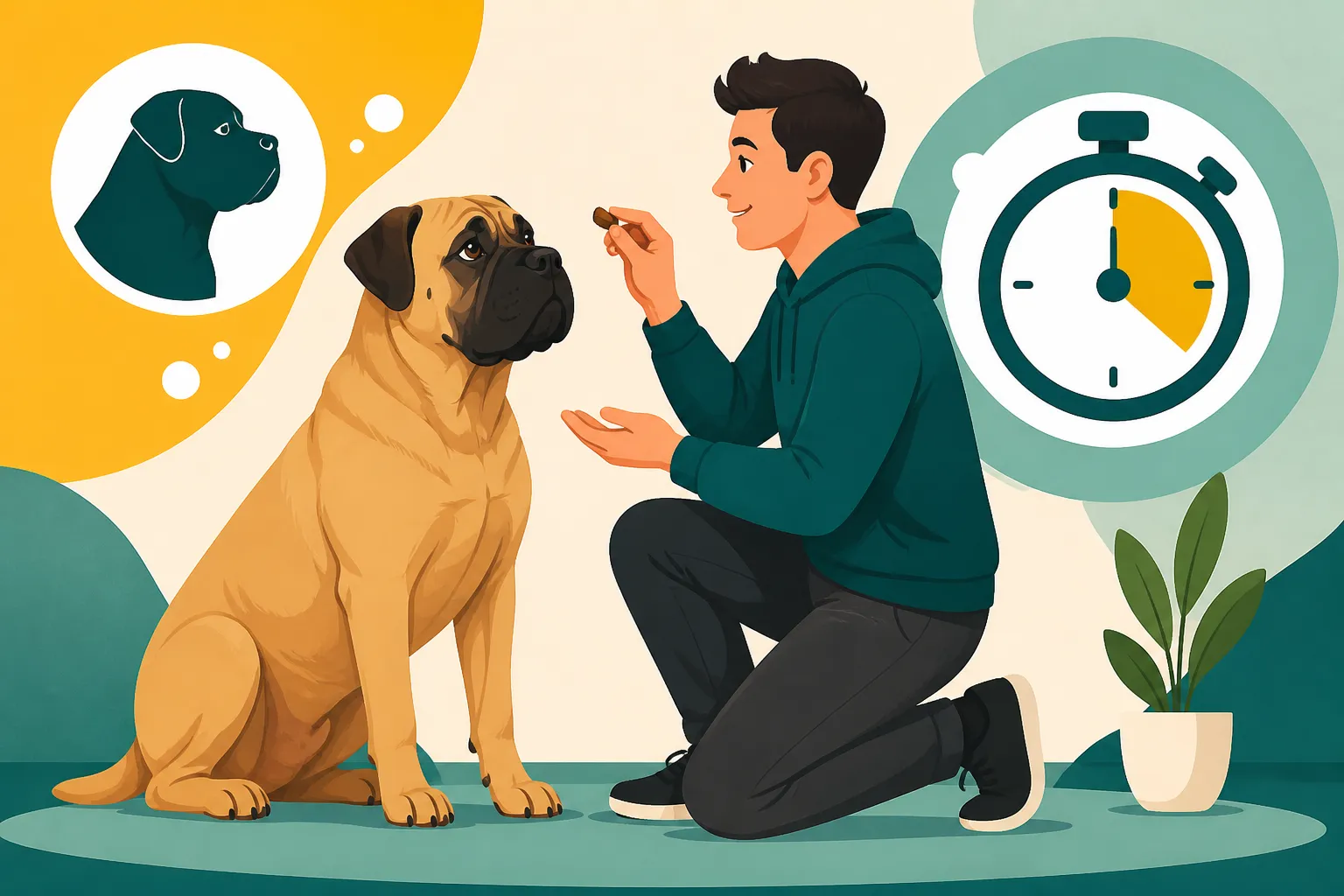
For Bullmastiff puppies, think "micro-bursts" of training. Their attention span is incredibly short, often no more than a few minutes at a time. Trying to cram too much into one session will lead to frustration for both of you. Aim for multiple, very short sessions throughout the day, rather than one long one.
A typical puppy training session might look like this:
- Duration: 2-5 minutes, absolute maximum of 7-8 minutes if they are exceptionally engaged.
- Frequency: 3-5 times a day, or whenever you have a few free moments and your puppy is receptive.
- Focus: One or two simple commands, like "sit," "down," or their name. Keep it super positive with high-value treats and enthusiastic praise.
- Environment: Start in a quiet area with minimal distractions, gradually introducing more challenging environments as they progress.
Think of it as commercial breaks in your daily routine. A few seconds of "sit," a treat, then back to playing. This builds a strong positive association with training and prevents burnout. For a deeper dive into their early development, check out The First Year With a Bullmastiff Puppy. These early, positive experiences lay the groundwork for a lifetime of good habits.
Adolescent Bullmastiffs (6 Months – 2-3 Years)
Ah, adolescence – the teenage years for your Bullmastiff. This period can be challenging, as your dog grows in size and confidence, often "forgetting" commands they once knew perfectly. Their attention span will have grown since puppyhood, but they might be more inclined to test boundaries and be distracted by the exciting world around them. When a Bullmastiff Tests Its Owner
- Duration: 5-10 minutes. Some days they might manage 15, but don't push it.
- Frequency: 2-3 times a day.
- Focus: Reinforce basic commands, work on impulse control (like "leave it" or waiting at the door), and introduce new, slightly more complex behaviors. This is also a great time to practice leash manners before they get too strong to handle. Teaching a Bullmastiff to Walk on Leash
- Variety: Mix up locations, introduce mild distractions, and incorporate play into your sessions to keep them engaged.
During this stage, consistency is more important than length. A few short, successful sessions daily will yield far better results than one long, frustrating battle of wills. Utilize high-value rewards to keep their attention and motivation strong.
Adult Bullmastiffs (3+ Years)
Once your Bullmastiff reaches full maturity, usually around 2-3 years of age, they tend to settle into a more predictable routine. Their attention span is generally longer than their younger selves, and they often have a solid foundation of basic commands. However, that independent streak doesn't disappear entirely!
- Duration: 10-20 minutes. The exact length will depend on the individual dog and the complexity of the task.
- Frequency: At least once a day, or a few times a week to maintain skills and introduce new tricks.
- Focus: Advanced obedience, scent work, trick training, or reinforcing good manners in more challenging environments. This is where you can explore activities like canine good citizen preparation or even just fun party tricks.
- Engagement: Keep it mentally stimulating. Bullmastiffs thrive on problem-solving and feeling like they're "working" with you, not just being drilled.
Adult training sessions can be a wonderful way to deepen your bond and provide mental enrichment. If you're looking for structured guidance, online programs like those offered by BAXTER & Bella can provide excellent curricula designed to keep training engaging for both of you. Remember to always end on a positive note, even if it means doing one super-easy command they're sure to nail.
Senior Bullmastiffs (6+ Years)
As your Bullmastiff enters their golden years (typically around 6-7 years old), their physical capabilities and energy levels will naturally decline. Training should shift to maintaining cognitive function, reinforcing good habits, and ensuring their comfort. Caring for an Aging Bullmastiff
- Duration: 5-10 minutes. Prioritize comfort and avoid anything physically taxing.
- Frequency: 1-2 times a day, or as your senior dog seems willing and able.
- Focus: Gentle mental stimulation. Reviewing known commands, simple scent games, or practicing behaviors that make daily life easier (like getting on and off furniture safely, if permitted).
- Comfort: Choose soft surfaces for training, ensure the environment is temperate, and be extra generous with praise and gentle affection.
Training for seniors is less about learning new, complex behaviors and more about maintaining their brain health and confidence. It's a fantastic way to keep them feeling engaged and cherished, adapting to their changing needs with patience and understanding.
Signs Your Bullmastiff Needs a Break or a Change
Recognizing when your Bullmastiff has had enough is crucial for successful training. They might not speak English, but they certainly communicate their needs through their body language and behavior. Learning to read these signals will help you avoid frustration and keep training a positive experience.
Behavioral Cues
Your Bullmastiff will give you subtle, and sometimes not-so-subtle, hints that they're losing interest or getting overwhelmed. These cues are their way of saying, "I need a break" or "This isn't working for me." Ignoring these signals can lead to a breakdown in communication and a less willing participant in future sessions.
Watch for:
- Yawning or Lip Licking: Often a sign of stress or mild anxiety, not just tiredness.
- Sniffing the Ground/Looking Away: A clear indication of disengagement. They're trying to find something more interesting to do than engage with you.
- Scratching or Grooming Themselves Excessively: Displacement behaviors that show they're uncomfortable or trying to relieve stress.
- Low Tail Carriage or Tucked Tail: Can indicate a lack of confidence or feeling overwhelmed.
- Lying Down or Sitting Away: A direct refusal to participate. If they know the command and are choosing to ignore it, it's often a sign of fatigue or boredom. Why a Bullmastiff Ignores a Cue It Knows
- Mouth Open, Panting, or Tongue Out: If it's not due to heat or exercise, it can be a sign of stress.
- Lack of Enthusiasm for Treats: If your Bullmastiff, who usually inhales treats, starts taking them gently or ignoring them, they're likely done.
When you see these signs, it's time to graciously end the session. Don't try to push through; you'll only reinforce negative associations with training. It's far better to end early on a positive note than to prolong a session into a struggle.
Physical Cues
Given their breed characteristics, physical comfort is paramount for Bullmastiffs. Overlooking physical discomfort during training can lead to health issues and a reluctance to participate.
Pay close attention to:
- Heavy Panting or Drooling: While Bullmastiffs do drool, excessive panting or drooling, especially if not related to recent exertion or excitement, can be a sign of overheating. This is particularly important with their brachycephalic tendencies.
- Slowing Down or Reluctance to Move: If your Bullmastiff is usually quick to respond but suddenly becomes sluggish, it might be physical discomfort, especially in older dogs.
- Stiff or Guarded Movements: This could indicate joint pain or muscle soreness. Stop immediately and assess their physical state.
- Seeking Shade or a Cooler Spot: A clear sign they're feeling too warm.
If you observe any of these physical cues, stop the training session immediately. Offer water, move to a cooler environment, and allow your Bullmastiff to rest. Their physical well-being should always take precedence over training goals.
The "Bullmastiff Sigh"
Any Bullmastiff owner will recognize this distinctive communication. It's a deep, dramatic, almost theatrical sigh that often accompanies them flopping down, or when they're mildly inconvenienced. It’s not necessarily a sign of pain, but more often a signal of profound resignation or mild annoyance. When you hear the "Bullmastiff sigh" during a training session, especially after they've been asked to do something they find tedious, consider it their final, polite declaration: "I'm done. My shift is over. Please respect my artistic expression of disinterest." While it can be amusing, it’s a strong signal that pushing further will be futile.
Maximizing Training Effectiveness
Knowing how short a Bullmastiff's training session should be is just one piece of the puzzle. To truly make those brief moments count, you need strategies that amplify engagement, motivation, and retention. It's about working smarter, not harder, with your intelligent and independent companion.
The Power of Positive Reinforcement
Bullmastiffs respond incredibly well to positive reinforcement. They thrive when they understand what's expected of them and receive a rewarding payoff. Harsh corrections or punishment-based methods are not only counterproductive but can damage your bond and make your Bullmastiff shut down completely. Why Harsh Correction Fails on a Bullmastiff
- High-Value Treats: Forget the dry kibble. For a Bullmastiff, you need something truly exciting. Think small pieces of cooked chicken, cheese, hot dogs, or liverwurst. These are "paychecks" that make them eager to work.
- Enthusiastic Praise: Your voice matters! A cheerful, upbeat "Good dog!" or "Yes!" can be just as motivating as a treat, especially when paired with one.
- Favorite Toys: For some Bullmastiffs, a quick game of tug or a toss of their favorite ball can be a fantastic reward. Keep these rewards varied to maintain interest. Which Rewards a Bullmastiff Works For
- Clicker Training: A clicker can be an incredibly precise tool for marking desired behaviors. It allows you to communicate exactly what your Bullmastiff did right at the moment they did it, making learning faster and clearer. Many resources are available on Amazon for clickers and introductory guides to clicker training.
Consistency in your positive reinforcement is key. Always reward desired behavior immediately. This helps your Bullmastiff understand the connection between their actions and the positive outcome, making them more likely to repeat it.
Incorporating Play and Variety
Monotony is the enemy of Bullmastiff training. If every session is the same repetitive drill in the same location, they'll quickly lose interest. Mixing things up keeps their brains engaged and turns training into a fun game rather than a chore.
- Location, Location, Location: Don't always train in the living room. Take your sessions to the backyard, a quiet park, or even a different room in the house. The change of scenery can be refreshing and help generalize behaviors.
- Mix Up Commands: Instead of doing 10 "sits" in a row, intersperse it with a "down," a "stay," or even a simple recall.
- Integrate Games: Turn training into a game. For example, hide-and-seek can be a fun way to practice recall. Or use puzzle toys (easily found on Amazon) to challenge their minds and reward them for problem-solving. Whether Puzzle Toys Satisfy a Bullmastiff
- Short Play Breaks: During longer (for a Bullmastiff!) sessions, include a brief play break. A minute of tug or fetch can reset their focus and inject some fun before returning to a command.
Variety keeps training fresh and exciting, tapping into their natural curiosity and desire for engagement. It also helps them learn that commands apply in different situations, not just in a specific training spot.
Professional Guidance and Resources
Sometimes, despite your best efforts, you might encounter a training hurdle that feels insurmountable. Or perhaps you're a first-time Bullmastiff owner and need extra guidance. That's where professional help and structured resources come in.
- Certified Professional Dog Trainers: A good trainer can observe your Bullmastiff's behavior, identify potential issues, and provide personalized strategies. Look for trainers who use positive, force-free methods. They can teach you the nuances of reading your Bullmastiff's body language and how to effectively motivate them. Whether a Bullmastiff Needs a Professional Trainer
- Online Training Programs: For those who prefer to learn at their own pace or have scheduling conflicts, online platforms like BAXTER & Bella offer comprehensive, step-by-step training programs that can be incredibly valuable. They often include video tutorials, written guides, and sometimes even direct access to trainers for support. These can be particularly useful for ensuring consistency in your approach.
- Breed-Specific Books and Forums: Reading books about Bullmastiff behavior and training can provide insights into their unique characteristics. Online forums for Bullmastiff owners can also be a source of shared experiences and tips, though always cross-reference advice with professional trainers.
Remember, seeking help isn't a sign of failure; it's a sign of a responsible and committed owner who wants the best for their Bullmastiff. Even experienced owners benefit from fresh perspectives and advanced techniques to continue enriching their dog's life and refining their behavior.
Bullmastiff Training Session Length Guide
Here's a quick overview to help you gauge appropriate training session lengths for your Bullmastiff at different stages of their life. Remember, these are guidelines, and every dog is an individual!
| Age/Stage | Recommended Session Length | Frequency per Day | Primary Focus | Key Considerations |
|---|---|---|---|---|
| Puppy (8 wks – 6 mos) | 2-5 minutes (max 8) | 3-5+ times | Foundational manners, socialization, name recognition | Keep it fun, positive, and end before boredom/fatigue. |
| Adolescent (6 mos – 2-3 yrs) | 5-10 minutes (max 15) | 2-3 times | Reinforce basics, impulse control, leash manners | Address stubbornness with high rewards, vary locations. |
| Adult (3+ yrs) | 10-20 minutes | 1-2 times | Advanced obedience, mental enrichment, specific skills | Maintain interest with variety, challenge their minds. |
| Senior (6+ yrs) | 5-10 minutes | 1-2 times | Cognitive maintenance, gentle review, comfort-focused | Prioritize comfort, avoid physical strain, be patient. |
This table provides a handy reference, but always observe your individual Bullmastiff's cues. Some days they might be more receptive than others, and learning to adapt to their mood is part of the art of training.
Disclaimer
This article is for general informational purposes only and does not constitute professional advice. Laws, prices and regulations vary by location and change over time. Consult a qualified professional for guidance on your specific situation.