Teaching a Bullmastiff to Have Its Feet Handled
One of the trickiest things about owning a Bullmastiff, besides managing all that drool, is getting them to cooperate for routine care, especially when it comes to their massive paws. If you've ever tried to trim a Bullmastiff's nails or check between their pads only to be met with a stubborn refusal, a heavy paw withdrawal, or even a subtle but firm lean away, you know the frustration. This guide is here to walk you through how to teach your Bullmastiff to not just tolerate, but genuinely accept and even enjoy having their feet handled, making necessary grooming and health checks a stress-free experience for both of you.
Why Handling Your Bullmastiff's Feet is Non-Negotiable
It might seem like a small thing, but getting your Bullmastiff comfortable with having their feet touched is more than just about aesthetics; it's a critical foundation for their health, safety, and your sanity as an owner. With a dog of this size and strength, refusing foot handling can quickly escalate into a difficult and even dangerous situation.
Essential for Routine Grooming
Let's be real, a Bullmastiff's nails grow fast, and if they're not kept in check, they can cause serious problems. Overgrown nails can curve under, dig into the paw pad, lead to infections, or even change the way your dog walks, putting undue stress on their joints, hips, and elbows. Imagine trying to wrestle a reluctant 130-pound dog for a nail trim – it's a battle you're unlikely to win without proper training. Beyond nails, you'll need to check for matting between their pads, especially if they’ve been romping through mud or tall grass. Those little tufts of hair can collect debris, leading to discomfort and skin irritation.
Regular foot handling also includes checking for dryness or cracking on their paw pads, especially in extreme weather. Think about the hot pavements in summer or the icy, salted sidewalks in winter. Catching these issues early, before they become painful, is key to preventing further complications. How Often a Bullmastiff's Nails Need Trimming is a topic many owners grapple with, and cooperation makes all the difference.
Crucial for Health Checks and Injury Prevention
Bullmastiffs are big, and sometimes, despite their best efforts, they can step on something sharp, get a thorn embedded, or even twist a paw. When an injury occurs, being able to calmly examine their foot without causing additional stress or pain is paramount. If your Bullmastiff suddenly starts limping, you need to be able to investigate quickly. Is there a cut? A splinter? A bee sting? Without prior desensitization to foot handling, this already stressful situation becomes even more complicated.
Beyond acute injuries, Bullmastiffs are prone to certain orthopedic issues like hip and elbow dysplasia, and even arthritis as they age. Hips and Elbows Under a Hundred and Thirty Pound Bullmastiff are areas that carry a lot of weight and stress. Regular, gentle foot massages and examinations can help you identify any swelling, tenderness, or changes in their gait early on. These early observations can be invaluable for your vet in diagnosing potential issues, leading to quicker treatment and better long-term outcomes for your beloved companion.
Facilitates Veterinary Visits and Professional Grooming
Picture this: your Bullmastiff needs a vet visit, and part of the examination involves checking their paws. If your dog has a history of resisting foot handling, this simple procedure can become a struggle, requiring additional staff, muzzles, or even sedation, all of which add stress, time, and cost to the visit. Vets and vet techs appreciate a dog that is comfortable and cooperative, as it allows them to perform thorough examinations more efficiently and safely.
The same goes for professional groomers. While many Bullmastiffs don't need extensive grooming, they might still need nail trims, pad trims, or even a professional bath that involves handling their feet. A cooperative dog makes their job easier and ensures a more pleasant experience for everyone involved. Investing time in this training now pays dividends for years to come, turning potential struggles into routine care.
The Unique Challenges of Teaching a Bullmastiff
While teaching any dog to tolerate foot handling has its moments, doing it with a Bullmastiff introduces a few extra layers of complexity. Their sheer size, combined with some breed-specific traits, means you'll need patience, consistency, and a deep understanding of what makes them tick.
Their Size and Strength
Let's state the obvious: Bullmastiffs are big. A fully grown male can easily weigh 130 pounds or more. This isn't a small terrier you can easily scoop up or physically maneuver into submission. If a Bullmastiff decides they don't want their foot handled, they can simply lean away, pull their paw, or even stand up, making it nearly impossible for you to hold onto them, especially for something delicate like a nail trim. Training a Bullmastiff That Weighs More Than You Do is a topic that resonates with every Bullmastiff owner, and it's particularly relevant here.
Their strength means that even a gentle tug can feel like a powerful resistance, and if you're not careful, you could both end up in an awkward, potentially injurious position. This is why force is absolutely out of the question. Trying to physically overpower a Bullmastiff will not only be ineffective but will also damage your bond and make them even more resistant next time. You need to rely on their willingness to cooperate, which comes from positive association and trust.
Bullmastiff Temperament and Sensitivity
Bullmastiffs are known for their calm, confident, and sometimes stubborn nature. They are often described as deliberate thinkers, pausing to decide if your request is truly worth their effort. This isn't always a bad thing; it means they're not typically impulsive or frantic. However, it also means they won't just blindly obey if they're uncomfortable or if they don't see the value in it. How Sensitive a Bullmastiff Is might surprise some, as despite their formidable appearance, they can be quite sensitive to discomfort or perceived threats.
Some Bullmastiffs can be quite sensitive about their paws, either due to past negative experiences, or simply because it's a vulnerable part of their body. They might flinch, withdraw, or give a low growl to signal their displeasure. It's crucial to respect these signals and not push past their comfort level too quickly. Instead, you'll need to build up their tolerance gradually, making every interaction positive and rewarding. Remember, these are dogs bred for a serious job, and they possess an innate sense of self-preservation that means they won't yield easily if they feel threatened or uncomfortable.
Building Trust Over Force
Given their size and temperament, the absolute golden rule for Bullmastiffs is that force is never the answer. You cannot physically make a Bullmastiff do anything they are truly determined not to do. Why a Bullmastiff Cannot Be Physically Made to Do Anything is a lesson many owners learn the hard way. Instead, your approach must be built entirely on trust, positive reinforcement, and making the experience incredibly rewarding for them.
This means short, positive sessions, high-value treats, and ending before they get uncomfortable or resist. You want them to associate having their feet touched with good things, not with stress or struggle. Consistency is key, and every family member who interacts with the dog should follow the same positive protocol. Over time, your Bullmastiff will learn that cooperating with foot handling means treats, praise, and a positive interaction with you, fostering a stronger bond in the process.
Step-by-Step Training for Paw-sitive Experiences
Teaching your Bullmastiff to have their feet handled is a marathon, not a sprint. It requires patience, consistency, and a commitment to positive reinforcement. Breaking the process down into tiny, manageable steps is the secret to success.
Phase 1: Gentle Touch and Positive Association
The very first step is to create a positive association with simple touches. This isn't about picking up paws yet; it's just about contact.
- Start Small, High-Value Rewards: Choose a time when your Bullmastiff is relaxed, perhaps lying down after a walk or a meal. Have a stash of incredibly high-value treats ready – think small pieces of cooked chicken, cheese, or even some of that tasty human-grade food from Ollie.
- Touch and Treat: Gently touch their shoulder or upper leg, immediately say "yes!" or click a clicker, and give a treat. Repeat this several times, keeping the touches brief and light. The goal is for them to think, "Oh, a touch here means a yummy treat!"
- Gradual Progression: Over several sessions, slowly move your touch closer to their paw. Go from shoulder to elbow, then knee, then upper leg, then just above the paw. Each time you touch a new, slightly more sensitive area, say your marker word and give a treat. If they pull away or show discomfort, you've moved too fast. Go back to the last step where they were comfortable and work from there.
- Practice on All Four Paws: Make sure you practice this on all four paws, as some dogs can be more sensitive about certain feet. Keep sessions short, no more than 5 minutes, and always end on a positive note.
Phase 2: Introducing Paw Lifts and Inspection
Once your Bullmastiff is happy with you touching their legs and paws, you can start to introduce gentle lifts and inspections.
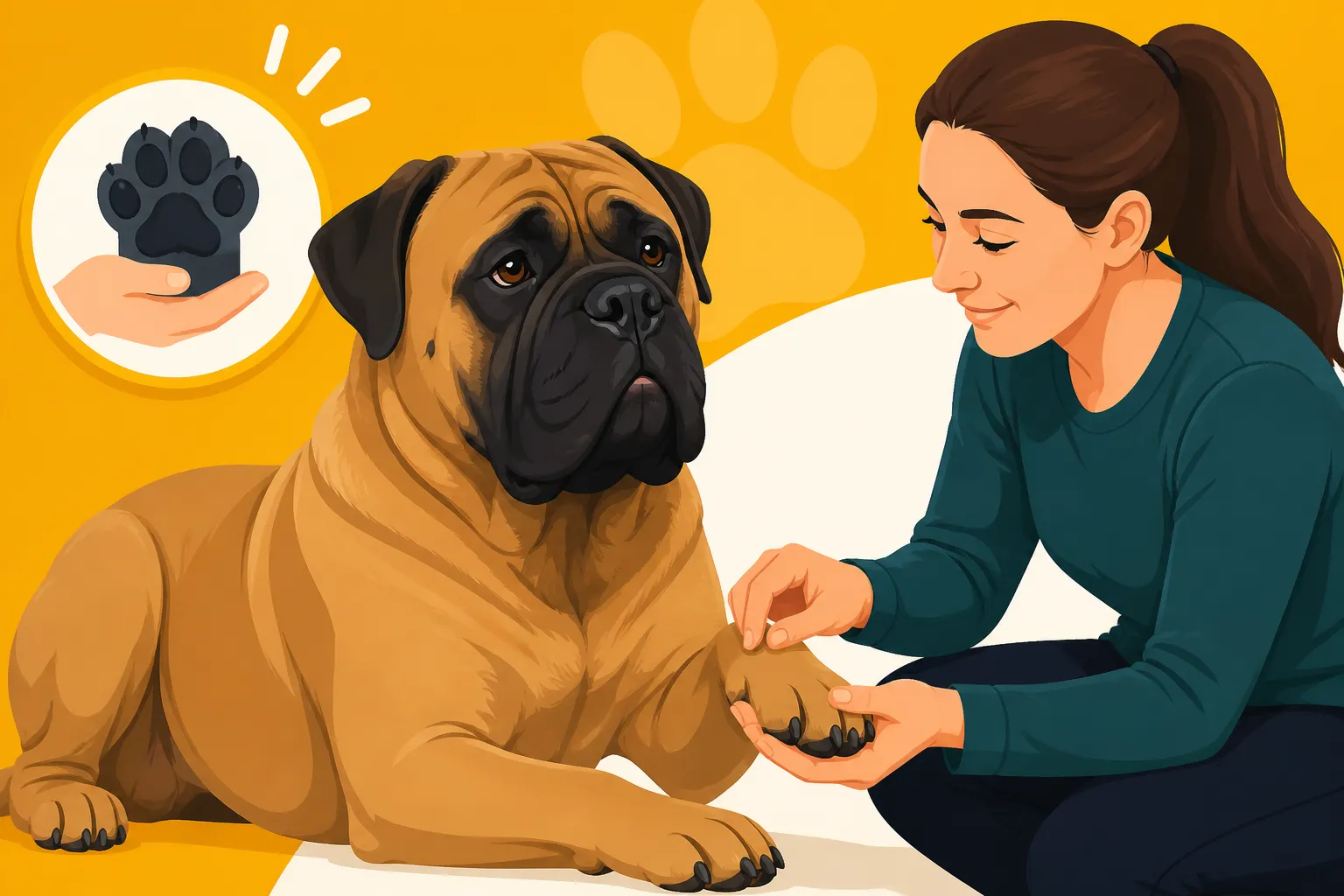
- Brief Paw Lift: Following the same touch-and-treat principle, gently cup their paw in your hand. The moment your hand is around their paw, say "yes!" and give a treat. Then immediately release their paw. This should be so quick that they barely register it.
- Hold for Longer Durations: Gradually increase the time you hold their paw. Start with one second, treat, release. Then two seconds, treat, release. Work your way up to 5-10 seconds, always praising and treating for calm acceptance. If they resist, shorten the duration for the next attempt.
- Gentle Manipulation: Once they are comfortable with you holding their paw, start introducing gentle manipulation. Lightly touch between their pads, gently squeeze a toe, or lightly rub a nail. Each successful, calm interaction gets a treat. This helps them get used to the sensations of nail trims or having their pads checked.
- Simulate Grooming Tools: Introduce grooming tools without actually using them yet. Let them see and smell the nail clippers or dremel. Touch the back of the clippers to their paw, treat. Turn on the dremel nearby (without touching them), treat. The goal is to desensitize them to the sight and sound of these tools long before you ever use them on their nails. Whether a Dremel Suits a Bullmastiff's Nails is a consideration many owners have, and this desensitization is vital regardless of your chosen tool.
Phase 3: Making Grooming a Positive Routine
Now that your Bullmastiff is comfortable with handling, it's time to integrate this into their routine care.
- Combine Handling with Actual Grooming: Start with a single nail. Hold their paw, trim one nail (or dremel it for a second), immediately give a super high-value treat and praise, then release. That's it for the first session! You want them to feel like this was no big deal and ended with a huge reward.
- Gradually Increase the Number of Nails: Over subsequent sessions, slowly increase the number of nails you trim or dremel, one or two at a time, always ending with success and a reward. If you notice signs of stress, stop for the day and try again later, or go back to a simpler step.
- Variety is Key: Don't just focus on nails. Use this training for checking between pads, applying paw balm (you can find excellent paw balms on Amazon or Chewy), or simply inspecting for debris after a walk. Each positive interaction reinforces the overall comfort with foot handling.
- Consistency: Make foot handling a regular, but not necessarily daily, part of your routine. Even if they don't need their nails trimmed, a quick "check and treat" session a few times a week keeps the positive association strong. This is especially important for Caring for an Aging Bullmastiff, whose mobility and comfort might depend on consistent foot care.
Tools and Techniques for Success
Having the right tools and employing smart techniques can make all the difference in turning a challenging task into a manageable one.
Choosing the Right Grooming Tools
When it comes to your Bullmastiff's paws, having the right equipment is paramount. Their nails are thick and strong, requiring robust tools.
- Nail Clippers: For Bullmastiffs, heavy-duty guillotine-style clippers or scissor-style clippers designed for large breeds are often recommended. Make sure they are sharp to ensure a clean cut and prevent crushing the nail, which can be painful. Brands like Millers Forge or Safari make durable clippers suitable for thick nails.
- Dremel/Grinder: Many owners find a dremel or nail grinder to be less intimidating for their dog and can achieve a smoother finish, reducing the risk of cutting the quick. The key is to desensitize your Bullmastiff to the sound and vibration first, as discussed above. Cordless options offer more flexibility.
- Styptic Powder: Accidents happen. Always have styptic powder on hand in case you cut too deep and hit the quick. It quickly stops bleeding and reduces discomfort.
- Paw Balm: For cracked or dry paw pads, a good quality paw balm can provide relief and protection. You can often find a variety of highly-rated paw balms on Amazon or Chewy.
High-Value Treats and Rewards
For a Bullmastiff, "high-value" means something truly irresistible. Kibble or basic biscuits usually won't cut it when asking for cooperation on a sensitive task.
- Human-Grade Goodies: Small pieces of cooked chicken, lean beef, cheese, hot dogs, or even peanut butter (xylitol-free!) are often big hits. Some commercial treats, especially those from brands like Ollie, are formulated to be highly palatable and can work wonders.
- Variety: Rotate your high-value treats to keep things interesting and prevent your Bullmastiff from getting bored. The novelty can keep their motivation high.
- Timing is Everything: Deliver the treat immediately after the desired behavior (even a fractional moment of calm compliance). This instant reward solidifies the positive association. If you wait too long, your dog might not connect the treat with the specific action you're trying to reinforce.
Creating a Calm and Safe Environment
The environment in which you conduct your foot handling sessions plays a huge role in your Bullmastiff's comfort and willingness to cooperate.
- Quiet Space: Choose a quiet, familiar area where your Bullmastiff feels safe and there are minimal distractions. Avoid busy rooms, loud noises, or times when other pets or children might interrupt.
- Comfortable Positioning: For a large dog, having them lie down can be helpful. You might sit on the floor with them, making yourself less imposing. Some owners find that having their Bullmastiff lie on their side works best for accessing nails.
- Non-Slip Surface: If you're working on a hard floor, consider placing a non-slip mat or rug underneath them. This prevents slipping and helps them feel more secure, which is especially important for older Bullmastiffs. Bedding and Joints for a Hundred and Thirty Pound Bullmastiff is an important consideration for their overall comfort and joint health.
Maintaining the Skill Throughout Their Life
Teaching your Bullmastiff to tolerate foot handling isn't a one-time project; it's an ongoing commitment that will benefit both of you for their entire life. Regular reinforcement and adaptability are key.
Regular Practice, Even When Not Needed
The phrase "use it or lose it" applies here. Even if your Bullmastiff's nails are perfectly trimmed, dedicate a few minutes each week to a "mock" foot handling session. Gently touch their paws, lift them, spread their toes, and offer a treat. This keeps the positive association strong and ensures they don't regress. Think of it as a maintenance workout for their cooperation skills.
This regular, low-stakes practice also allows you to notice any subtle changes in their paws. Is there a new lump or bump? Is a toe suddenly sensitive? Catching these things early can prevent bigger problems down the line, especially as your Bullmastiff ages and might become more prone to issues like The Age a Bullmastiff Gets Arthritis.
Adapting to Age and Health Changes
As your Bullmastiff enters their senior years, their physical capabilities and tolerance levels might change. Arthritis, decreased mobility, or even vision impairment can make once-routine tasks more challenging. You might need to adjust your approach.
- Softer Surfaces: An orthopedic dog bed or a thick rug can make lying down for foot handling much more comfortable for an aging Bullmastiff with stiff joints.
- Positioning: You might need to find new positions that are less taxing for them. Perhaps they prefer to have their paw handled while standing and leaning against you, rather than lying down.
- Increased Gentleness: Always be extra gentle and observant of any signs of pain or discomfort. What was once a minor annoyance might now be genuinely painful. Consult your vet if you suspect pain is causing resistance, as pain management can make a world of difference.
- Patience and Understanding: Your aging Bullmastiff might move slower or be less cooperative. This isn't stubbornness; it could be a sign of discomfort or confusion. More patience, shorter sessions, and even higher-value rewards will be your best tools.
Seeking Professional Help When Necessary
Sometimes, despite your best efforts, you might encounter significant resistance or anxiety when trying to handle your Bullmastiff's feet. Don't view this as a failure; it's an opportunity to seek expert guidance.
- Certified Professional Dog Trainer: A trainer specializing in positive reinforcement and force-free methods can offer tailored advice and hands-on demonstrations. They can help identify specific triggers for your dog's anxiety and develop a personalized plan.
- Veterinary Behaviorist: For severe cases of fear, aggression, or anxiety related to handling, a veterinary behaviorist can provide a more in-depth assessment. They can help rule out underlying medical conditions and, if appropriate, discuss behavioral modification techniques, potentially including medication to reduce anxiety during training.
- Groomer or Vet Tech: Sometimes, just having an experienced professional take over for a few sessions can help break the cycle of resistance. They often have tricks and techniques for calming dogs and might even have a second person to assist, making the experience less stressful for everyone.
Remember, the goal is always to make foot handling a positive, fear-free experience for your Bullmastiff. It might take time and dedication, but the peace of mind that comes with a cooperative dog for essential care is absolutely priceless.
Disclaimer
This article is for general informational purposes only and does not constitute professional advice. Laws, prices and regulations vary by location and change over time. Consult a qualified professional for guidance on your specific situation.