Whether Show Bullmastiffs Are Heavier Than Working Ones
A show Bullmastiff may look heavier than a working one, but appearance alone can be misleading. Breed, sex, frame, age, and body condition all affect what you see on the scale. This guide explains why show and working Bullmastiffs may differ, what the breed standards actually say, and how to tell healthy substance from excess weight.
Are show Bullmastiffs usually heavier than working Bullmastiffs
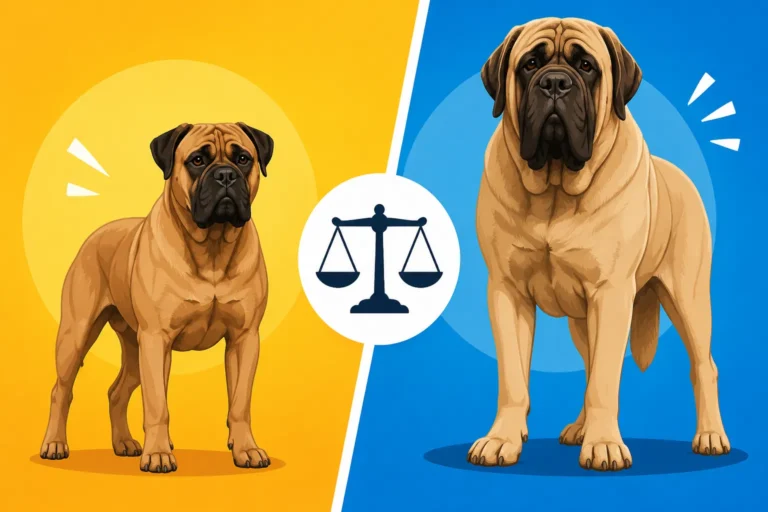
There is no simple rule that show Bullmastiffs weigh more than working Bullmastiffs. Show dogs are bred and evaluated against a written breed standard, while dogs described as working Bullmastiffs may come from different lines and be selected for other traits. Those differences can influence build and conditioning, but neither label guarantees a particular weight.
What the breed standard says about weight
For Bullmastiffs shown under the American Kennel Club standard, the typical weight range is 110 to 130 pounds for males and 100 to 120 pounds for females. Those ranges describe the breed’s expected size; they are not a target that every individual dog must hit exactly. A well-built dog can be healthy below or above a typical figure, so weight should be considered alongside body condition and overall structure.
Standards also describe a dog’s proportions, bone, muscle, and movement—not just a number on the scale. A Bullmastiff should look powerful and substantial, but not so heavy or cumbersome that it loses soundness or ease of movement. If you are comparing individual dogs, How Much a Bullmastiff Weighs gives useful context for the breed’s general size, while A Hundred and Thirty Pounds of Bullmastiff, Measured explores what that much dog means in everyday life.
The standards can differ slightly between kennel organizations, including how they describe weight and proportions. For a closer look at those distinctions, see How the British and American Bullmastiff Differ. Whichever standard is being used, the important point is that a show dog is not supposed to be rewarded simply for being the heaviest dog in the ring.
Why show dogs may look heavier
A show Bullmastiff may appear especially broad or massive because judges assess the whole outline of the dog. A wide chest, substantial bone, strong neck, and well-developed muscles can create an impression of greater size even when the dog’s weight is within a typical range. A broad head and thick coat can add to that visual effect, too.
Presentation matters. A dog standing squarely with its head up and weight distributed evenly can look more imposing than the same dog relaxing on the living-room floor. Photographs can exaggerate this further, especially when the dog is posed close to the camera or photographed from a low angle. Comparing photos without a reliable reference for height, age, or body condition is a poor way to estimate weight.
Breeding choices can also shape the look of show lines. A breeder may prioritize conformation traits that fit the standard, while also considering temperament, health, and movement. That does not mean show breeders intentionally produce overweight dogs. The desired outline is a powerful, balanced Bullmastiff, not an unhealthy one.
Why working dogs may look leaner
The phrase “working Bullmastiff” can mean different things. Some people use it for dogs from lines selected for athleticism or practical work; others simply mean a Bullmastiff that is active on a farm or in a working home. There is no single universal working-line standard that sets a separate weight range.
A dog that regularly moves over uneven ground, trains, or performs physical tasks may develop more visible muscle and carry less body fat. That can make the dog look leaner, even if the difference in weight from a show dog is small. Conversely, an inactive dog from a working background can still become overweight. Lifestyle and individual condition matter more than the label.
The breed’s history helps explain why movement and stamina matter alongside strength. Bullmastiffs were developed to be capable, powerful dogs, not simply large ones. The Bullmastiff Was Built to Catch Poachers in the Dark and The Outline a Gamekeeper Wanted in a Bullmastiff provide more background on the practical qualities behind the breed’s shape.
What creates the weight difference between individual dogs
When one Bullmastiff weighs more than another, the reason may have little to do with whether the dog is shown or works. A useful comparison accounts for sex, height, age, frame, muscle, and body condition. Without those details, a number on the scale can tell you surprisingly little.
Sex, height, age, and frame
Males are generally larger and heavier than females, but there is individual variation. A tall, broad female may weigh more than a smaller male without being overweight. Likewise, two dogs of the same sex can have different frames: one may be taller and longer, while another is shorter and more compact.
Age is another factor. A young adult may still be developing muscle and filling out, while an older dog may lose muscle even as body fat increases. That change can be hard to spot if you focus only on total weight. A dog that weighs the same as it did a year ago may have a different body composition now.
When comparing dogs, record more than the scale reading. Note sex, age, height, and whether the dog has a lean, muscular, or padded appearance. If you are choosing a puppy, avoid judging future adult size from a single weight estimate. Growth varies, and rapid growth or excess weight during puppyhood can put unnecessary strain on developing joints. Whether a Bullmastiff Should Look Square and What a Bullmastiff's Chest Should Be Like can help explain how structure affects the dog’s outline.
Muscle and body fat are not the same thing
Muscle adds weight, but it tends to look different from excess body fat. A fit Bullmastiff may have a solid, powerful body with a visible waist when viewed from above and a gentle abdominal tuck from the side. An overweight dog may have a thickened waist, a rounder outline, and ribs that are difficult to feel beneath the body covering.
Bullmastiffs naturally have a substantial build, so you should not expect them to look like a lightly built, narrow dog. Still, “big-boned” should not become a reason to ignore excess fat. A dog can have a large frame and still be overweight, just as a smaller dog can be in excellent condition at a lower weight.
Use the scale as one part of a regular check, not as the only measure of health. Ask your veterinarian to assess body condition and explain what a healthy shape looks like for your individual dog. For practical guidance on maintaining a suitable weight, read Keeping a Bullmastiff Lean Is the Best Thing You Can Do and What an Adult Bullmastiff Should Weigh.
| What you notice | What it may indicate | What to check next |
|---|---|---|
| Broad chest and heavy bone with a visible waist | A naturally substantial frame | Feel the ribs and assess the dog from above and the side |
| Firm, defined muscles and easy movement | Good conditioning, though weight still varies | Consider age, activity, and veterinary body-condition advice |
| No visible waist and ribs are difficult to feel | Possible excess body fat | Arrange a body-condition check and review feeding and activity |
| Stable weight but a changing outline | Possible muscle loss or fat gain | Discuss the change with a veterinarian, especially in an older dog |
| A sudden increase or decrease in weight | A change that deserves attention | Track the change and contact your veterinary clinic |
How to compare show and working Bullmastiffs fairly
A fair comparison starts by setting aside assumptions. “Show” and “working” describe context or background, not a guaranteed body type. Look at the dog’s condition and movement, and ask how the weight was measured before deciding that one category is heavier.
Use the same conditions for each comparison
If you are comparing two dogs, weigh them on reliable equipment and record the date. A reading from a home scale may not be directly comparable with a veterinary clinic reading if the scales differ or if one dog has eaten, drunk, or exercised shortly beforehand. Small fluctuations are normal; what matters most is the pattern over time.
Compare dogs of similar age and sex when possible. A mature male and a young female are not useful examples of show-versus-working differences. Also consider whether one dog has recently changed activity, diet, or health. A dog recovering from illness or moving into a less active household may gain or lose weight for reasons unrelated to its breeding background.
For an individual pet, a consistent routine can make tracking easier. Some owners keep a simple record of date, weight, food portions, and notable changes in activity. If you already order food or basic feeding supplies through Chewy, you can keep those purchase records alongside your own notes; the records are useful only if you still measure portions and monitor your dog’s condition rather than assuming the same amount suits every Bullmastiff.
Judge movement and comfort, not just size
A Bullmastiff should be able to move comfortably and carry its own weight without obvious strain. Watch the dog walk and turn on a safe, non-slip surface. Stiffness, reluctance to rise, or difficulty walking should not be dismissed as an unavoidable result of being a large breed. Those signs merit a veterinary conversation, whether the dog is a show prospect, a working companion, or a much-loved pet.
Condition can be more important than reaching a particular number. Two healthy Bullmastiffs may differ in weight because of their frames, muscles, or age. On the other hand, a dog that matches a standard’s weight range may still carry too much fat. If your dog’s body shape is changing, your veterinarian can help distinguish normal variation from a weight or health concern.
Avoid trying to make a dog heavier so it looks more impressive or leaner just to resemble a working dog. For puppies especially, controlled growth matters more than chasing a particular adult-size prediction. Why a Bullmastiff Puppy Should Be Kept Lean explains why keeping a growing dog in appropriate condition is a practical health measure, not a contest over size.
Feeding should follow the dog, not the label
Food needs vary with age, activity, body condition, and health. A show dog may have a relatively calm routine outside training and events; another may exercise more often. But a working label does not automatically mean a dog needs extra food, and a show label does not mean the dog should be fed to a heavier appearance.
Measure meals rather than estimating by eye, and adjust portions with veterinary guidance if your dog’s weight or body condition changes. Treats and table scraps count, too. Owners who purchase food through Chewy or another retailer should use the feeding guidance as a starting point, then tailor the amount to their dog’s actual condition with professional advice. A bag’s suggested serving is not a personalized prescription.
If you are considering a Bullmastiff puppy, ask the breeder about adult size in the family line, but treat those answers as estimates rather than guarantees. Discuss growth, body condition, and suitable food with your veterinarian as the puppy develops. For an overview of the breed’s expected proportions, How Much a Bullmastiff Weighs is a helpful companion read; it should not replace an assessment of the individual dog.
So are show Bullmastiffs heavier
Some show Bullmastiffs may be heavier or look more massive than some working Bullmastiffs, but that is not a reliable rule across the breed. Show dogs are judged against a conformation standard, while working dogs may be selected or conditioned for different activities. Individual variation is substantial, and there is no single weight dividing the two groups.
A broad chest, thick bone, or muscular build can make a dog look heavy without indicating excess fat. Conversely, a dog within a typical weight range can still be overweight if its waist has disappeared and its ribs are difficult to feel. Use the scale, body condition, movement, and your veterinarian’s guidance together.
The most useful question is not whether show or working Bullmastiffs weigh more as a category. It is whether this particular dog is maintaining a comfortable, healthy condition for its frame, age, and life. That answer comes from looking at the dog—not from a label or a number alone.
Disclaimer
This article is for general informational purposes only and does not constitute professional advice. Laws, prices and regulations vary by location and change over time. Consult a qualified professional for guidance on your specific situation.