What to Do When a Bullmastiff Overheats
There’s almost nothing more terrifying than seeing your big, beloved Bullmastiff panting excessively, looking distressed, and struggling to cool down on a warm day. Their sheer size and unique physiology make them incredibly susceptible to overheating, and it happens far faster than most owners realize, leading to potentially life-threatening heatstroke. This guide is here to walk you through how to recognize the critical signs, what immediate steps you must take, and how to prevent these scary situations from happening in the first place.
Recognizing the Early Warning Signs of Overheating
It’s easy to dismiss a bit of heavy panting on a hot day, especially with a big dog like a Bullmastiff. But with these gentle giants, even subtle changes can escalate quickly into a full-blown emergency. Knowing the early indicators of overheating is paramount, because acting swiftly can make all the difference.
Subtle Cues Before Things Get Critical
Before your Bullmastiff even begins to show serious signs of heatstroke, there are often subtle indicators that they're struggling to regulate their body temperature. You might notice their panting becomes noticeably heavier and more rapid than usual, even after minimal exertion. Their tongue might appear wider and longer than normal, possibly with a darker red color. Excessive drooling, beyond their usual slobbery charm, is another red flag, as they try desperately to evaporate moisture to cool down.
You might also observe changes in their behavior. They could become unusually restless, pacing around, or actively seeking out the coolest spot in the house or yard. Conversely, they might become lethargic and reluctant to move, preferring to just lie still. Sometimes, their eyes might look a little glazed or anxious. It's so easy to miss these nuances, especially when you're busy, but validating that feeling of worry when you see these minor shifts is the first step to protecting your Bullmastiff. Trust your gut if something seems off.
Progressing to Heatstroke: The Red Flags
When overheating progresses to heatstroke, the symptoms become far more pronounced and alarming, signaling a dire emergency. You might see vomiting or diarrhea, sometimes with blood, as their internal organs begin to suffer damage. Their gait could become wobbly and uncoordinated, almost like they're drunk, and they might even collapse outright. Their gums, which might have just been dark red, can turn brick red or even bluish-purple as their circulation struggles.
In severe cases, you could witness muscle tremors, disorientation, or even seizures. At this point, irreversible organ damage is a very real threat, and immediate veterinary intervention is critical. Understanding these Signs a Bullmastiff Has Heatstroke is not just important, it’s a matter of life and death. If you see any of these severe symptoms, you're not just dealing with a hot dog; you're dealing with a medical crisis that needs professional help right now.
Immediate Actions When Your Bullmastiff is Overheating
The moment you suspect your Bullmastiff is overheating, every second counts. Your quick and calm response can drastically improve their chances of recovery and prevent long-term damage. This isn't a time for hesitation; it's a time for action.
The Critical First Steps: Get Them Cool, Fast
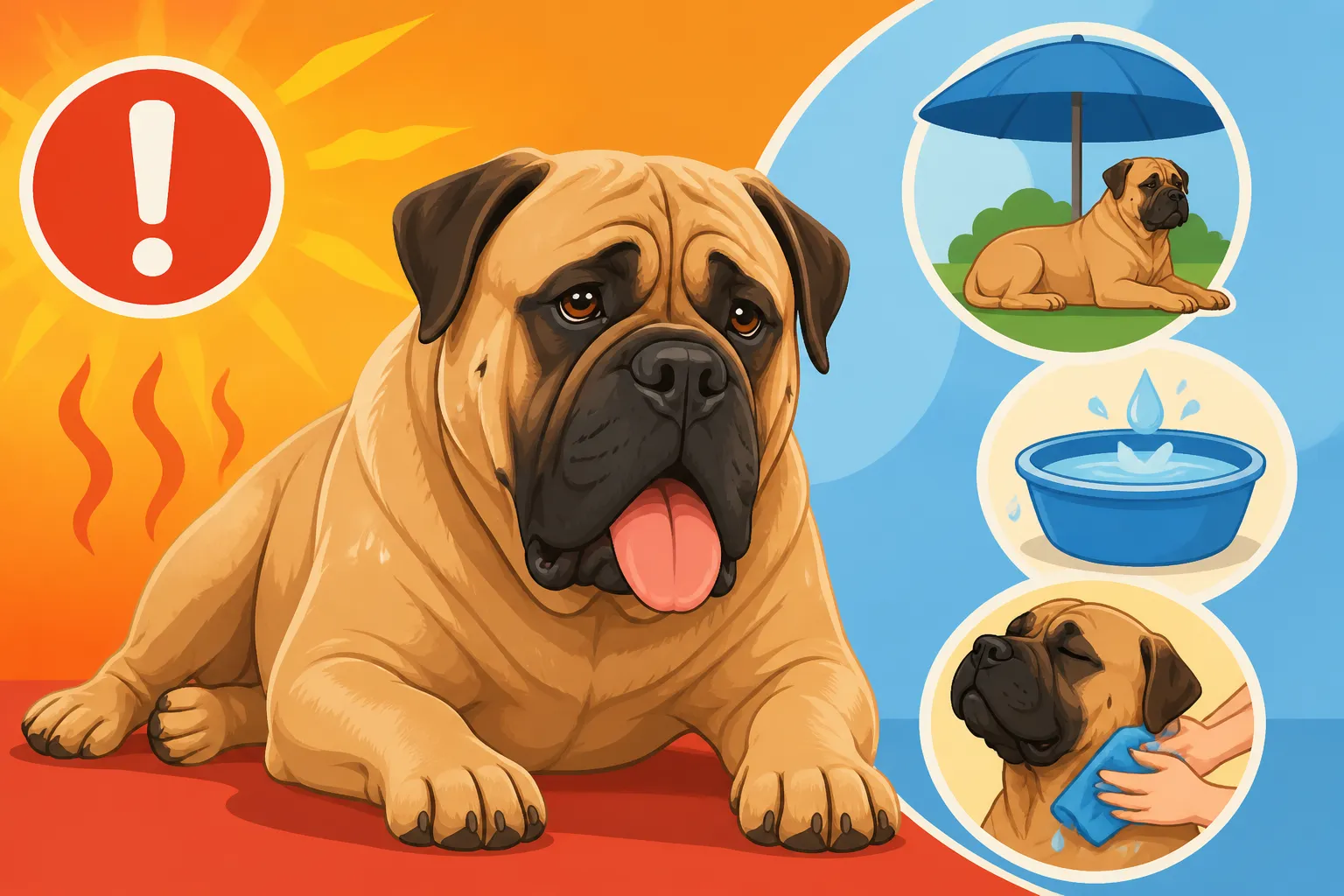
Your absolute first priority is to get your Bullmastiff out of the heat source immediately. If they're outside in the sun, move them to the coolest, shadiest spot you can find, or ideally, bring them indoors into an air-conditioned space. Offer them fresh, cool water, but don't try to force them to drink if they're disoriented or unwilling, as this could lead to aspiration.
Next, you need to begin active cooling. This means applying cool (but not icy cold) water to their body. Using icy water can actually be counterproductive, causing their blood vessels to constrict and trapping heat inside their body, or even inducing shock. Instead, focus on moderate cooling methods. For a detailed guide on safe cooling, check out our post on How to Cool a Bullmastiff Down. Wet towels draped over them, particularly on their head, neck, and chest, are a great start. You'll be surprised how quickly their body temperature can drop with these initial interventions.
Using Water Effectively for Cooling
When applying water, concentrate on areas where blood vessels are close to the surface, allowing for more efficient heat transfer. This includes their paws (you can stand them in a shallow tub of cool water if they're cooperative and able), armpits, groin, and the underside of their neck. Use a sponge, wet cloth, or even a garden hose on a gentle setting to continuously wet these areas. A fan directed at your Bullmastiff will also significantly help, as the evaporation of the water from their coat will further cool them down.
Remember, the goal is to cool them gradually but effectively. Continuously re-wet the towels as they warm up. Avoid submerging them entirely in cold water if they're in distress, as this can be frightening and make monitoring their condition difficult. Keep checking their gum color and general responsiveness. Your steady actions are critical in this emergency, providing comfort and much-needed relief.
When to Call the Vet and What to Expect
Heatstroke is a severe medical emergency, and even if your Bullmastiff seems to be improving after your initial cooling efforts, you must contact your veterinarian immediately. It’s best to call them while you are still performing cooling measures. Describe your dog’s symptoms, how long they’ve been overheating, and what you’ve done so far. This allows the veterinary team to prepare for your arrival, potentially saving precious minutes.
When transporting your Bullmastiff to the clinic, ensure your car has the air conditioning blasting to maintain a cool environment. You might need assistance getting your large Bullmastiff into the vehicle if they are weak or collapsed. Once at the vet, they will likely check your dog's core body temperature, administer intravenous fluids to combat dehydration and shock, and monitor them for organ damage, especially kidney function and clotting issues. This can involve extensive tests and overnight stays. The financial aspect of such an emergency can be daunting, and having robust pet insurance, such as a policy from Healthy Paws, can provide immense peace of mind during such a stressful time, ensuring you can focus on your dog's recovery without added financial strain.
Proactive Measures to Prevent Overheating
The old adage "an ounce of prevention is worth a pound of cure" couldn't be more true when it comes to Bullmastiffs and heat. Their physical characteristics inherently make them more prone to overheating, so understanding these vulnerabilities and taking preventative steps is key to keeping them safe and healthy.
Understanding Why Bullmastiffs Are So Vulnerable
Bullmastiffs, like many large and brachycephalic (short-nosed) breeds, are inherently at a higher risk of overheating compared to other dogs. Their short muzzles mean they can't pant as efficiently to cool themselves down. As we've discussed in Why a Bullmastiff's Short Muzzle Cannot Cool It, their restricted airways make it difficult for them to move enough air across the moist surfaces in their mouth and throat to effectively evaporate heat.
Couple this with their substantial body mass and often dense, albeit short, coats, and you have a dog that struggles significantly to dissipate heat. Imagine wearing a heavy fur coat in summer – that's essentially what your Bullmastiff is dealing with. Even moderate temperatures can be dangerous. Our article Why Eighty Degrees Is Dangerous for a Bullmastiff delves deeper into this, but generally, anything above 75-80 degrees Fahrenheit can become hazardous, especially with humidity. It's a constant struggle for them, and it's our job to compensate for their natural limitations. Understanding What Temperature Is Dangerous for a Bullmastiff is crucial for their safety.
Safe Exercise and Outdoor Management
Managing your Bullmastiff's outdoor activities, especially during warmer months, requires diligence. Scheduling walks during the coolest parts of the day – early morning or late evening – is non-negotiable. Our guide on When to Walk a Bullmastiff in Summer offers great tips for planning your routine. Avoid strenuous exercise like running or intense play when temperatures rise, even if it feels mild to you. A casual stroll is usually sufficient, but always be mindful of their panting and seek shade frequently.
Always ensure they have access to ample fresh, cool water when outdoors, and provide plenty of shade. Never, ever leave your Bullmastiff unattended in a car, even with the windows cracked, as How Fast a Bullmastiff Overheats in a Car can be shockingly quick, turning deadly in minutes. Even on a seemingly mild 70-degree day, the temperature inside a car can rocket to over 100 degrees in just 10-15 minutes. It’s also important to consider Whether a Bullmastiff Should Be Walked in Summer at all, sometimes it's simply too hot and a shorter, indoor play session is safer.
Creating a Cool Environment at Home
For Bullmastiffs, an indoor lifestyle is not just preferred, it's often essential for their well-being, especially in warmer climates. Relying on good air conditioning is vital, and our article Whether a Bullmastiff Needs Air Conditioning highlights just how crucial this can be for their comfort and health. If you don't have AC, consider portable units or ensuring your home has good airflow with fans.
Creating designated cool spots in your home can also help. This could be a tiled floor in a bathroom or kitchen, or an orthopedic bed with a cooling mat. A good quality Whether a Cooling Mat Helps a Bullmastiff can provide a great spot for them to relax and regulate their temperature. Keep curtains and blinds closed during the hottest parts of the day to block direct sunlight and keep the house cooler. Having these measures in place provides a safety net and shows how much you prioritize your gentle giant's comfort, and knowing that you've got them covered in emergencies, perhaps with a comprehensive pet insurance plan from Healthy Paws, can give you that extra reassurance.
Overheating vs. Heatstroke: A Quick Reference Guide
Understanding the difference between mild overheating and severe heatstroke, and knowing the appropriate response, can be life-saving for your Bullmastiff.
| Symptom Category | Overheating (Mild to Moderate) | Heatstroke (Severe Emergency) | Immediate Action |
|---|---|---|---|
| Panting | Heavy, rapid, but controlled; deep breaths | Excessive, frantic, labored; shallow, irregular breaths | Move to cool area, offer water, start gentle cooling |
| Gums/Tongue | Dark red, moist tongue, normal gum color | Bright red, brick red, or bluish-purple gums; dry/sticky | Emergency vet call, aggressive cooling |
| Behavior | Restless, seeking shade, lethargic, reduced activity | Disoriented, stumbling, collapse, seizures, unresponsiveness | Emergency vet call, aggressive cooling |
| Drooling | Increased, thicker saliva | Profuse, foamy saliva | Move to cool area, offer water, start gentle cooling |
| Other | Warm to the touch | Vomiting, diarrhea (possibly bloody), muscle tremors | Emergency vet call, aggressive cooling |
Disclaimer
The information provided in this article is for general educational and informational purposes only, and does not constitute veterinary advice. Always consult with a qualified veterinarian for any health concerns or before making any decisions about your Bullmastiff's care. In case of a suspected emergency, seek immediate veterinary attention.