The Price Range for a Bullmastiff Puppy in 2026
Bringing a Bullmastiff puppy into your home is an incredibly exciting time, full of dreams of a loyal, protective companion. However, many prospective owners get caught off guard by the sheer variability in initial purchase prices, leaving them wondering what a fair cost truly looks like and, more importantly, what that price tag actually includes. This guide will walk you through the typical price ranges for Bullmastiff puppies, explain the crucial factors that drive those differences, and shed light on the initial and ongoing costs you absolutely need to consider beyond just the puppy's sticker price, helping you make an informed decision for your family and your future dog.
Understanding Bullmastiff Puppy Costs Beyond the Sticker Price
It’s easy to focus solely on the initial figure quoted by a breeder, but the truth is, the price of a Bullmastiff puppy is rarely just about the puppy itself. It’s a reflection of the care, health, lineage, and effort that goes into producing that puppy. Ignoring what lies behind the price can lead to significant headaches and expenses down the road. Think of it less as buying a product and more as investing in a healthy foundation for a decade-long relationship.
The Initial Purchase: What to Expect
When you start looking for a Bullmastiff puppy, you’ll quickly notice a wide spectrum of prices. Generally, you can expect to see prices fall within a certain range for a well-bred Bullmastiff puppy from a reputable source. Puppies at the lower end of this range might still come from decent lines, but perhaps the breeder isn't doing extensive health testing or doesn't have a long-standing show record. On the other hand, a puppy at the higher end usually signifies a significant investment by the breeder in health clearances, champion bloodlines, extensive socialization, and ongoing support for their puppy buyers. This isn't just about pedigree; it's about minimizing the risk of inherited health problems and ensuring sound temperament.
It’s tempting to look for the absolute lowest price, but with a breed like the Bullmastiff, that's often a red flag. These are large, powerful dogs with specific health considerations, and cutting corners in the breeding process can have devastating and expensive consequences later in the dog's life. Think about how much potential heartache and financial strain you might save by investing a bit more upfront in a puppy whose parents have been thoroughly screened for common issues like hip and elbow dysplasia, heart conditions, and certain cancers. What a Bullmastiff Breeder Should Have Screened touches on the importance of these screenings.
Why a "Bargain" Bullmastiff Is Rarely a Bargain
You know the old saying: "You get what you pay for." This rings especially true when it comes to Bullmastiff puppies. A puppy offered for a price significantly below the average range should immediately raise your eyebrows. Often, these "bargain" puppies come from puppy mills or backyard breeders who prioritize profit over the health and welfare of their dogs.
These breeders typically skip crucial health testing for the parents, don't provide adequate nutrition or veterinary care for the mother and puppies, and offer little to no socialization. This means you could be bringing home a puppy predisposed to serious genetic health conditions like Lymphoma Kills More Bullmastiffs Than Anything Else or Subaortic Stenosis Is There Before a Bullmastiff's First Birthday. The cost of treating these conditions can quickly eclipse any initial savings you might have made on the purchase price. Moreover, puppies from these environments often suffer from behavioral issues due to poor early socialization, which can lead to expensive training interventions or even rehoming down the line. A truly responsible breeder will be transparent about their pricing and why their puppies command the cost they do.
Factors That Influence a Bullmastiff Puppy's Price
The price tag on a Bullmastiff puppy isn't arbitrary; it's a culmination of various factors, each contributing to the overall value and, frankly, the peace of mind you get when you bring your new companion home. Understanding these factors will empower you to discern a reputable breeder from someone who's simply in it for a quick buck.
Reputable Breeders and Health Clearances
The single biggest determinant of a Bullmastiff puppy's price is the reputation of the breeder and their commitment to health. Ethical breeders invest a substantial amount of time, money, and effort into their breeding programs. This includes:
- Extensive Health Testing: Before breeding, responsible Bullmastiff breeders will perform a battery of health tests on both parent dogs. This means OFA (Orthopedic Foundation for Animals) certifications for hips and elbows to check for conditions like Hip Dysplasia in a Bullmastiff and Elbow Dysplasia in a Bullmastiff, cardiac clearances by a board-certified veterinary cardiologist, and potentially genetic tests for other inherited conditions relevant to the breed. These tests are not cheap, and their cost is factored into the puppy's price.
- Quality Care for Parents and Puppies: This includes top-tier nutrition for the mother, regular veterinary check-ups for both parents and puppies, proper vaccination and deworming schedules for the litter, and a clean, safe environment for the puppies to grow.
- Early Socialization: Reputable breeders spend countless hours socializing their puppies, exposing them to different sights, sounds, people, and textures. This foundational work is critical for developing a confident, well-adjusted adult Bullmastiff.
- Lifelong Support: A good breeder will offer ongoing support and advice for the lifetime of your dog. They often require you to sign a contract that includes a health guarantee and a commitment to take the dog back if you ever can't care for it, ensuring their dogs never end up in a shelter.
The upfront investment in a puppy from such a breeder can save you thousands of dollars in potential vet bills and behavioral training costs in the long run. They are essentially selling you a significantly reduced risk of heartache and financial strain.
Pedigree, Show Potential, and Breeding Rights
Another significant factor influencing price is the puppy's lineage and its potential future roles.
- Champion Bloodlines: Puppies from parents with distinguished show careers or champion titles often command higher prices. This isn't just about bragging rights; it indicates that the parents conform well to the breed standard in terms of structure, temperament, and health. These qualities are then passed on to their offspring, making such puppies more desirable for those interested in showing or breeding.
- Show Potential: Some puppies in a litter might be identified as having "show potential" – meaning they possess excellent conformation and temperament that aligns with the breed standard. These puppies might be priced higher than their littermates destined for companion homes, especially if sold with full registration (meaning breeding rights).
- Limited vs. Full Registration: Most reputable breeders sell companion puppies on "limited registration," meaning the dog cannot be bred and its offspring cannot be registered. This is done to protect the breed and ensure only suitable dogs are used for breeding. Puppies sold with "full registration" (including breeding rights) are typically more expensive and come with strict conditions, as the breeder wants to ensure their lines are continued responsibly. It's rare for a first-time owner to need or want a puppy with full registration. What a Bullmastiff Breeder Contract Requires often details these distinctions.
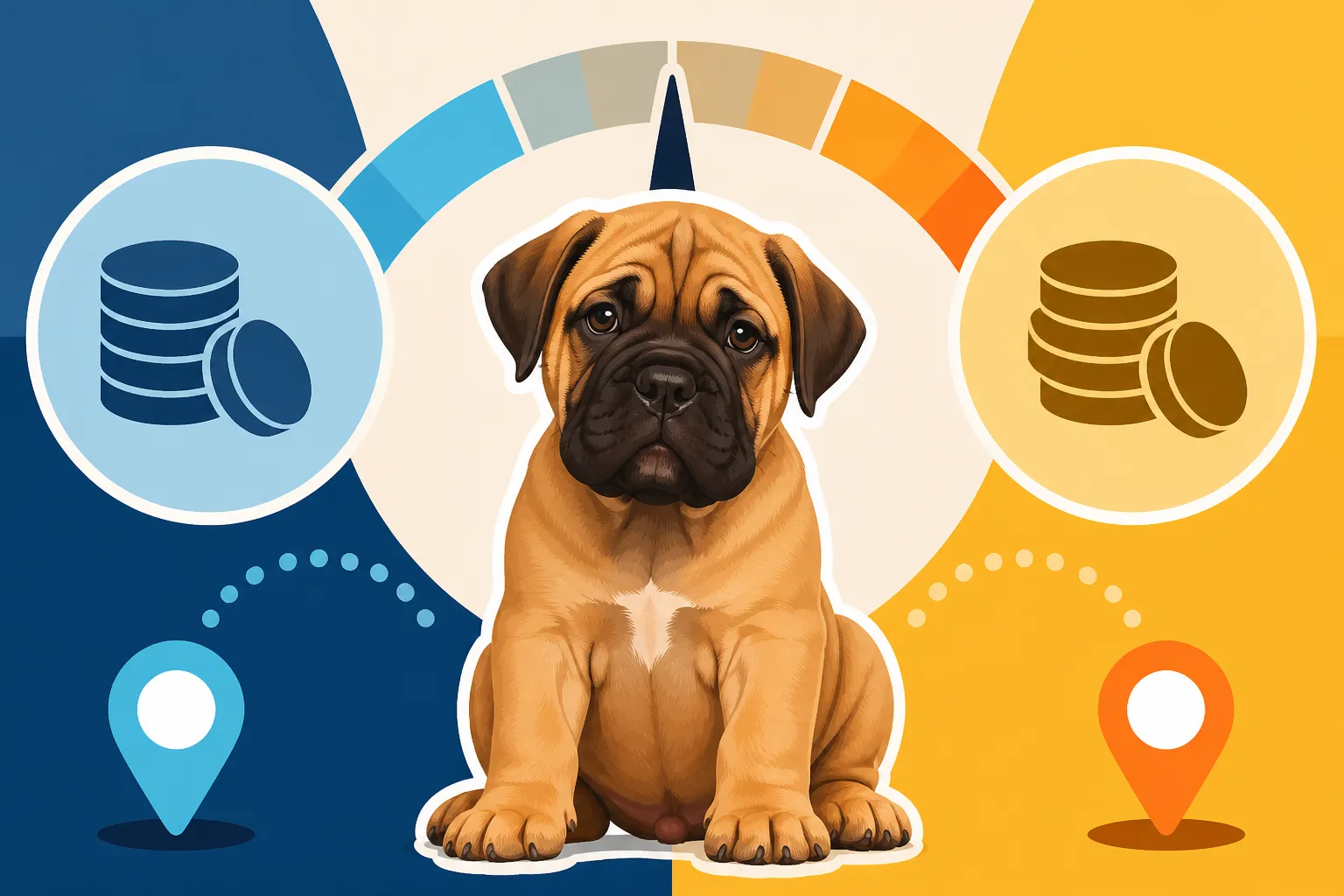
Geographic Location and Market Demand
Just like real estate, the cost of a Bullmastiff puppy can vary based on geography and current market demand.
- Regional Differences: In areas where Bullmastiffs are less common or where the cost of living (and thus, operating a kennel) is lower, prices might be slightly lower. Conversely, in affluent regions or areas with high demand for well-bred dogs, prices can be higher. Shipping costs, if applicable, would also add to the final price.
- Breeder Concentration: If there are fewer reputable Bullmastiff breeders in a particular region, their prices might reflect that limited supply. Conversely, in areas with a higher concentration of quality breeders, there might be more competitive pricing.
- Current Trends: While Bullmastiffs have a stable following, general trends in dog ownership can also subtly influence prices. However, a responsible breeder's prices will primarily be driven by their consistent investment in health and quality, rather than fluctuating fads.
The Hidden Costs of Bringing Home a Bullmastiff Puppy
The purchase price is just the entry ticket. Once you bring that adorable, wrinkly Bullmastiff puppy home, a whole new set of expenses begins. These initial "hidden" costs are absolutely essential for a healthy and happy start.
Initial Veterinary Care and Vaccinations
Your puppy's first few months will involve several trips to the veterinarian for a series of vaccinations, deworming, and general health check-ups.
- Puppy Vaccination Series: Puppies require a series of vaccinations (distemper, parvovirus, adenovirus, parainfluenza, rabies) over several weeks to build their immunity. Each visit incurs a consultation fee plus the cost of the vaccine.
- Deworming and Parasite Prevention: Puppies are highly susceptible to internal parasites. Regular deworming is crucial, as is starting on heartworm and flea/tick prevention, which will be ongoing monthly expenses. The Vaccination Schedule a Bullmastiff Puppy Needs outlines this further.
- Microchipping: This small, permanent identification chip is vital for your dog's safety and is usually done during one of the early vet visits.
- Spay/Neuter: While not immediate, you'll need to budget for spaying or neutering your Bullmastiff, typically around 12-18 months of age for giant breeds to allow for proper growth and development. This procedure can be significantly more expensive for large breeds due to increased anesthesia and medication requirements.
- Initial Health Exam: Even if your breeder provided excellent care, a new puppy should always have a thorough check-up with your chosen veterinarian within a few days of coming home. This initial visit allows your vet to establish a baseline and confirm your puppy's good health.
Essential Supplies for a Giant Breed Puppy
Bullmastiffs aren't just big; they're giant. This means their supplies aren't just scaled-up versions of regular dog items; they often come with a giant-sized price tag too.
- Crate: A sturdy, appropriately sized crate is essential for house-training and providing a safe den. You'll need a giant-breed sized crate, which is a significant investment. Brands available on platforms like Chewy offer a range of options, from wire crates to heavy-duty models.
- Bedding: Forget flimsy dog beds. A Bullmastiff needs an orthopedic, supportive bed from day one to protect their developing joints. These can be quite costly but are critical for their comfort and long-term health. Look for durable, washable options. Which Bed a Bullmastiff Needs elaborates on this.
- Food and Bowls: High-quality large-breed puppy food is vital for slow, steady growth, preventing conditions linked to rapid growth. Companies like Ollie, known for fresh, human-grade food, or reputable kibble brands available on Chewy, cater to specific dietary needs. You'll also need large, sturdy food and water bowls, possibly a slow feeder if your Bullmastiff tends to bolt their food.
- Leash, Collar, and Harness: You'll need a robust leash and collar, and likely a front-clip harness for better control during walks, as a Bullmastiff puppy quickly grows into a powerful adult. Teaching a Bullmastiff to Walk on Leash is a valuable skill to start early.
- Toys and Chews: Bullmastiff puppies love to chew, and providing appropriate, durable chew toys is crucial to protect your furniture and keep them entertained. Invest in tough, giant-breed-appropriate toys.
- Grooming Supplies: While their coat is low-maintenance, you'll still need brushes, nail clippers or a Dremel, and gentle shampoo. Why a Bullmastiff's Coat Takes Ten Minutes a Week simplifies grooming.
Early Training and Socialization
Training a large, powerful breed like a Bullmastiff is not optional; it's a necessity for their safety and yours. Investing in early training and socialization is paramount.
- Puppy Classes: Group puppy classes are excellent for socialization with other dogs and people, and for teaching basic obedience commands.
- Professional Training: Due to their size and potential for stubbornness, many Bullmastiff owners find professional one-on-one training invaluable, especially during adolescence. Training a Bullmastiff That Weighs More Than You Do can be a serious undertaking.
- Socialization Outings: Taking your puppy to various places (stores, parks, friends' houses) to safely expose them to different environments is free, but requires time and effort, which can be seen as an investment.
- Preventative Training for Problem Behaviors: Addressing issues like jumping, nipping, or leash pulling early on is far easier and less costly than correcting ingrained behaviors in an adult Bullmastiff.
Long-Term Financial Commitments: Beyond the First Year
While the focus here is on puppy price, it's crucial for prospective Bullmastiff owners to understand that the financial commitment extends far beyond the initial purchase and first-year expenses. These dogs have a relatively shorter lifespan compared to smaller breeds, which often means their significant health needs can concentrate into their middle and senior years.
Ongoing Nutrition for a Growing Giant
A Bullmastiff, once fully grown, will consume a substantial amount of food. This is an ongoing, significant monthly expense.
- High-Quality Adult Food: Just like with puppies, feeding a high-quality adult large-breed formula is vital for maintaining their health, energy levels, and joint support. Again, brands like Ollie offer tailored meal plans, and Chewy is a great resource for a wide array of premium kibble options. The cost can vary dramatically depending on the brand and type of food (kibble, raw, fresh). Feeding a Hundred and Thirty Pound Bullmastiff gives a clear picture of the sheer volume of food.
- Supplements: Many Bullmastiff owners opt to give joint supplements from a young age to support their heavy frames, which can add to the monthly food bill. Fish oil and other health-boosting supplements are also common.
- Treats: Training and rewarding your Bullmastiff will require a steady supply of treats. Choosing healthy, low-calorie options is important to prevent obesity, which can exacerbate joint issues. Keeping a Bullmastiff Lean Is the Best Thing You Can Do is critical for their health and longevity.
The Lifelong Need for Veterinary Care and Insurance
Routine veterinary care and preventative medicine are essential investments in your Bullmastiff's long-term health.
- Annual Wellness Exams: Even healthy adult Bullmastiffs need yearly check-ups, including vaccinations, parasite screenings, and a general physical.
- Preventative Medications: Heartworm, flea, and tick prevention are year-round necessities in most regions and represent a continuous monthly or quarterly expense.
- Bloodwork and Diagnostics: As Bullmastiffs age, or if any health concerns arise, blood panels, urinalysis, and other diagnostic tests become more common.
- Pet Insurance: Given the breed's predispositions to certain health issues (like cancers and orthopedic problems), pet insurance is highly recommended. Companies like Healthy Paws can provide a financial safety net for unexpected illnesses or accidents. Starting a policy when your Bullmastiff is a puppy is usually the best approach, as pre-existing conditions won't be covered if developed before the policy starts. What Insurance Covers on a Bullmastiff is a must-read for anyone considering this breed.
Potential for Unexpected Health Issues
Unfortunately, giant breeds like Bullmastiffs are prone to certain health challenges, and these can come with very substantial veterinary bills.
- Cancer: Bullmastiffs have a higher risk of various cancers, including lymphoma and mast cell tumors. Mast Cell Tumors and the Lumps on a Bullmastiff are a particular concern. Cancer treatments, including chemotherapy and surgery, can be incredibly expensive.
- Orthopedic Problems: Even with careful breeding, conditions like hip and elbow dysplasia, arthritis, and cruciate ligament tears can occur and often require surgery or ongoing pain management. Cruciate Tears in a Bullmastiff are not uncommon.
- Bloat (GDV): Gastric Dilatation-Volvulus (bloat) is a life-threatening emergency common in deep-chested breeds. Emergency surgery for bloat is extremely costly and time-sensitive. Many owners opt for a prophylactic gastropexy during spay/neuter surgery to prevent this, which adds to the initial surgical cost but can be life-saving. Bloat in a Bullmastiff is a condition every owner must be aware of.
Consider creating an emergency fund specifically for your Bullmastiff's health, or ensure you have a robust pet insurance policy in place. These dogs, while incredibly loving, can be incredibly expensive when health issues strike, and being prepared financially is a huge part of responsible ownership.
Bullmastiff Puppy Cost Breakdown: A Snapshot of Initial Expenses
To give you a clearer picture, here's a hypothetical breakdown of initial expenses, keeping in mind that actual costs will vary significantly by region, breeder, and specific choices you make. This table does not include the purchase price of the puppy itself, as that varies too widely, but focuses on the immediate necessities once you bring them home.
| Item Category | Estimated Cost Range (Shape, Not Specific Figures) | Notes |
|---|---|---|
| Initial Vet Care | Moderate to High | Includes initial exam, multiple rounds of puppy vaccinations, deworming, microchipping, and initial parasite preventatives. Spay/neuter will be a separate, later expense but is considerable for a giant breed. |
| High-Quality Puppy Food | Moderate to High (monthly) | For large breed puppies, essential for controlled growth. Consider reputable brands available on Chewy or fresh options like Ollie. |
| Giant-Sized Crate | Moderate to High | A necessary investment for training and safety. Must be strong and large enough for a mature Bullmastiff. |
| Orthopedic Dog Bed | Moderate to High | Critical for joint support from day one. Look for durable, washable covers. |
| Collar, Leash, Harness | Low to Moderate | Invest in durable, strong equipment. A front-clip harness is often recommended for better control with a powerful breed. |
| Durable Chew Toys | Low to Moderate (ongoing) | Bullmastiffs are powerful chewers; budget for tough, engaging toys to redirect destructive chewing. |
| Grooming Essentials | Low | Basic brushes, nail clippers/Dremel, and shampoo. |
| Puppy Classes/Training | Moderate to High | Highly recommended for socialization and basic obedience. Private training may add more. When to Start Training a Bullmastiff Puppy is as soon as you get them. |
| Pet Insurance (First Month) | Low to Moderate (monthly) | Highly recommended. Premiums vary based on coverage, deductible, and reimbursement percentage. Consider companies like Healthy Paws. Get coverage early to avoid pre-existing condition exclusions. Why a Bullmastiff Should Be Insured From Eight Weeks is sound advice. |
This table illustrates that the purchase price is just one piece of the financial puzzle. Being prepared for these subsequent costs is key to providing a Bullmastiff with a healthy, happy, and secure life.
Disclaimer
This article is for general informational purposes only and does not constitute professional advice. Laws, prices and regulations vary by location and change over time. Consult a qualified professional for guidance on your specific situation.